
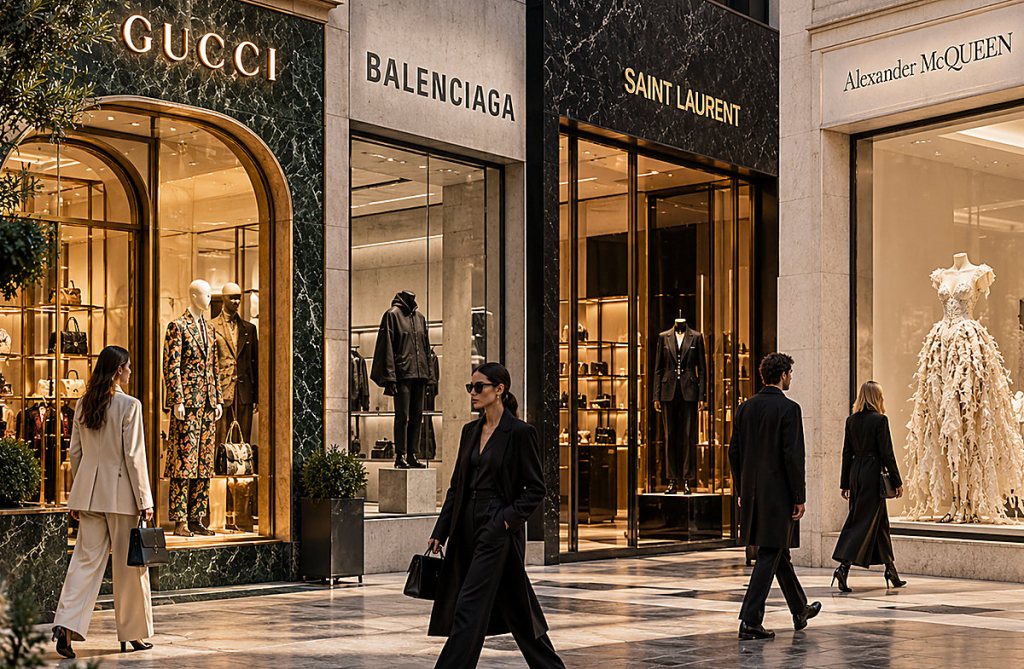
It is not the customer who no longer understands fashion; fashion no longer understands its customer.
Luca de Meo is looking for a way to revive Kering. According to recent reports, Chemena Kamali could move from Chloé to Saint Laurent, Martine Rose could join Balenciaga, and Italy’s Virginia Burlina could take over the creative direction of Alexander McQueen. All three appointments remain unconfirmed, but they reopen a fundamental question: does changing designers necessarily improve the product?
In recent years, creative directors have moved from one brand to another almost like football managers. Yet many of luxury’s problems stem from creative choices that fail to convince, often because they sit too far from a brand’s history and the tastes of its customers.
Look at Gucci. Under Demna, we have seen exaggerated proportions, distorted jackets, uncomfortable shoes and coats that look old-fashioned. It is a provocative aesthetic that found an audience at Balenciaga, but one I consider ill-suited to Gucci. The constant return to the archives also leaves little room for genuinely new ideas. Experimentation is legitimate, but a garment should still be a pleasure to look at and to wear.
I have also questioned the choice of Pierpaolo Piccioli for Balenciaga. Cristóbal Balenciaga built the brand’s stature on precise tailoring and the geometry of volume. Demna turned that language into something deconstructed and provocative, while Piccioli arrives from Valentino’s romantic elegance. These are profoundly different visions, and the changes risk disorienting customers.
A designer’s talent does not guarantee that they are right for every brand.
Gucci’s history offers different examples. With Domenico De Sole’s support, Tom Ford imposed a polished, personal style. Frida Giannini, working with Patrizio di Marco, developed successful products and lines while strengthening ties with film, music and entertainment. Alessandro Michele, alongside Marco Bizzarri, won over audiences with an original, theatrical narrative that lost some of its freshness after several years.
These were winning partnerships, able to draw a response from the market quickly. De Meo says Kering must take a long-term view. It is understandable that an industrial reorganisation takes years, but that does not mean it should take as long to see whether a creative direction is working. Ford and Michele showed that a compelling proposal can produce positive signs much sooner.
The problem is more structural, involving both management and designers. A group’s leadership must identify the right creative director for each brand and take responsibility for that decision. Designers, in turn, need to understand the product and its history, and have the freedom to develop a personal vision.
I see this in my own work, when I follow the launch of a product or a campaign: discussion is essential, but constant management interference can undermine the coherence of the result.
Luxury customers have changed, too. After years of price rises, even the wealthiest are more selective, directing some of their spending toward travel, experiences or investments. Add collections with exaggerated proportions, difficult to wear and far from the tastes of their intended buyers, and the risk is to push customers further away. The public cannot always be expected to adapt to fashion’s choices.
The answer is not to keep moving designers from one brand to another. It is to choose the right creative director for the right brand, then give that person room to work without constant interference. Management should offer support, assess results and take responsibility for its decisions. Customers do not buy corporate strategies. They buy a product they want, and believe is worth their money.
Sure-com America – Alessandro Sicuro
Brand Strategist | Photographer | Art Director | Project Manager
Alessandro Sicuro Comunication


