
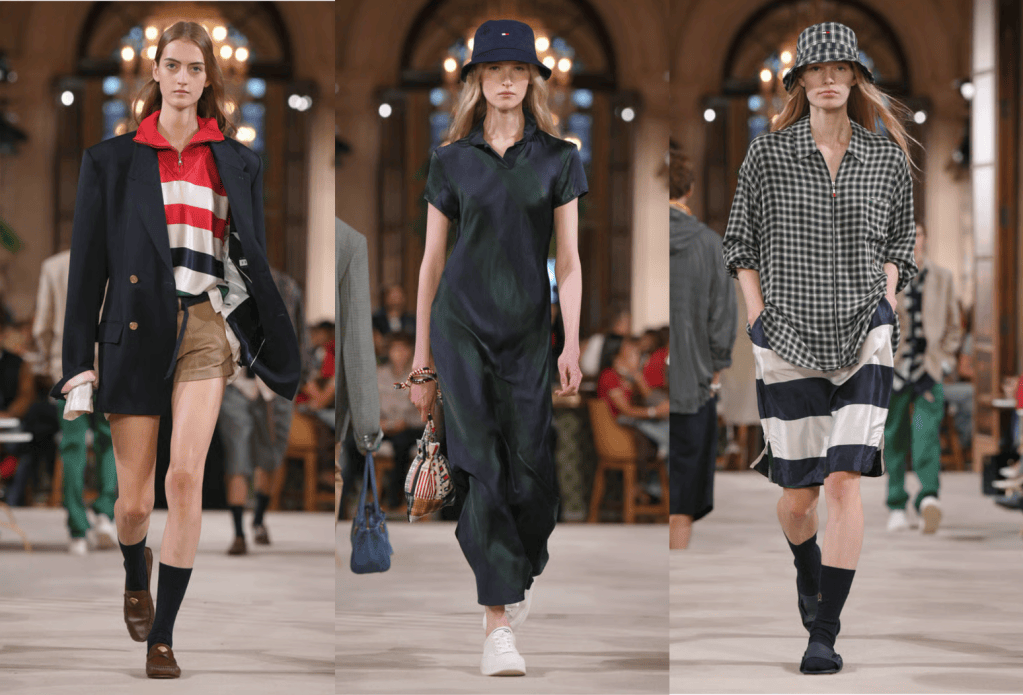
Tommy Hilfiger has always been a bit of a mystery to me. A powerhouse American brand. Instantly recognizable. With a significant history. Yet I’ve always struggled to really place it.
On one side, there’s Ralph Lauren. A precise world built over the years. Elegant America. The college. The country club. The West. The East Coast. A vision that now goes beyond clothing. On the other side, there’s more direct American sportswear. Urban. Commercial. Hilfiger seems to sit right in the middle.
Maybe that’s exactly its strength. The preppy look. The red, white, and blue. The blazer. The college vibe. The nautical feel. Then hip-hop. Music. The logo that became almost a pop symbol. All very American. All very recognizable. But I still wonder where the big brand ends and where real fashion begins.
At New York Fashion Week, he returns once again to his signature codes. This time at the Plaza Hotel. A show built as an event. A spectacle. An image. After all, Hilfiger understood before many others how fashion, music, celebrities, and communication could coexist.
The problem, if anything, is also New York.
A Fashion Week that still has important brands, certainly. But for a few seasons now, it feels like it has lost some of that centrality. That anticipation you still sense in Milan. And especially in Paris. The names are there. The events are there. The celebrities are there. But not always that feeling that something is happening capable of truly shifting fashion’s language.
And maybe Tommy Hilfiger represents this contradiction perfectly. Strong. Recognizable. Commercial. Deeply American. But it still leaves me with that same question as always.
Where does it really belong?
Maybe right there. In the middle. Between fashion, lifestyle, pop culture, and big American industry.
Gallery


Alessandro Sicuro
Brand Strategist | Photographer | Art Director | Project Manager Alessandro Sicuro Comunication


 Sure-com America