
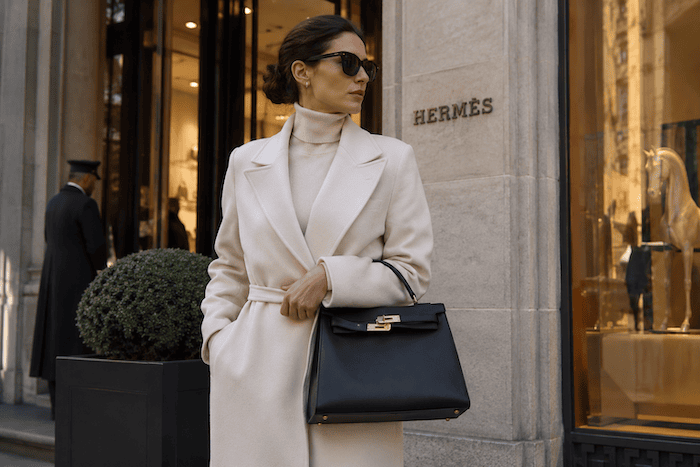
The luxury market is showing some signs of growth again. We are certainly not back to the years immediately after the pandemic, when it seemed everything could rise without limits, but something is moving. LVMH is growing, Hermès keeps showing above-average solidity, and even Kering, after complicated years especially for Gucci, shows some signs of recovery.
The interesting thing, however, is not only the economic data. It is what is happening behind those numbers. Luxury is growing again because, in some way, it has been forced to go back to doing its job. To do luxury.
For some years an important part of the sector probably believed that brand strength, accompanied by continuous price increases, was enough to keep the attraction to the product intact. It didn’t work out that way. Consumers, even those with great spending power, at some point look again at what they buy and ask whether what is in front of them still holds that quality and that culture of the product that built the very meaning of luxury over time.
And perhaps this is exactly where something was lost in recent years. The constant pursuit of provocation and the need to amaze at all costs have often pushed fashion away from one of its fundamental tasks: creating beauty. Of course beauty doesn’t mean conformity. Fashion has always needed to question what exists, but it is one thing to do so because you have something new to say, another to demolish what was there just to attract attention. And the public, sooner or later, perceives this difference.
The same goes for price. For too long people thought that raising it automatically meant raising positioning too, but the value of a maison doesn’t come from a price tag. It is built over time, through what it produces and the consistency with which it keeps its identity. When price becomes the main tool for declaring exclusivity, the mechanism sooner or later breaks.
It is significant that right now many groups are returning to invest with greater care in creative direction and product. The new appointments at the maisons are not just changes of people: they are a sign that the sector needs to rediscover its own creative strength and interpret the present without disowning what made it important. In other words, fashion is once again in need of fashion.
The renewed attention to the so-called aspirational customer also tells us something. In recent years that segment of the public was progressively pushed out of the market by very significant increases; today we realize it was not marginal at all, but represented an important part of the sector’s balance. This doesn’t mean luxury must become popular; it means it must once again make evident, through what it offers, why it occupies a different position.
True exclusivity doesn’t come from making an object simply unreachable, but from that object truly having something that sets it apart.
We probably won’t return to the double-digit growth of the post-Covid years, and perhaps that’s for the best. That was an exceptional condition. The phase opening now could be far more selective and interesting, because it will force brands to win back the market by demonstrating their value again, in practice.
Before constantly inventing something new, luxury must go back to being credible in what it has always claimed to be.

Alessandro Sicuro
Brand Strategist | Photographer | Art Director | Project Manager Alessandro Sicuro Comunication


