
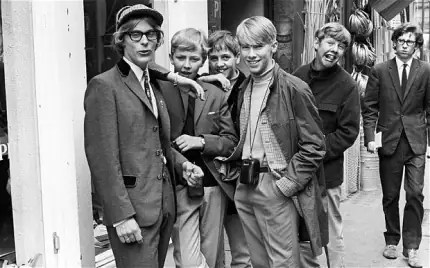
After Florence, London showed that beauty, music and fashion can become development, identity and future.
I have always thought that in the history of Western culture there have been two great Renaissances: the Florentine one, between the fourteenth and the early sixteenth century, and the London one, which exploded in the mid-1960s.
Not because the two cities produced the same art forms or lived under comparable conditions. They are worlds apart in time. The common point is another: in both cases, those with economic and political power understood that creativity was not a luxury for the few, but a force capable of changing society.
A Renaissance matures when talent is not left at the margins. When it is given space, tools, visibility and dignity.
Power doesn’t generate talent. But power decides whether that talent remains isolated or becomes a collective fact.
In Florence the first signs arrive as early as the fourteenth century, with Dante, Cavalcanti, Petrarch and Boccaccio: a new language, a new way of speaking about man, love, the city and life. Then, in the fifteenth century, the city becomes the most extraordinary laboratory in Europe.
The Medici, bankers and businessmen before they were rulers, understand that beauty has a concrete value. A palace, a church, a sculpture, a fresco are not simply decoration: they tell of the strength of a city, its intelligence, its ability to endure over time.
They turn money into prestige, wealth into culture, culture into influence.
They don’t invent Brunelleschi, Donatello, Botticelli, Leonardo or Michelangelo. But they build a Florence in which those artists can work, be recognized, compete and leave the world something that still defines us today.
Centuries later, London lives a different season, but with a similar dynamic.
After the war and the years of austerity, England begins to open up. Laws change, customs change, a generation grows that is less willing to accept the rigid codes of its fathers. Art schools train photographers, designers, musicians and graphic artists; television enters homes; the record industry, magazines, radio and advertising discover that young people are no longer just an audience: they are a new creative and economic force.
No government invented the Beatles, Mary Quant or David Bailey. But the country created a climate in which those talents could emerge and make their mark. Institutions, business, media and a new social freedom made an ecosystem possible.
And that generation didn’t want to just live its time. It wanted to invent it.
This is where Swinging London takes shape. Not a “swaying” London, but a living, brilliant, modern city, full of energy. A city that sets the rhythm and becomes the center of the scene.
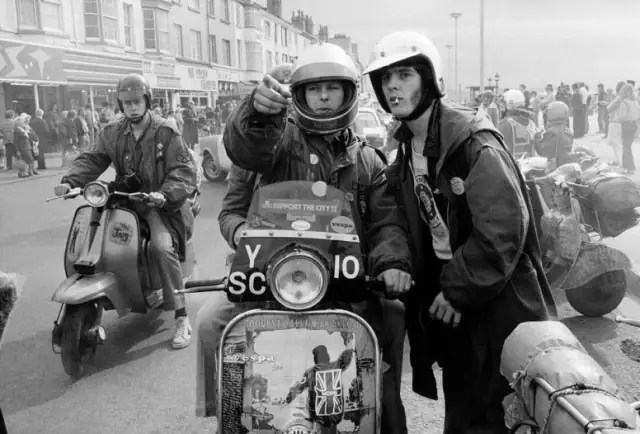
Its strongest moment is the mid-1960s. It isn’t a matter of putting everything between 1960 and 1980 in the same container: Swinging London has its heart between 1964 and 1967. Then would come psychedelia, the counterculture, protest, punk and other revolutions. But that is where everything changes.
Music is the first engine.
The Beatles, the Rolling Stones, the Who, the Kinks and many others don’t just change the sound of rock. They change the image, the attitude, the way of standing on a stage, of speaking to a generation and of being photographed. A record becomes a cover, a photo, a haircut, a dress, a behavior.
Fashion picks up that shock and takes it to the street.
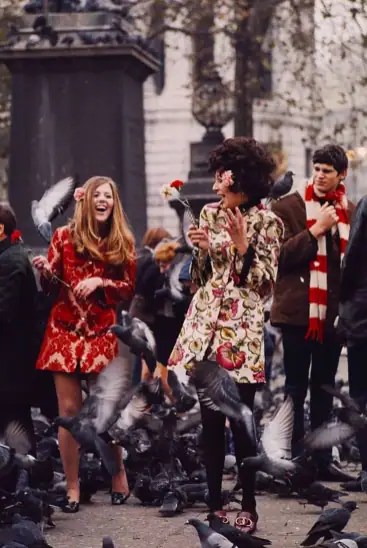
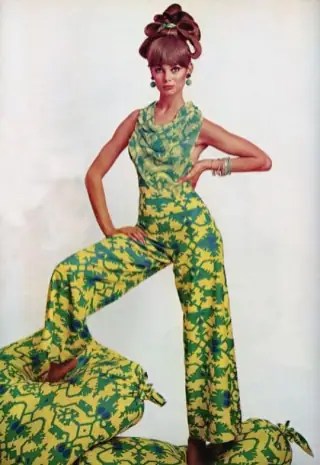
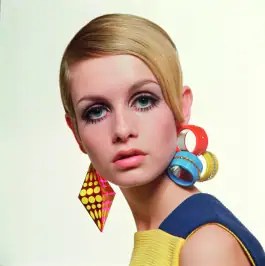
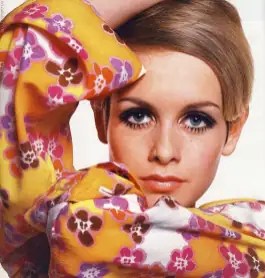
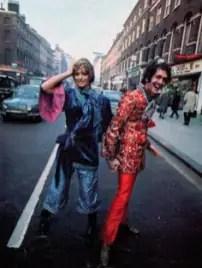
King’s Road, Carnaby Street, Mary Quant, the boutiques, the miniskirt, Twiggy, Jean Shrimpton, Vidal Sassoon: they are not separate episodes. They are a single language. For the first time, with that force, young people decide by themselves how to appear. The body stops respecting only imposed conventions and becomes part of a new freedom.
Fashion no longer comes from above to be copied. It rises from the street, from clubs, concerts, photographs and the desires of those who want to be recognizable.
Pop Art, cinema, photography and graphic design also take part in the same movement. David Bailey, Brian Duffy and Terence Donovan turn faces and clothes into icons; Peter Blake brings the new popular imagery into art; magazines and advertising make that London desirable everywhere.
Florence had understood that the beauty of works, architecture and ideas could make a city central in the world.
London understands that beauty can also live in a song, a photograph, a dress, a cover, a street. And that all this, if authentic and recognizable, can become culture, economy and international influence.
Beauty is not a consequence of development. It is part of development.
Today, instead, too often beauty, education and the quality of places are treated as secondary details. Ugliness, rudeness and decay are tolerated as if they were inevitable. Florence and London teach the opposite: a society grows when it values what elevates people, makes them more aware and allows them to create.
Swinging London was therefore not a frivolous parenthesis made of miniskirts and memorable records. It was a contemporary cultural Renaissance. The moment when a generation found the space to turn its creativity into a new way of living in the world.
LONDON CALLING PROJECT
In search of the origins of the contemporary cultural Renaissance
Alessandro Sicuro

Alessandro Sicuro
Brand Strategist | Photographer | Art Director | Project Manager Alessandro Sicuro Comunication


