
Pierpaolo Piccioli’s debut marks a return to classic couture, to volumes, to the architecture of the dress and to the highest memory of Balenciaga. All of it, however, inside the equatorial oven of a runway under the sun, closer to a mixed grill than to a luxury show. Poetic and artistic license, they tell us.
Balenciaga restarts from Pierpaolo Piccioli and restarts from couture. The built, thought-out kind, sculpted on volumes. After the Demna Gvasalia years, which had accustomed — indeed almost habituated, and often quite effectively — the Balenciaga public to oddities, visual shocks and disturbing languages, Piccioli makes a jibe. The wind changes, the course changes, the tension changes.
From noise to form. From provocation to construction. From fashion as shock to fashion as architecture.
Inside Balenciaga, Piccioli brings his romantic alphabet: feathers, petals, full colors, big volumes, that monumental sweetness we saw in the Valentino years. And I don’t mind it at all. On the contrary, when romanticism is held back by tailoring discipline, it can become very powerful.
Of course, nobody should tell us that looking at this collection you can’t also read a bit of Valentino. It would be strange otherwise. The designer is the same, the hand is the same, the sensibility is the same. When a designer enters a maison, he doesn’t leave his world outside the door: he brings memory, obsessions, colors, proportions, vision.
It is the great waltz of creative directions that the maisons have by now accustomed us to. The designer changes, the course changes, the way of rereading the archive changes. The point is to understand whether that new hand betrays the brand or brings it back to a truth of its own.
Here, in my view, Piccioli doesn’t betray Balenciaga. He brings it closer to its original creator, Cristóbal Balenciaga: the dress as project, volume, architecture, construction. And let’s not forget that this is haute couture. Haute couture is not just drawing-room elegance: it is laboratory, risk, craft, time, hands, technique. It is also daring. Taking a fabric beyond its function. Turning a silhouette into presence.
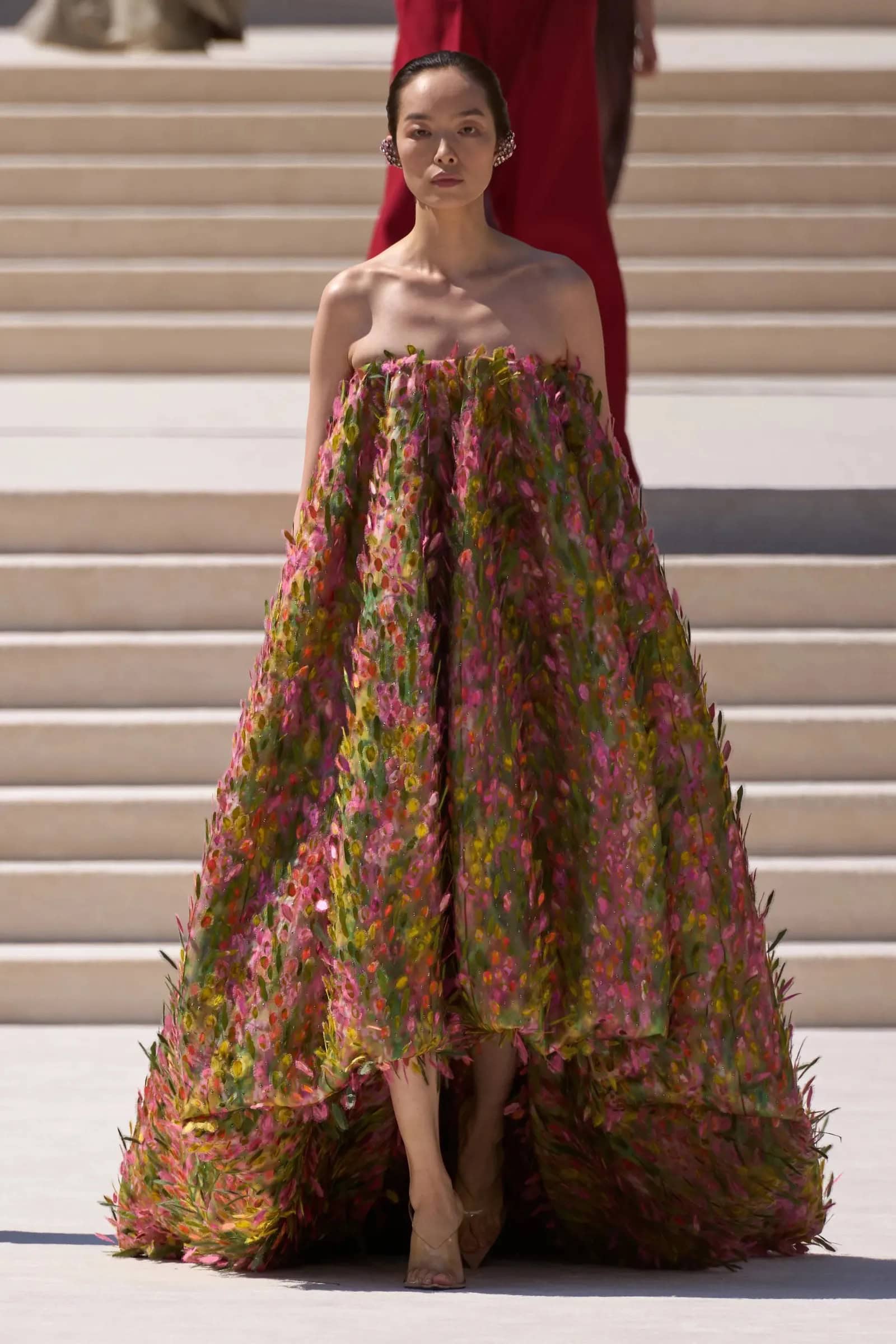
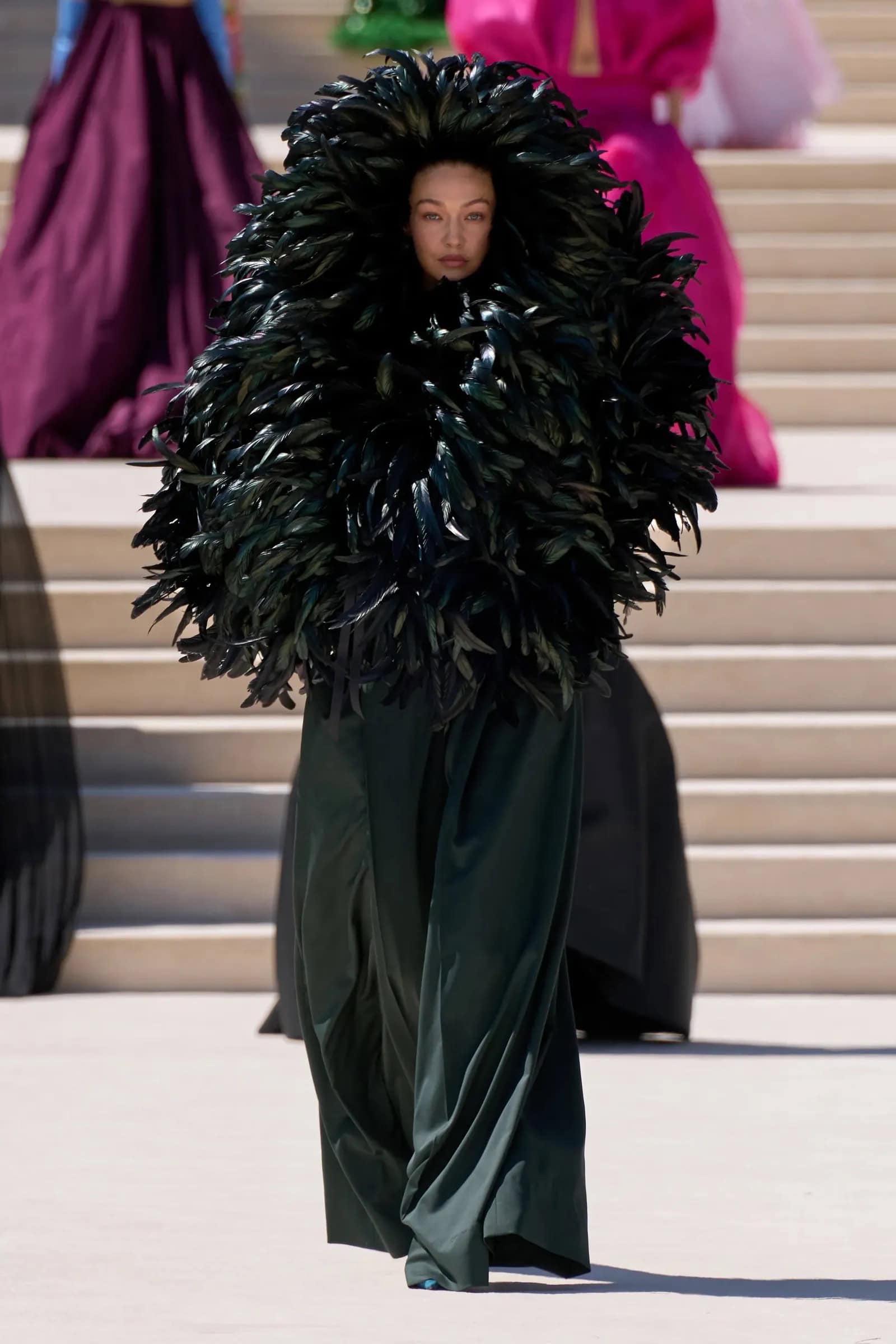
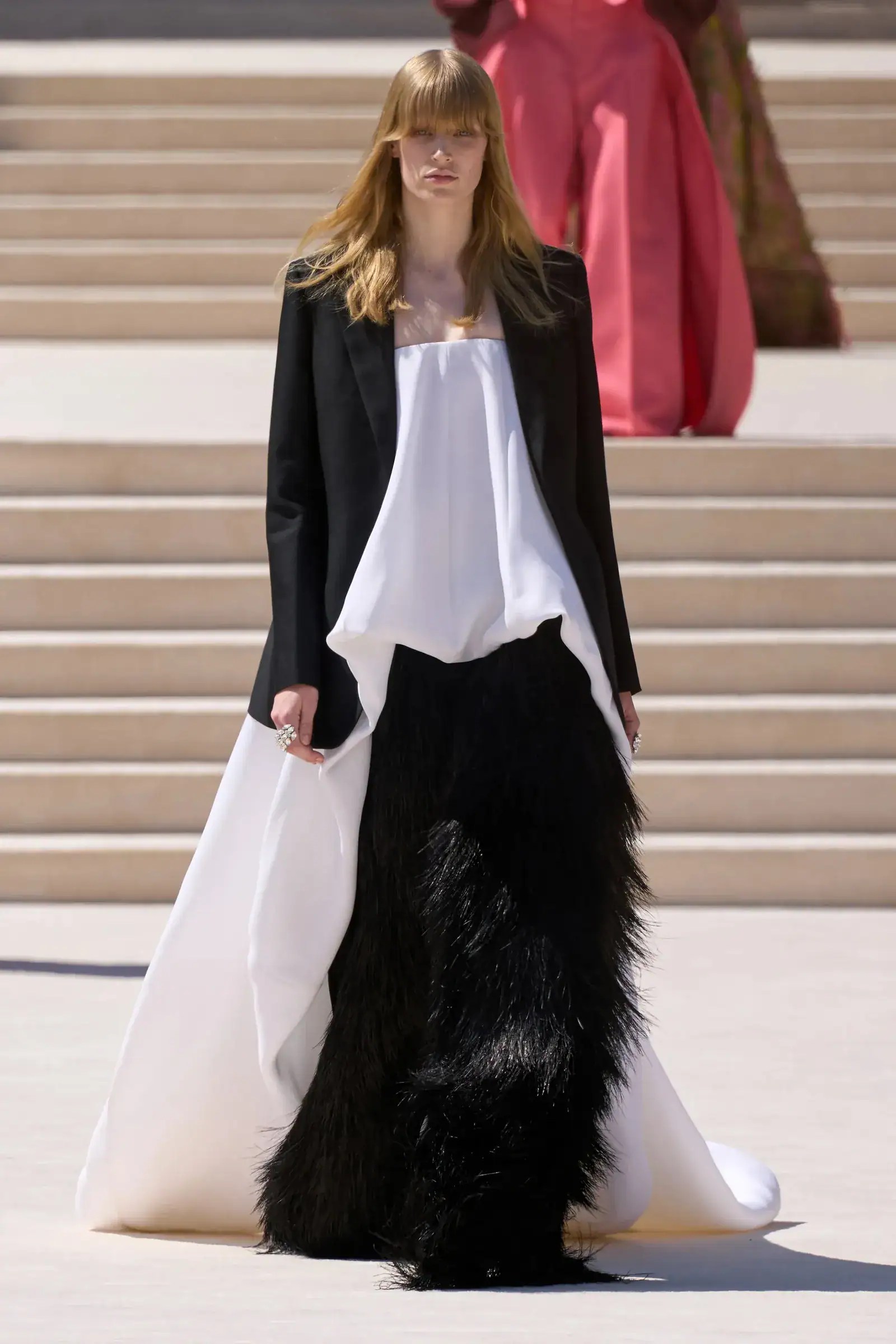
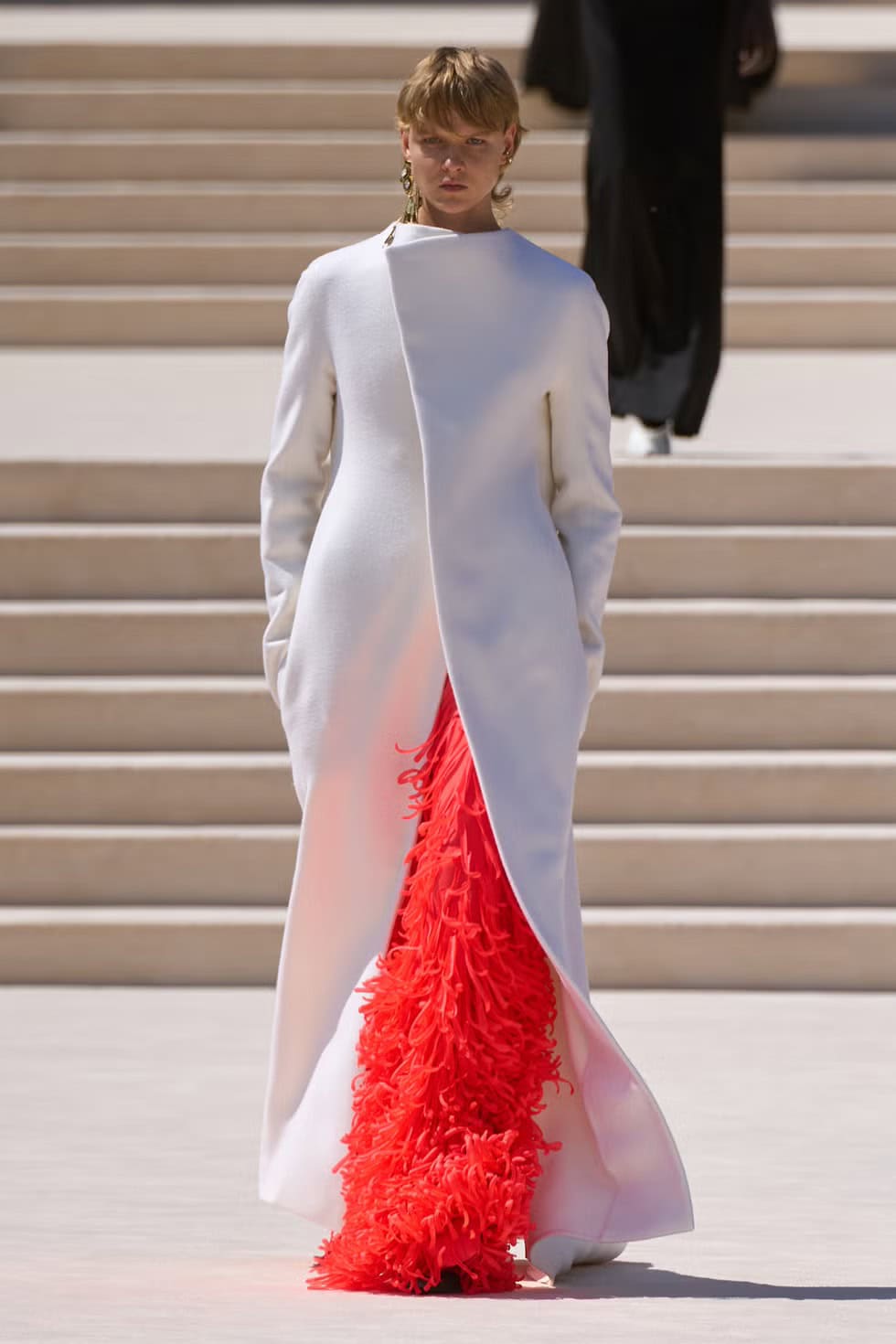
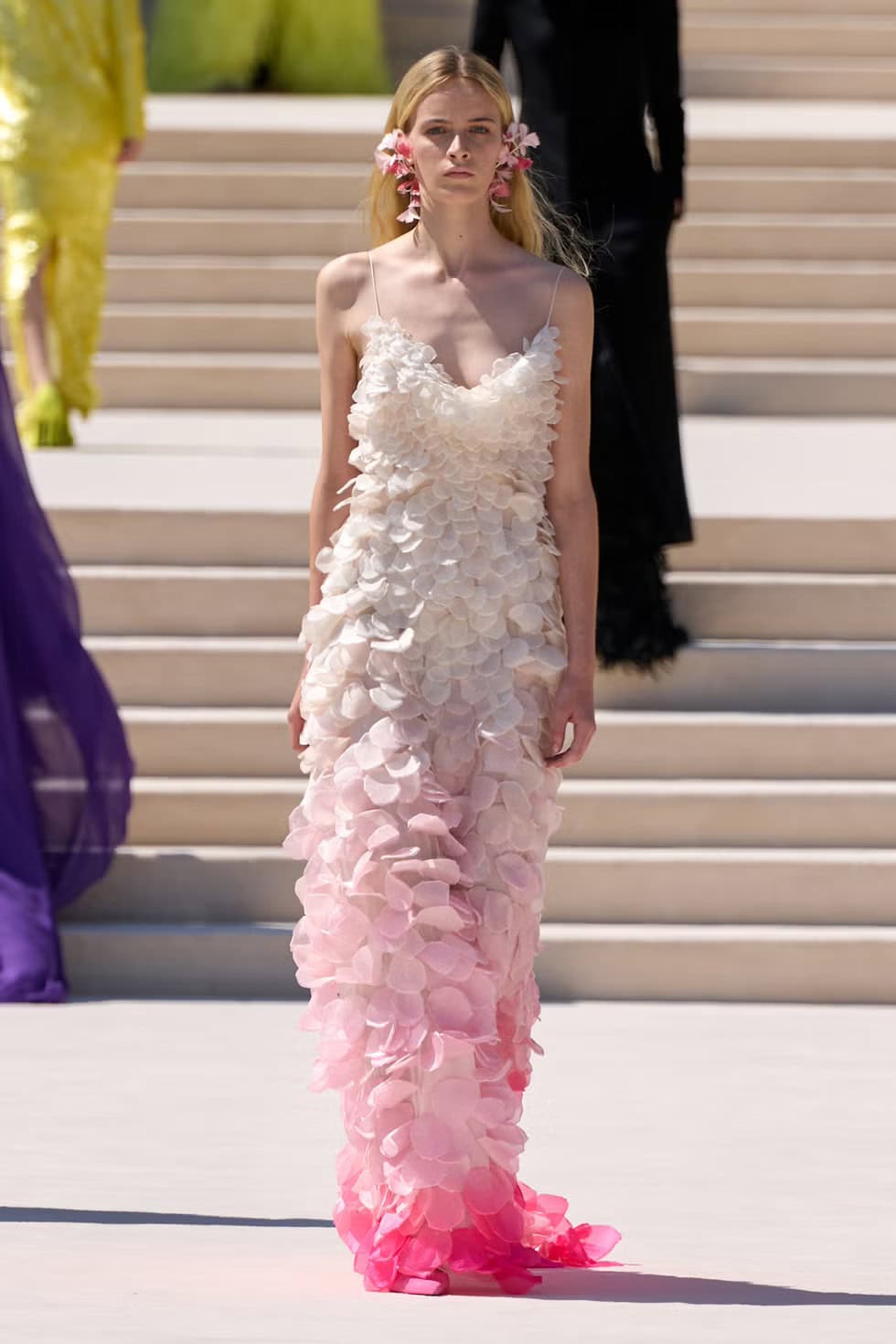
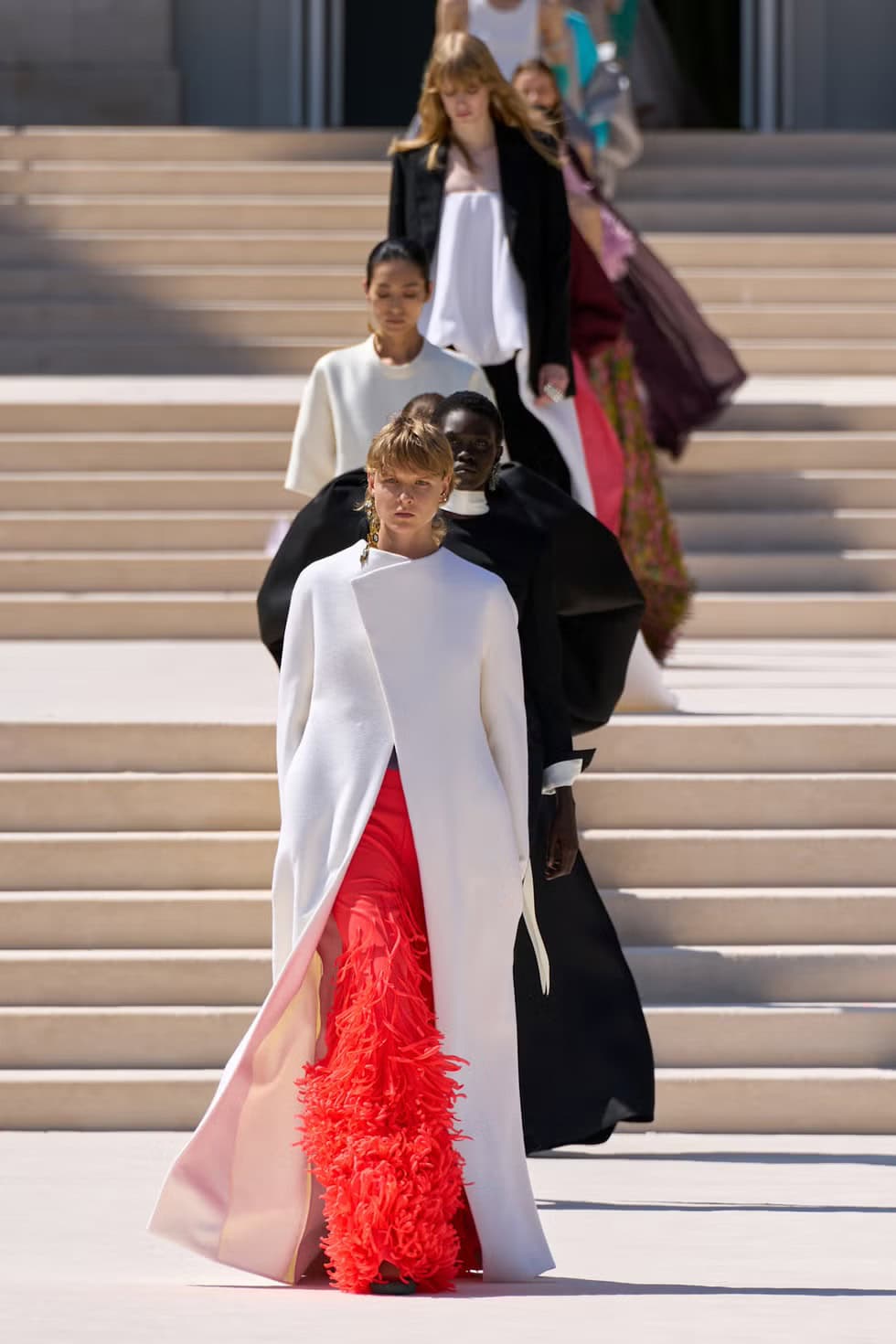
The looks tell this tension well. Severe black with draped white and a fringed lower part opens with a romantic rigor. The great black construction of feathers becomes almost an apparition. The floral dress, full of petals, is the most evident Piccioli, a couture garden that inevitably recalls Valentino. But the white, architectural coat, open on vivid red, immediately brings the discourse back inside Balenciaga: form, volume, structure.
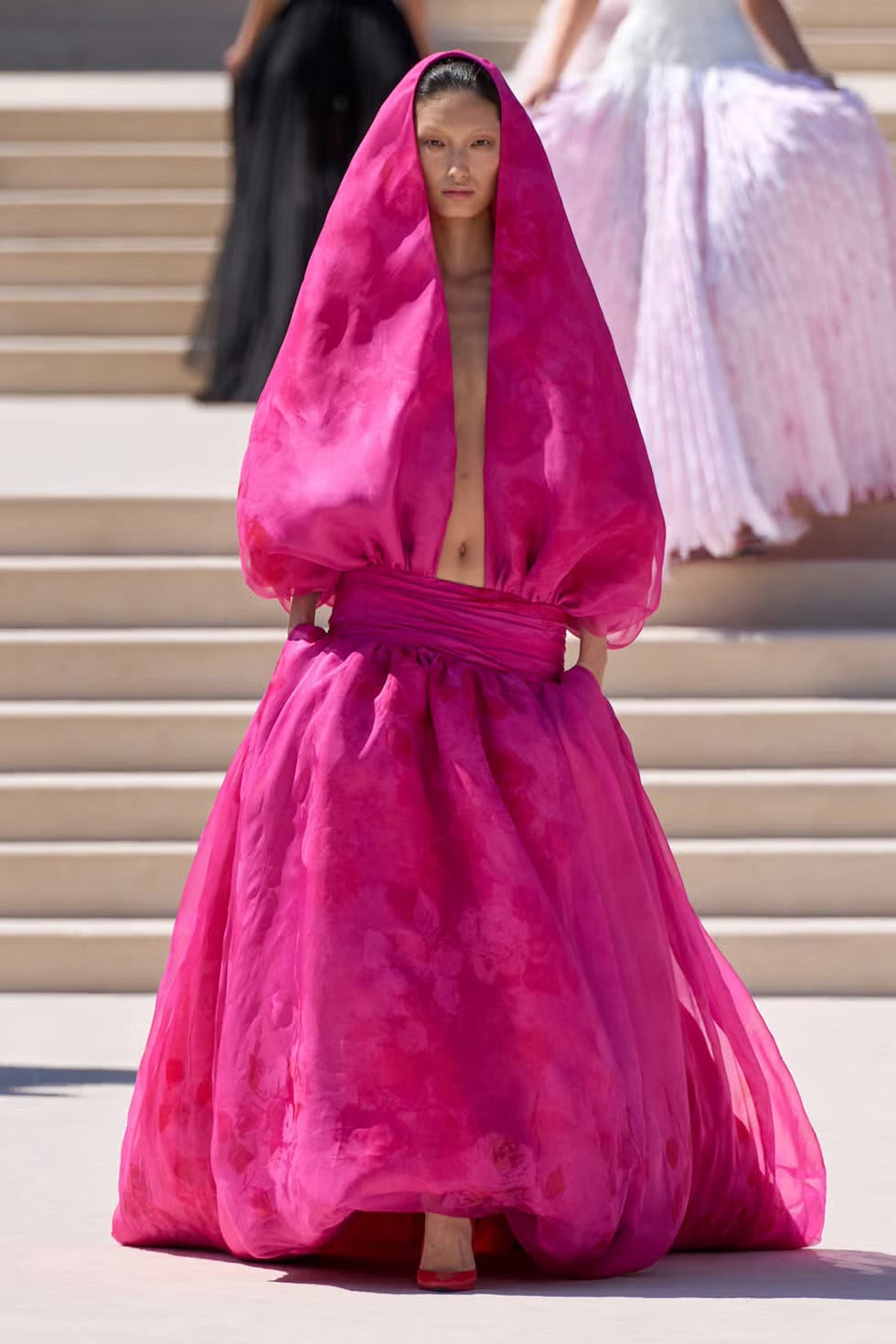
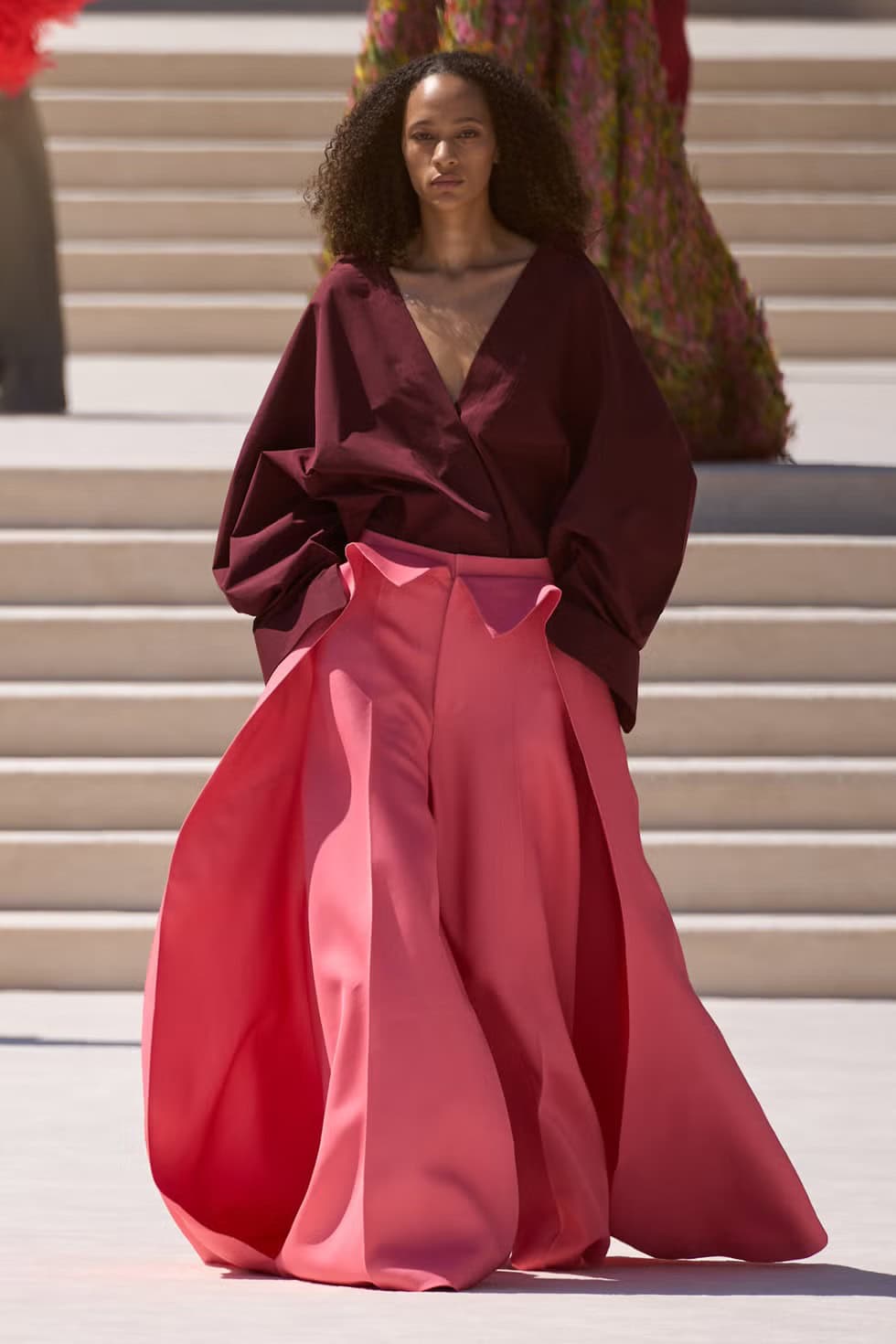
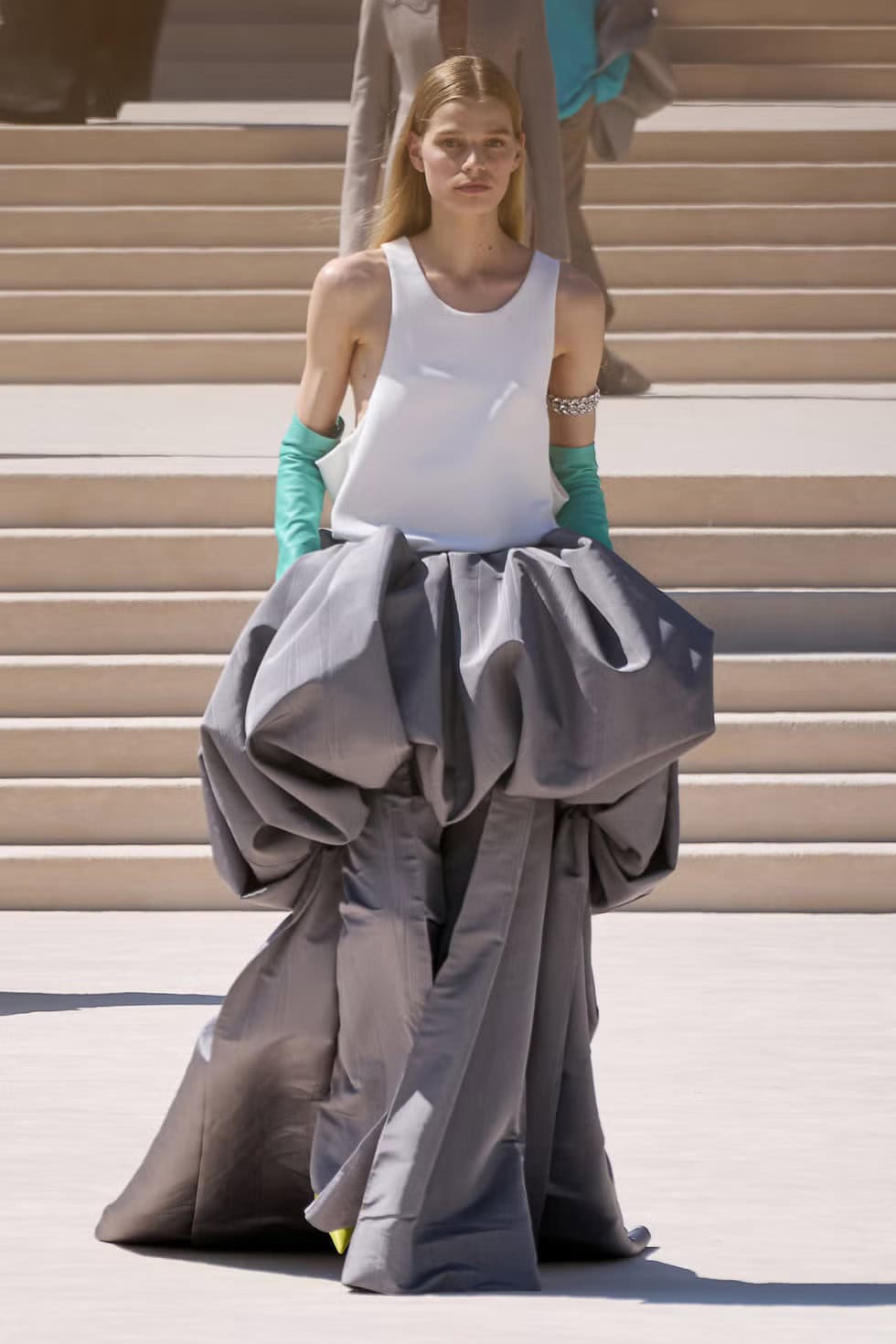
The burgundy with coral pink has an important softness, but not a fragile one. The fuchsia with a hood seems almost a rite, between absolute color and restrained sensuality. The white tank top with turquoise gloves and gray construction underneath is one of the most contemporary passages: almost nothing on top, all the complexity of couture underneath.
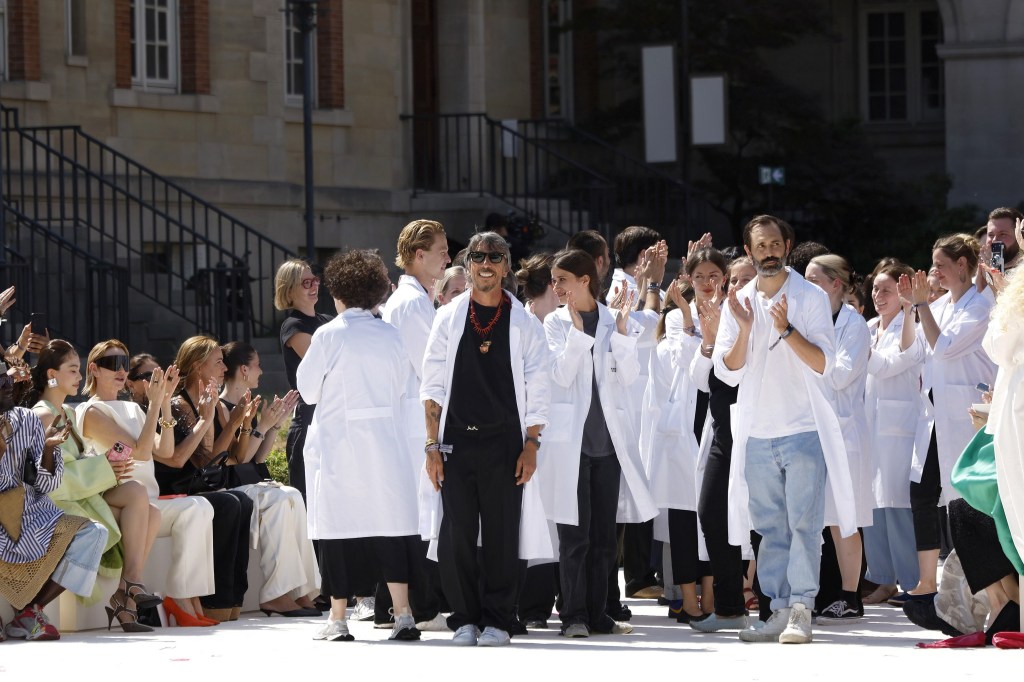
Then there is the atelier. The craftspeople in white coats are not a sentimental detail, but a statement: couture is not just the designer’s name, not just the model, not just the final image. It is collective work, human hand, discipline.
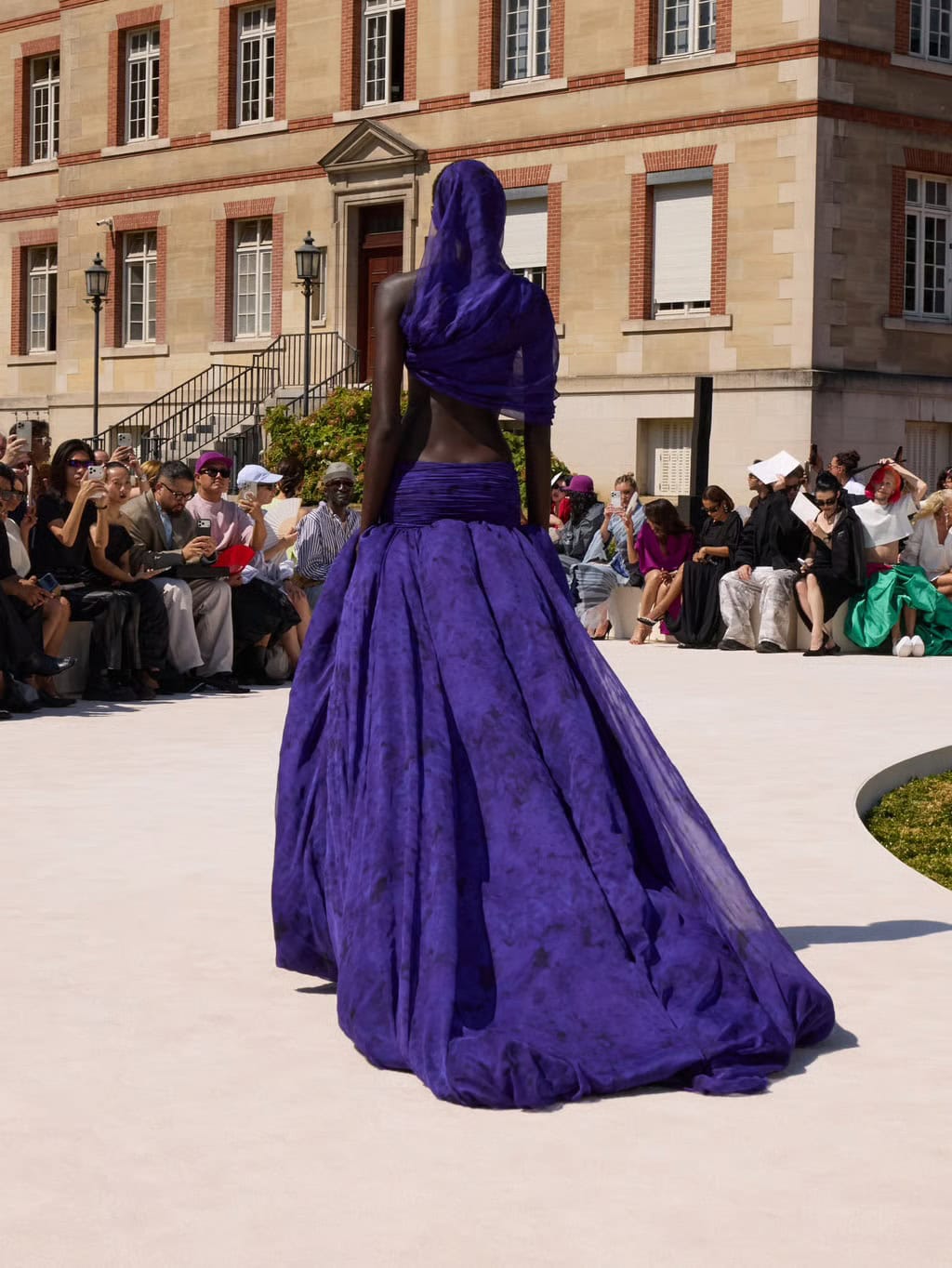
The purple dress seen from behind has a regal strength. The line of models on the stairs looks more like a procession than a show. The white and pink petal dress closes the circle: Piccioli doesn’t disown his poetry, he brings it into a new house and tries to make it dialogue with a more severe, more architectural, more Balenciaga archive.
Only one question remains: why make all this walk under a fierce sun, turning a haute couture runway into a sort of open-air Parisian oven? Even luxury, every now and then, would be entitled to a bit of shade. Indeed, luxury above all.
But as they tell us: artistic license.
GALLERY
Click on the images

Alessandro Sicuro
Brand Strategist | Photographer | Art Director | Project Manager Alessandro Sicuro Comunication


