
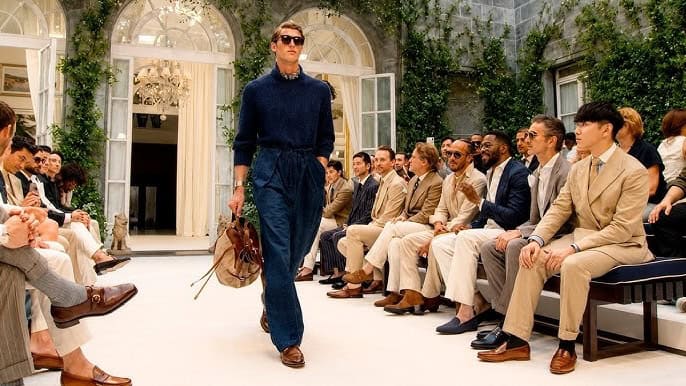
You can fill a wardrobe with different styles, loud brands, garments bought on the wave of the latest moment, only to find yourself shortly after with objects already worn out in perception, emptied of value and meaning. With Ralph Lauren the opposite happens: his pieces stay beautiful, recognizable, desirable. They don’t belong only to a season, but to an imaginary that keeps generating value over time.
The Ralph Lauren show in Milan opened this short menswear season with a lesson that today seems almost countercurrent: not everything has to change to be contemporary.
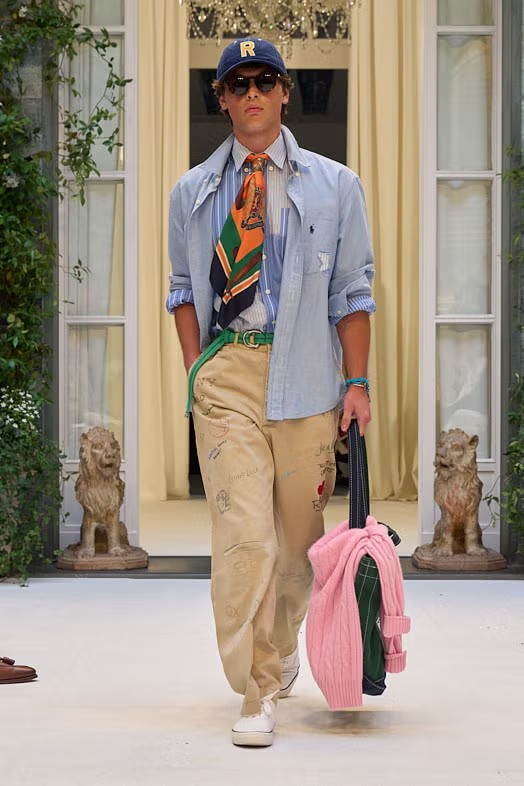
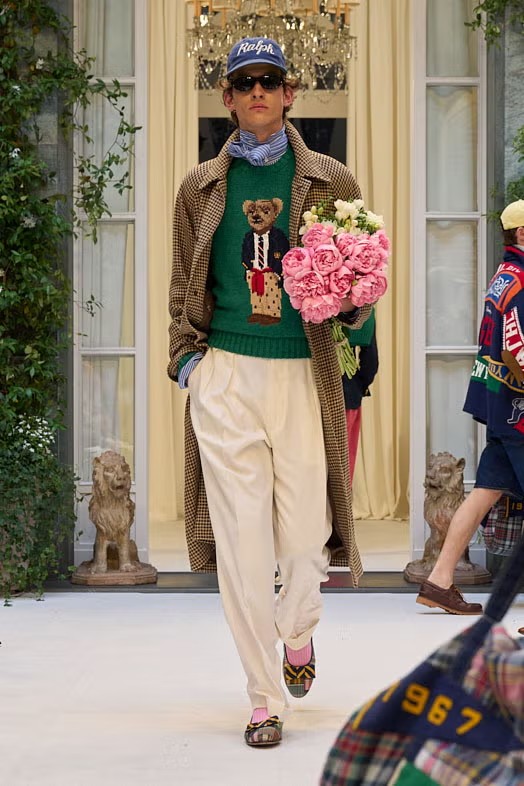
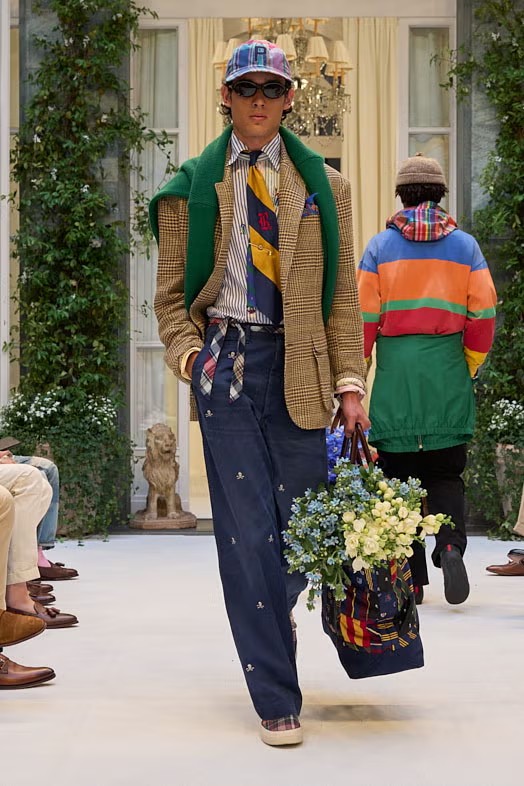
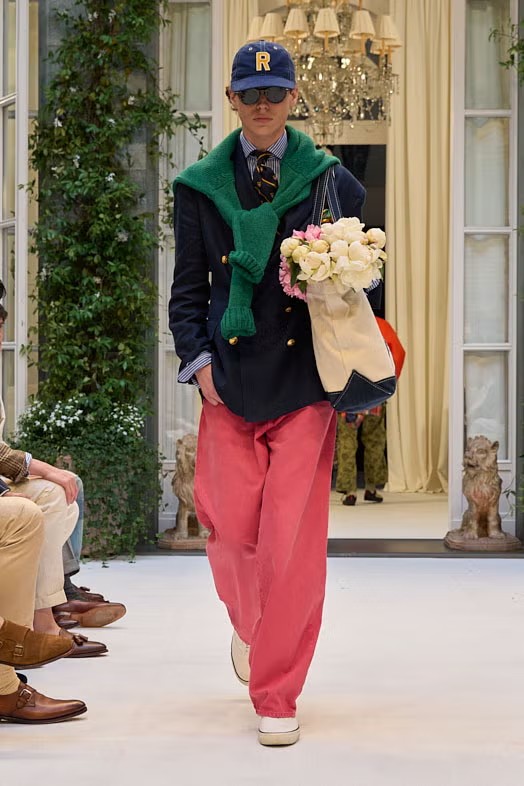
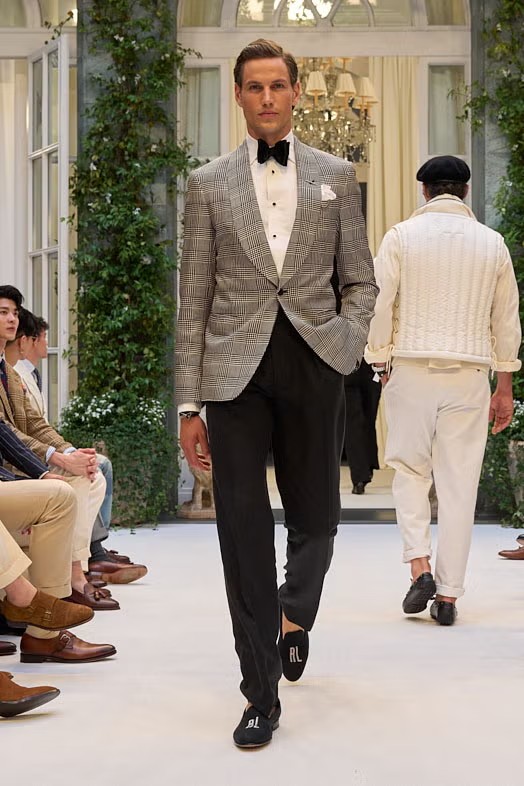
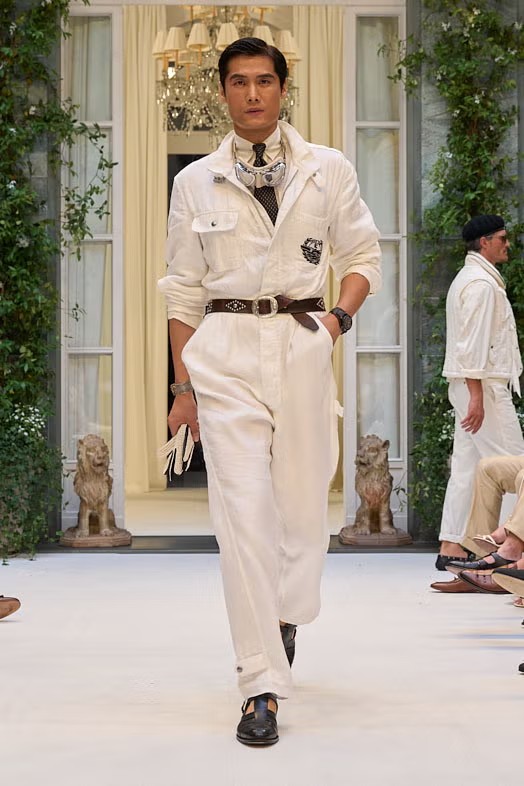
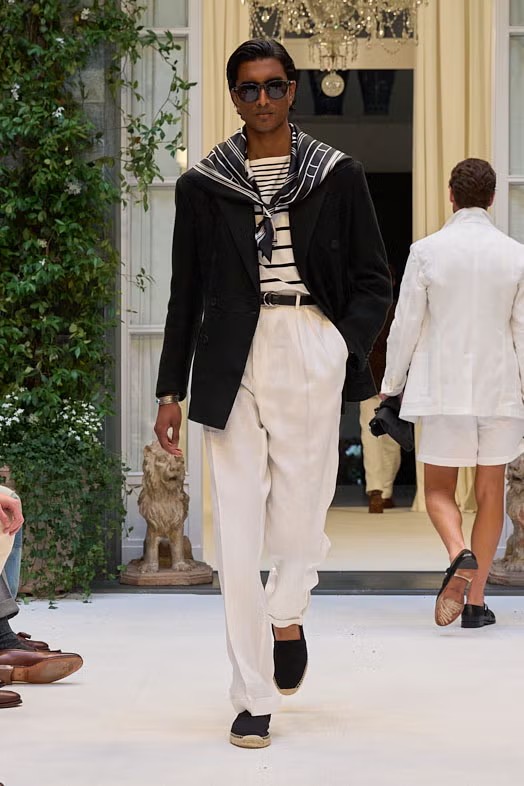
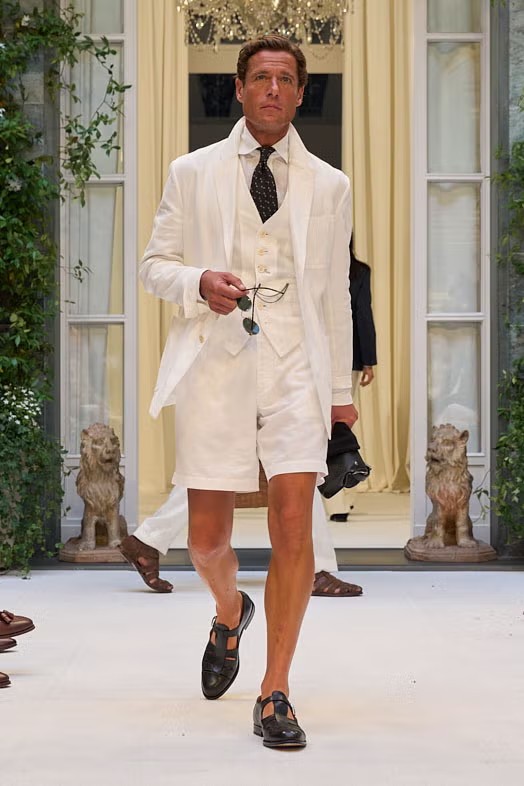
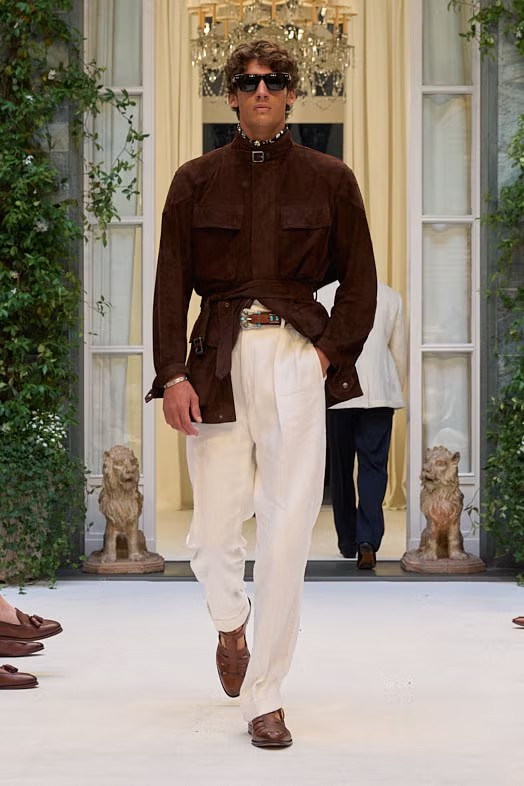
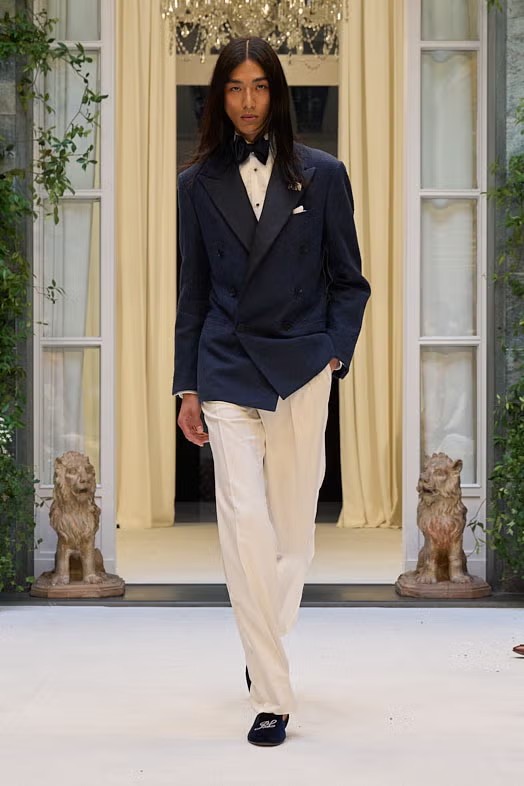
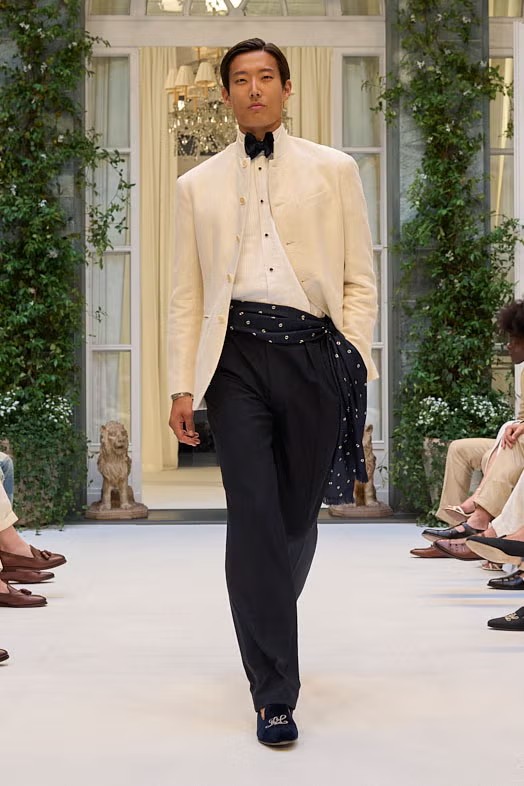
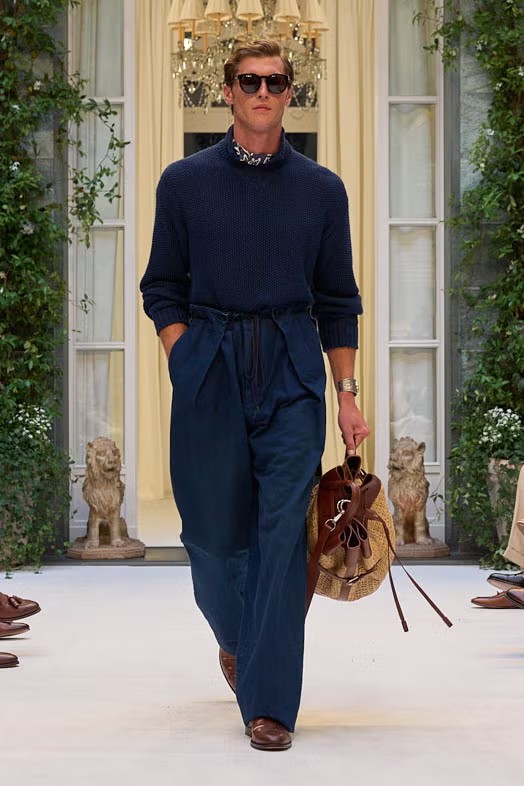
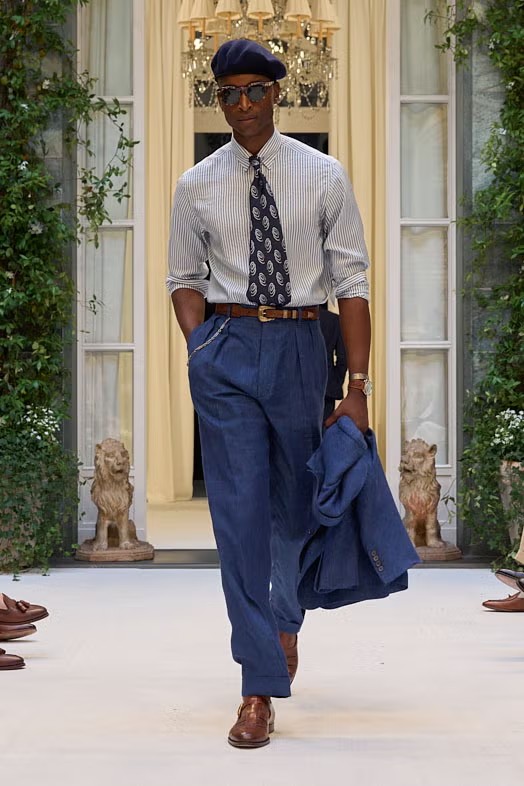
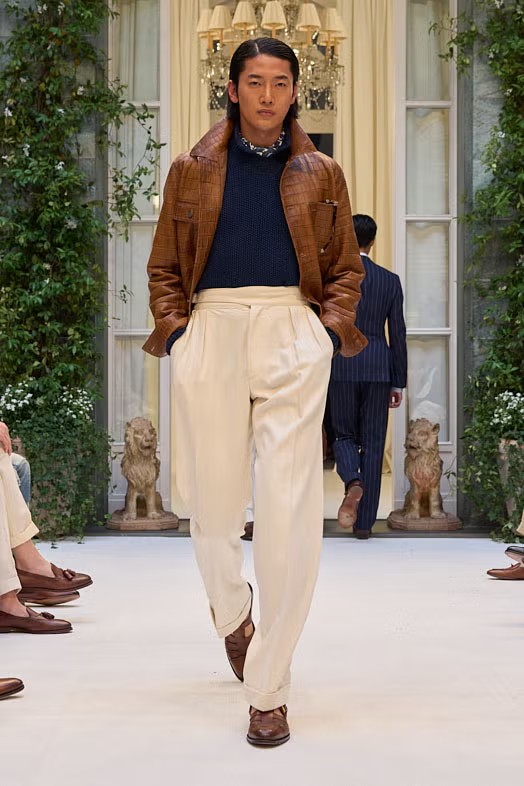
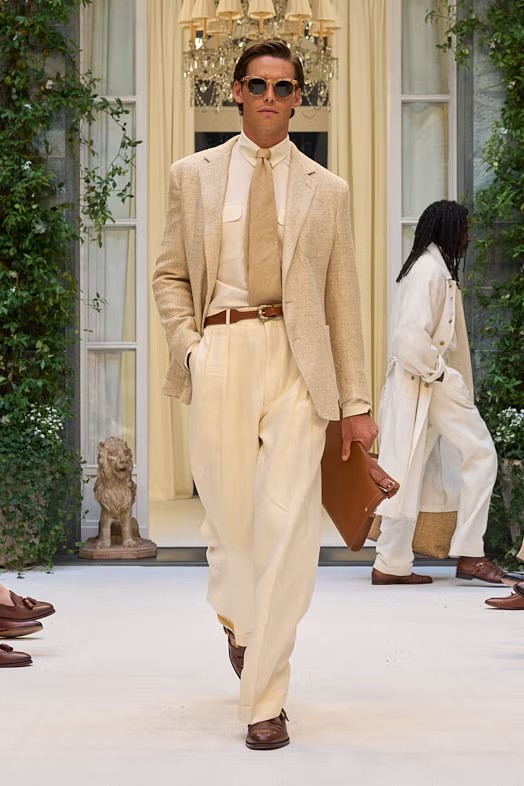
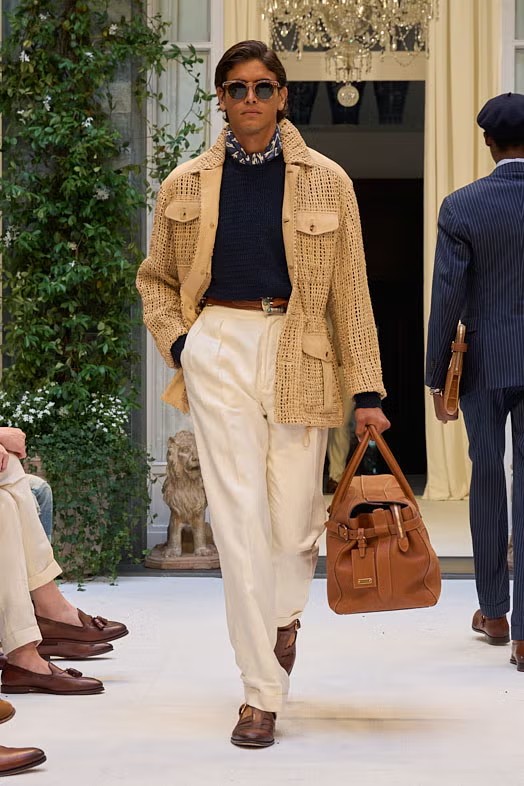
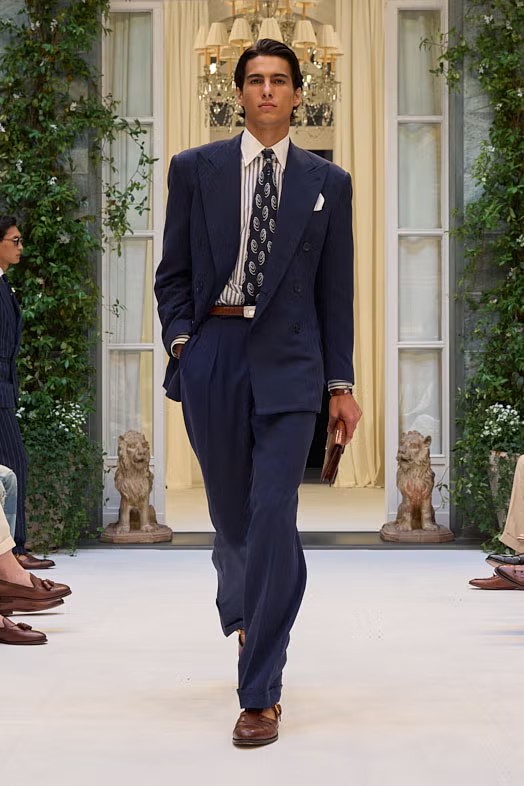
Ralph Lauren remains one of the few great names capable of building not only clothes, but a complete vision. A recognizable universe, crossed by codes that return season after season without losing strength: the blazer, linen, denim, suede, the double-breasted jacket, the tie, the white shirt, the cardigan, the college, the country, the club, the country house, the horse, the boat, the American dream.
It isn’t nostalgia. It’s grammar.
In a time when many brands seem to chase the noise of the moment, Ralph Lauren keeps working on something far rarer: continuity. It doesn’t simply present a collection, but restages a language. It does so with that naturalness that belongs only to those who have built a solid identity over the years, where every element has a precise place: colors, fabrics, proportions, settings, photography, storytelling, tone, graphic signs, even the way a man or a woman can inhabit that imaginary.
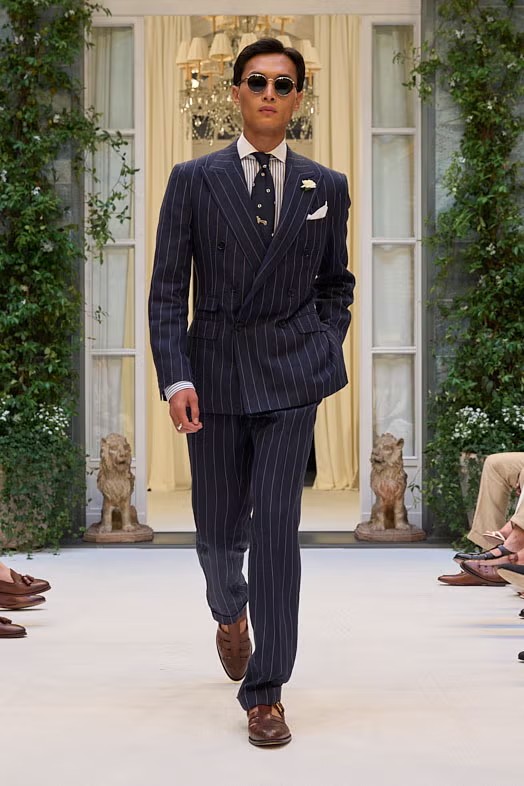
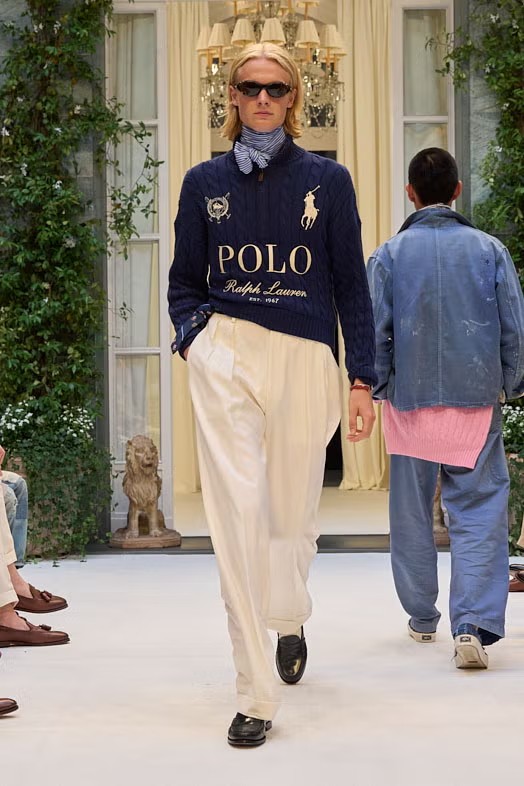
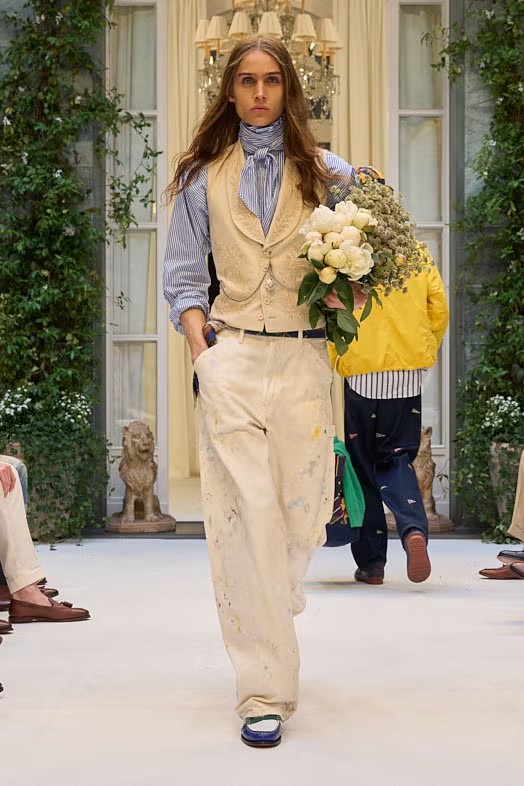
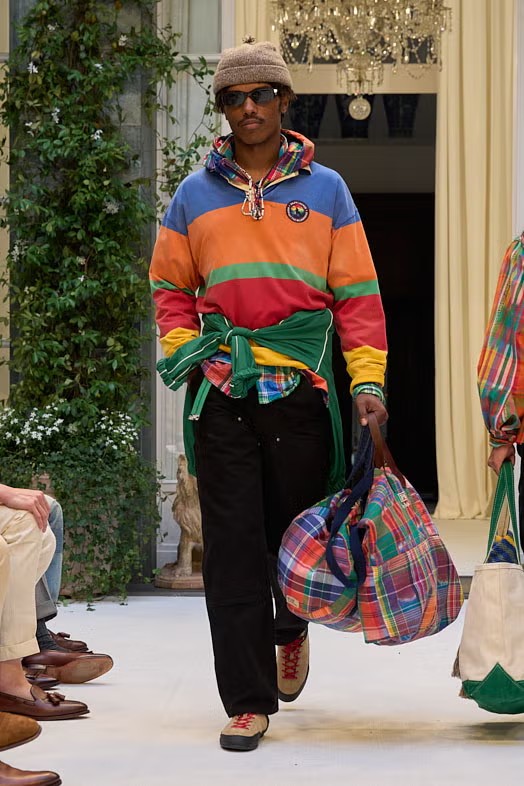
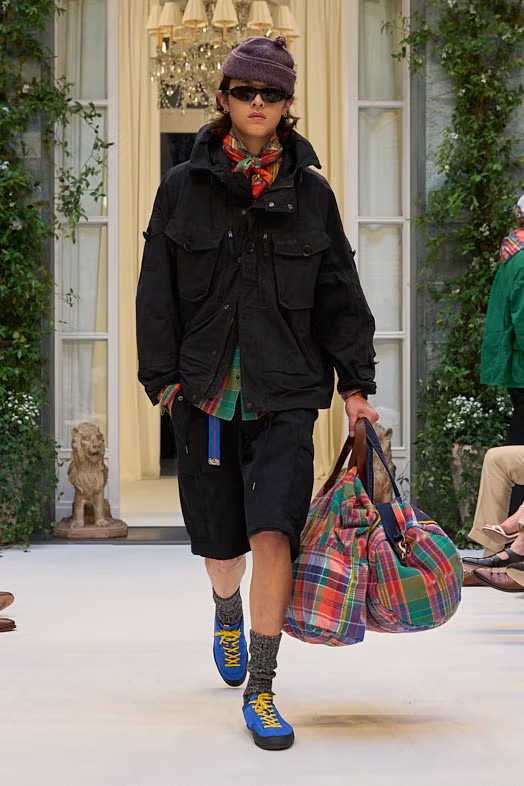
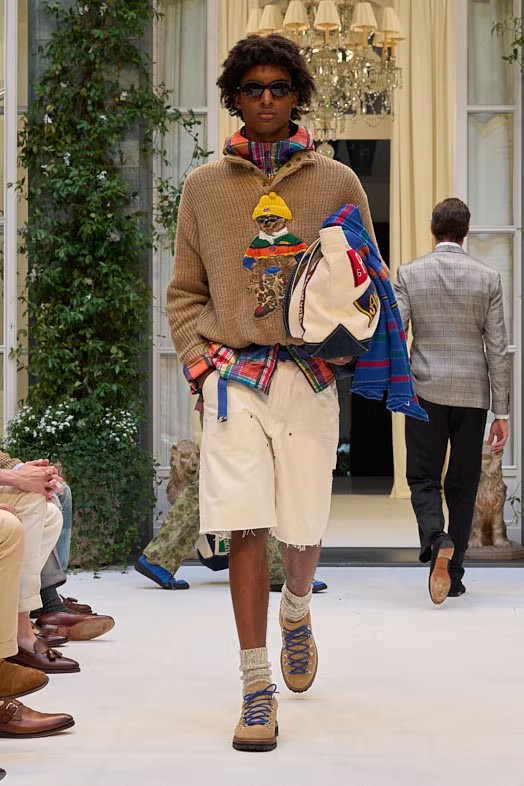
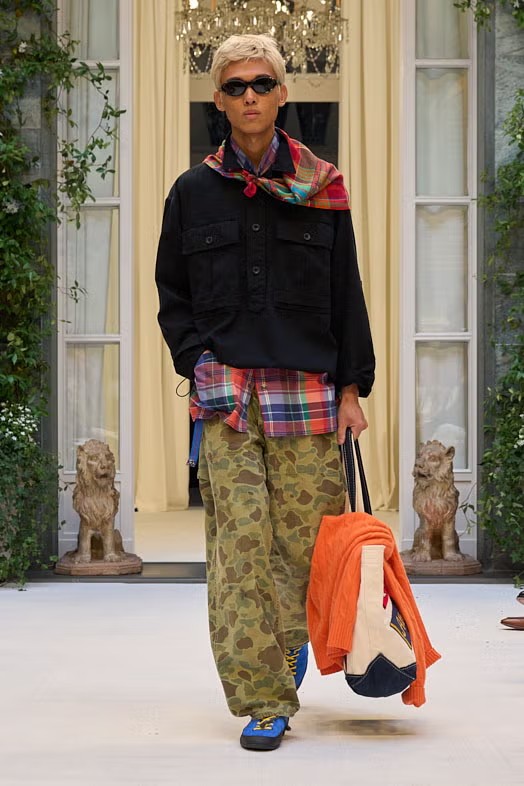
Purple Label represents the more adult, more tailored, more composed side. Polo brings into the same vision a younger, sportier, more immediate energy. But the interesting point is that they don’t seem like two separate worlds. They are two registers of the same identity. On one side classic luxury, on the other everyday elevated to style. On one side the suit, on the other denim. On one side the tie, on the other the teddy-bear cardigan, transformed from an almost childlike image into an adult, ironic, affectionate and perfectly recognizable icon.
This is Ralph Lauren’s strength: taking apparently distant codes and making them coexist without forcing. The formal and the casual. Elegance and country. College and club. Denim and double-breasted. Tailoring tradition and that American softness that doesn’t need to become rigid to be authoritative.
Ralph Lauren doesn’t only design clothes. Over the years he has built a screenplay. A way of being in the world. A mental landscape made of taste, proportion, memory, aspiration. A universe perhaps more evoked than real, but for this very reason extremely powerful: because fashion, when it is great, doesn’t just photograph reality. It interprets it, corrects it, dreams it, makes it desirable.
Today this ability is increasingly rare. Many brands have lost their center. They speak to different audiences, change tone too quickly, chase aesthetics that last a season. Ralph Lauren, instead, keeps being Ralph Lauren. And in a market saturated with short-lived trends, images consumed in a few seconds and shouted belongings, this fidelity to himself becomes almost a cultural gesture.
He belongs to that generation of creatives who didn’t limit themselves to signing a collection. They decided a vision. They established a code. They governed product, image, atmosphere, storytelling, graphics, set design, proportions and language. They were complete authors, able to turn a brand into a cultural system. Today, in a sector often dominated by speed, marketing offices, algorithms and the anxiety of intercepting the next audience, this figure seems almost to belong to another era.
And yet it is precisely this belonging to another era that makes him still so relevant.
His fashion doesn’t seek only to appear, still less to demolish in order to appear. It seeks to remain in the memory of those who look at it. Ralph Lauren creates clothes that make the wearer feel inside a story, inside a role, inside a more complete image of themselves.
After all, when we choose one garment over another, we don’t choose only a fabric, a construction, a color or a brand. We choose a code. We choose how we want to be perceived, the audience we wish to speak to, the image of ourselves we want to let through.
Here Ralph Lauren has built one of his strongest intuitions: turning dressing into imaginary belonging. He doesn’t sell only jackets, shirts, denim or cardigans. He offers the possibility of entering an orderly, recognizable, desirable world. A world where taste, measure and common sense still seem to have value.
His success shows that the public doesn’t seek only novelty. It seeks recognizability. It seeks trust. It seeks a story to enter and find itself in. If a brand so faithful to its own identity keeps working, it means consistency is not a limit. It is an asset.
Fashion, when it truly works, doesn’t serve only to dress us. It serves to build our presence. It communicates who we are, or perhaps who we wish to become, through proportions, fabrics, signs and details that others read, even unconsciously, before words.
Then of course, price can buy a garment. It can buy a better fabric, a signature, a more refined construction. But good taste and common sense are another matter. Those cannot be bought: they are recognized.
That is why Ralph Lauren keeps occupying a special place in contemporary fashion. Because he doesn’t belong only to the past, isn’t consumed in the present and doesn’t need to chase the future. He crosses it with the strength of someone who has built a style, defended it, made it recognizable and keeps multiplying its value over time.
GALLERY
Click on the images

Alessandro Sicuro
Brand Strategist | Photographer | Art Director | Project Manager Alessandro Sicuro Comunication


