
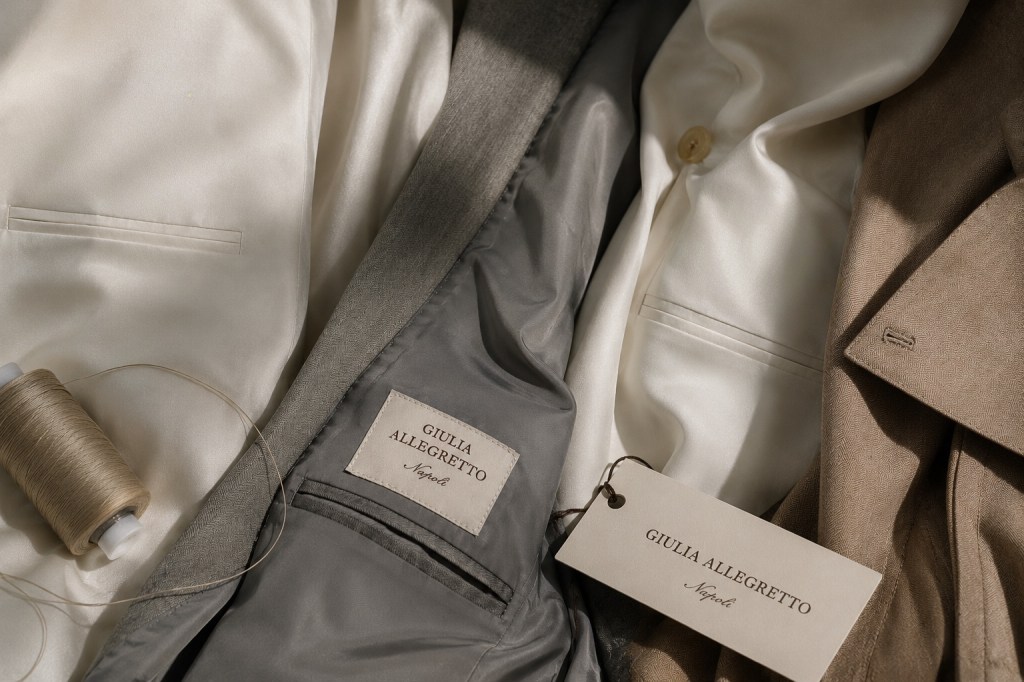
I have been watching fashion from a slightly different angle lately. Not only the shows, the images, the campaigns, but the way people react to them. Something has changed in the relationship between the public, fashion and luxury. I am trying to understand where this change comes from, and above all
Where it may take us. Will fashion continue to live through faster and faster images, or will it need something deeper again: identity, recognition, craft, vision?
I do not think this is simply a disconnection between brands and consumers. It is not just a matter of sales either. What I see is a certain tiredness around fashion. Not everywhere, of course, but in part of the system. Some images feel already seen. Some collections seem to speak a language we know too well. The surprise, the desire, the sense of something truly recognizable, sometimes appear weaker than they used to be.
This is why many people now look at major fashion brands with more distance. They no longer want only the image, or the logo, or the atmosphere around a brand. They want to understand whether there is still a real identity behind a garment, a collection, a creative direction. Luxury is changing because the public is changing. People are no longer satisfied with belonging to a brand. They want something that feels closer to their own idea of themselves.
This was the starting point of my conversation with Giulia Allegretto.
Giulia’s first thought is very direct: today she sees less personality. Not because young people are not interested in fashion, but because many of them are caught inside the speed of social media. A detail appears, someone influential wears it, an image circulates, and suddenly it becomes a reference for everyone. Taste no longer comes only from fashion houses. It also comes from feeds, creators, trends, repeated images, small signals that move quickly and shape the way people dress.
She remembers a time when people seemed more different from one another. Some were elegant, some sporty, some informal, some eccentric. Today, many identities seem to pass through the same filters. They are easy to recognize, but not always truly personal.
For Giulia, this is the point: personal identity matters more than brand identity. A brand can have history, strength and visibility, but if the person wearing it has no real personality, everything remains on the surface. Clothes need someone capable of giving them life.
GALLERY
Click on the images to enlarge them.


WORK IN PROGRESS
Giulia also sent me some images of the work she is preparing for Pitti Immagine Uomo 110. They are not campaign images. They are not finished looks. They are pieces of a process: fabric, stitching, tailoring details, construction.
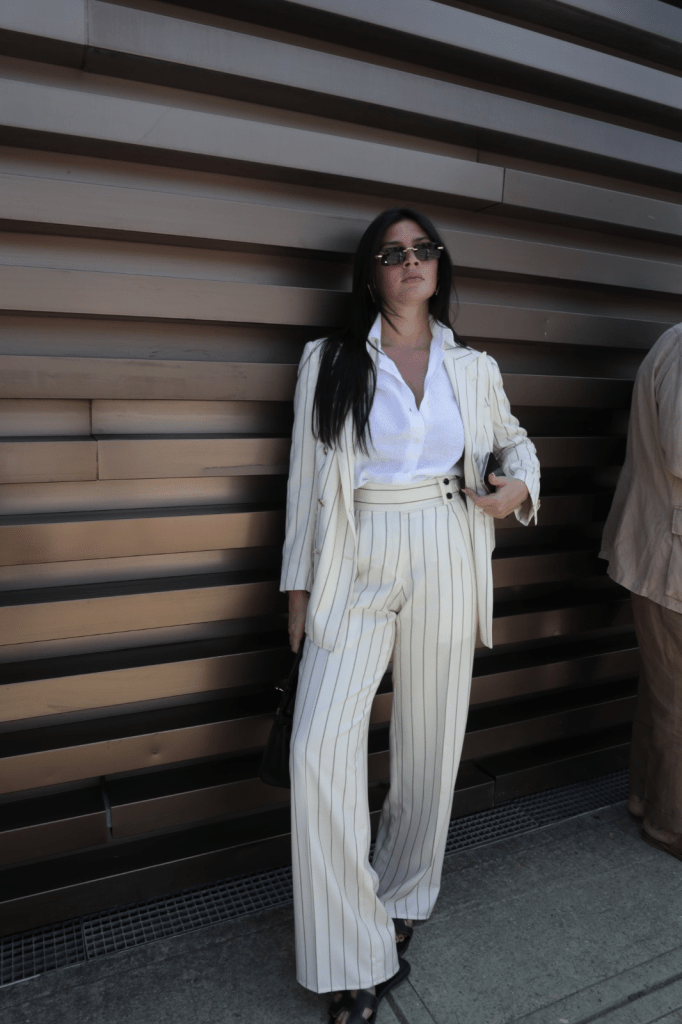
These images say something that a finished photograph often hides. Before the look, before the styling, before communication, there is the hand. There is the material. There is time. Looking at these jackets while they are still being made, her idea of fashion becomes clearer. It is not only about drawing clothes. It is about giving shape to an intention through fabric, proportion and precision.
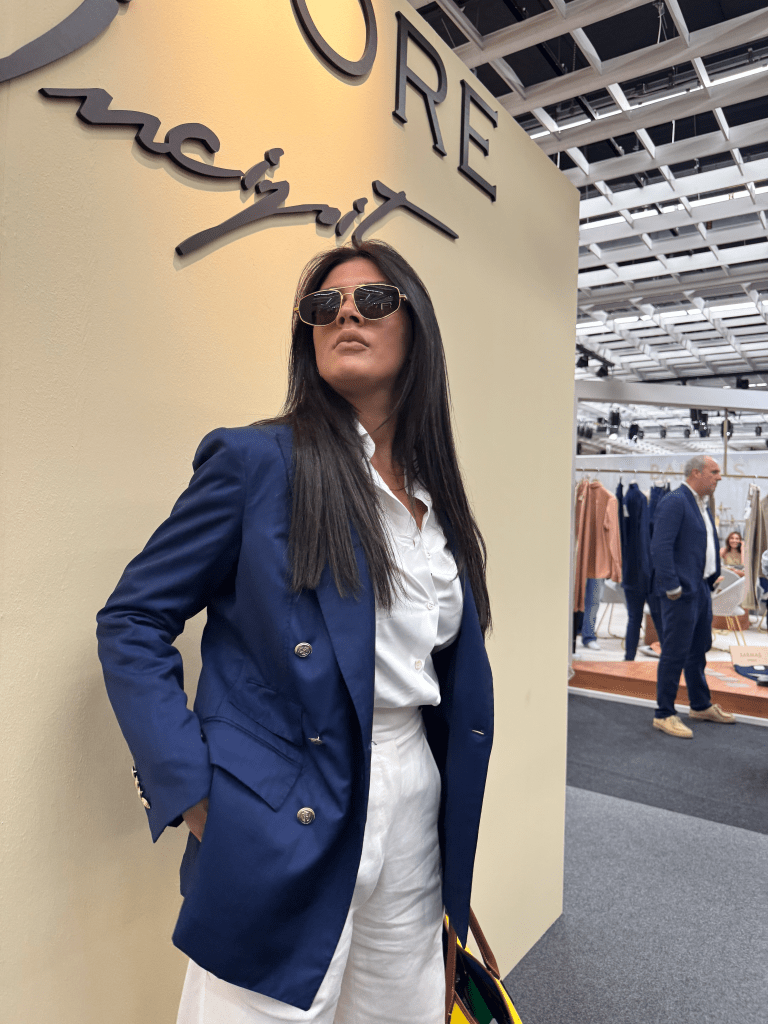
Giulia has grown in a real working environment, close to experience, manual skill and personal vision. Beside her father, Tito Allegretto, she has developed her eye, her sensitivity, and that ability to turn a simple detail into something recognizable.
When she talks about her father, her voice changes. She does not describe him only as a master, but almost as a way of seeing things. Watching him work, she says, means understanding that everything starts from the fabric, from the cut, from the fit, from the ability to make something apparently simple become special.
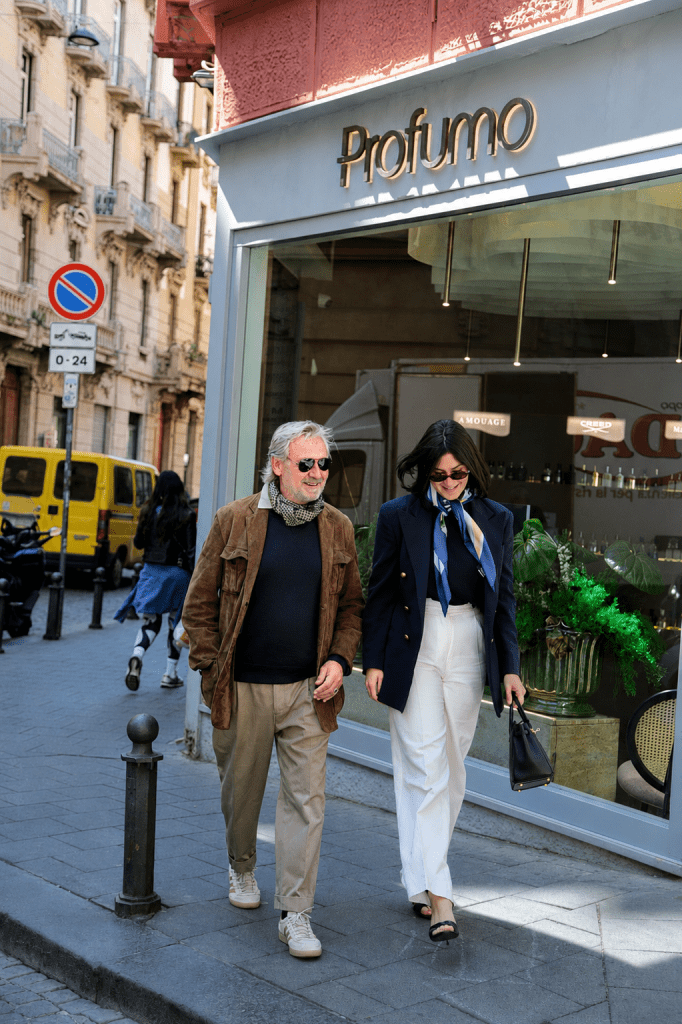
Her path seems clear: doing things in her own way, following instinct, heart and personal taste, without adapting too much to what everyone else is doing. Only like this, she says, can something personal be built.
The word that remains is countercurrent.
For Giulia, elegance has nothing to do with showing off. Elegance means staying close to who you are. It means communicating something without disappearing into the crowd. Sometimes very little is enough: a detail, a gesture, a small difference. It does not need to shout. It needs to be recognizable.
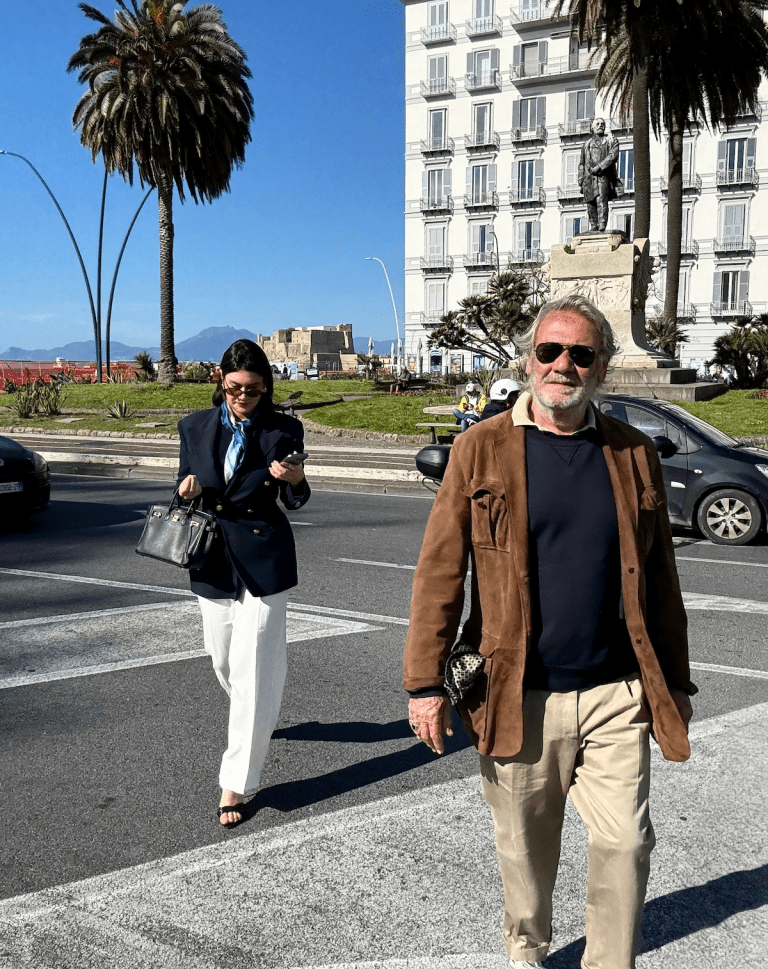
Her idea of fashion goes against the speed of the moment. She is not looking for noise, spectacle or immediate effect. She is interested in clothes that people can feel, recognize and wear with care.
Style, for her, is not simply being fashionable. It is personality, identity and passion. It is the choice not to do exactly what everyone else is doing.
Not perfect. Not loud. But recognizable.
When she imagines fashion that can last over time, she thinks of something essential, well made, coherent, not trapped inside the trend of the moment. A way of working where quality matters more than quantity.
And when she has to sum up her vision in three words, she chooses: essential, coherent, authentic.
Three simple words that, today, sound almost like a position.
Brand Strategist | Photographer | Art Director | Project Manager
Alessandro Sicuro Comunication


 Sure-com America