
Before we can love ourselves, we must know who we are.
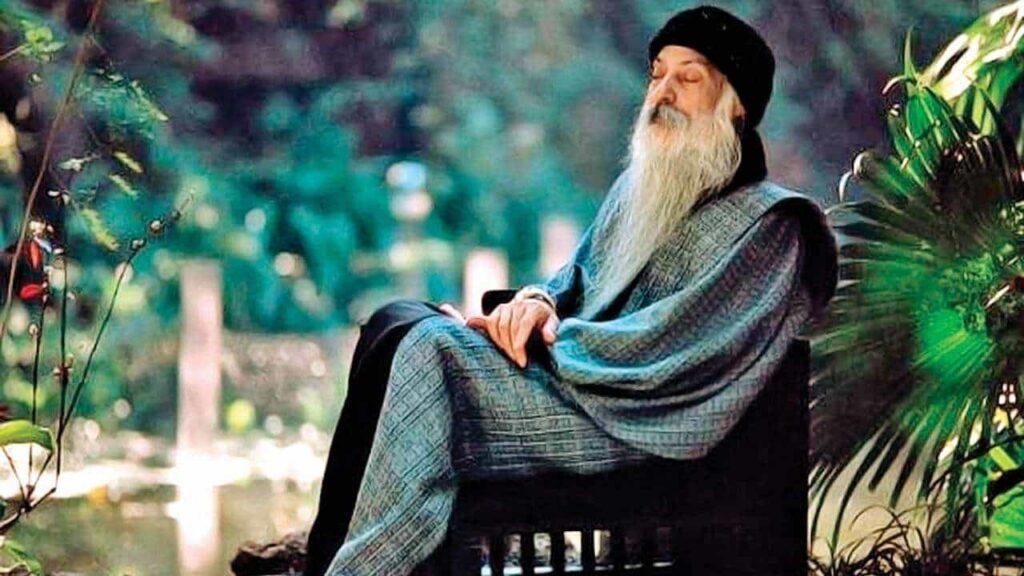
On January 9, 2011, I published this dialogue between Osho and Swami Prem Kabir, one of his disciples, on my blog. We are in Poona, India, in 1987. The conversation appears in the book The Invitation.
What has always fascinated me about Osho is his ability to explain, with an almost disarming simplicity, questions we might spend years pondering. Here, in speaking about love, he asks us a question: are we sure the person we believe ourselves to be corresponds to our true nature?
Prem Kabir — Beloved Osho, what does it mean to love myself?
Osho — Prem Kabir, before loving yourself you should know who you are. Otherwise, whom do you think you are loving? You will probably end up loving your ego, the personality you have constructed over the years and now mistake for yourself. How often have you taken pleasure in a compliment you knew you did not deserve? People tell you that you are beautiful, sincere, affectionate, honest, and it rarely occurs to you to contradict them. It is your ego that takes pleasure in it.
I would like you to learn to love yourself, because if you cannot love yourself, how will you be able to love someone else? But first you have to know yourself. That is why meditation comes before love. When you begin to free yourself from the ego, from your false personality, and discover who you really are, love arises spontaneously.
It is a flowering that requires a particular climate, one I call meditation. In the silence of the mind, when nothing within you is disturbed anymore, you will discover that thousands of flowers have blossomed within you, and their fragrance is love. You will be the first to experience it, to know that light and bliss. Then loving will become part of your nature. In our unawareness, we know love primarily as a relationship; when we become conscious of who we are, we discover that it can exist independently of a relationship.
It is no longer “I love you,” but “I am love.”
When you say “I love you,” what about everyone else, about the whole of existence? The more you narrow the boundaries of love, the more you imprison it. However beautiful a golden cage may be, the bird locked inside it will no longer be the same bird you watched flying across the sky with its wings spread. Love should become a quality of your being. Just as the sun radiates its light without directing it toward anyone in particular, meditation radiates love. You will love human beings, trees, birds. You will simply love, because you will be love.
I would like to extend this reasoning to the choice of a profession. Some people spend thirty years doing work that brings them money, prestige and recognition, without ever understanding whether it was truly what they wanted to do. Perhaps they have gratified their ego, but at what cost? Something similar can happen in relationships: we also fall in love with the way another person makes us feel important.
Osho — How can you accept yourself if you have been taught that you are a sinner? Some religions attribute human suffering to wrongs committed in previous lives; others regard even certain pleasures of life as sinful. If you grow up with these convictions, how will you be able to love yourself?
Priests have taught you to renounce earthly pleasures in exchange for a place in heaven. But nobody has ever returned from heaven to tell us what they found there. Life, however, is here. We received it as a gift, without doing anything to deserve it.
During a sermon, an old priest compared sins to large dogs that had to be killed before one could enter heaven. “Over the years,” he said, “I have killed the dog of pride, the dog of envy, the dog of greed, and yes, my children, even the dog of sex.” From the back of the church someone asked, “Father, are you sure that last one didn’t die of natural causes?”
Beyond Osho’s provocation lies a question that concerns religious education as much as political and social upbringing. If we are told for twenty years that a particular thing is wrong, we may eventually feel guilty merely for thinking about it. As adults we will be convinced that we are expressing our own judgment without asking where it comes from. It is a form of conditioning of consciousness that can stay with us throughout our lives.
Osho — You cannot change nature by force. The more you repress a desire, the more you remain conditioned by it. Live peacefully, devote some time to yourself, learn to be alone in silence, observing what happens in your mind. Gradually your thoughts will settle, until you feel as though the mind itself no longer exists.
In that silence you will discover a new dimension of life, beyond the mind, where greed, anger and violence do not exist, where love is free from biological impulses and compassion requires no reward because it is already a reward in itself. You will feel the desire to share what you have discovered, to shout from the rooftops: “You are not poor! Paradise is within you. You need not be beggars; you were born emperors.”
Your empire does not belong to the outside world; it is within you. It has always been there, waiting for you to come home. Love will arrive in such abundance that you will no longer be able to contain it. You need only discover your hidden splendor. Life can be a song of joy, a dance, a continuous celebration.
I consider a person genuinely religious when they love life and retain their sense of humor. This universe is our home; we are not orphans. The earth is our mother, the sky our father. There is no separation between ourselves and the whole; we are organically united with existence, like the instruments of an orchestra. Listening to its music is the only form of religiousness I recognize as authentic. It needs no sacred scriptures, statues or dogmas. From silence arise gratitude and prayer.
God does not exist as a person. The divine is everywhere, in trees, birds, animals and human beings, in the wise and in those who are not yet wise. Everything that lives contains something divine, ready to spread its wings toward freedom, the ultimate freedom of consciousness.
Yes, love yourself and you will come to love the whole of existence.

Contacts
Brand Strategist | Photographer | Art Director | Project Manager
Alessandro Sicuro Comunication


