
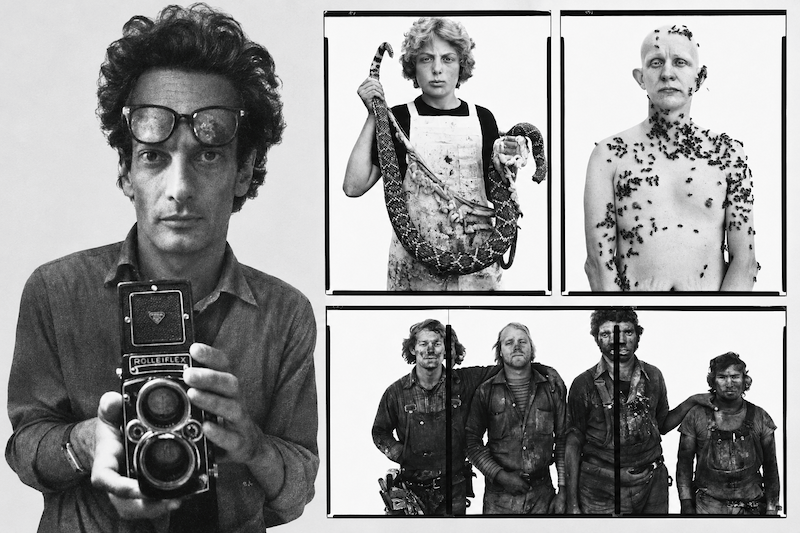
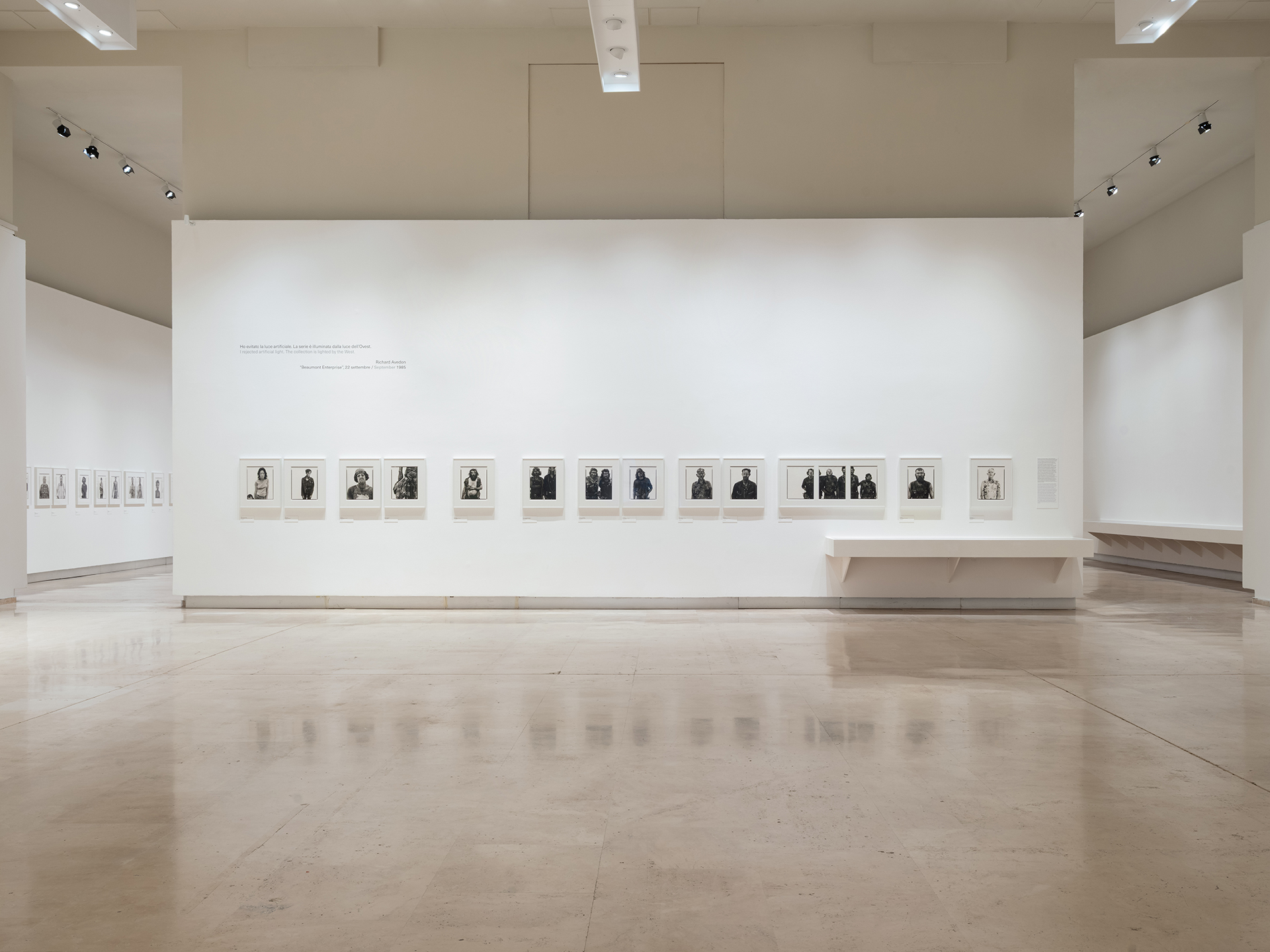
Palazzo Esposizioni Roma brings together the 110 prints made for In the American West. A studio photographer’s eye falls on the miners, ranch hands and workers of the American West.
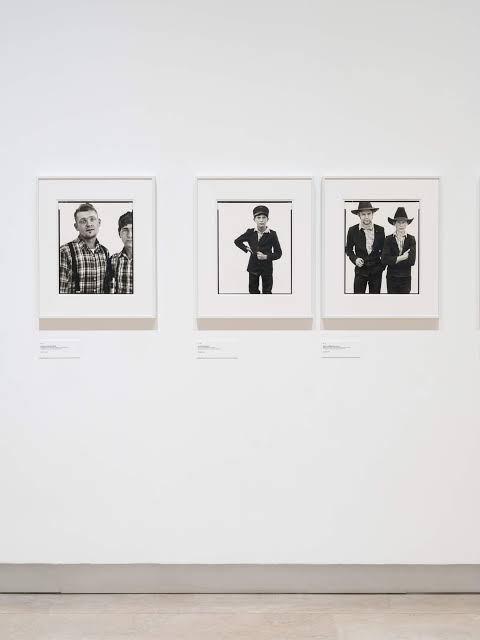
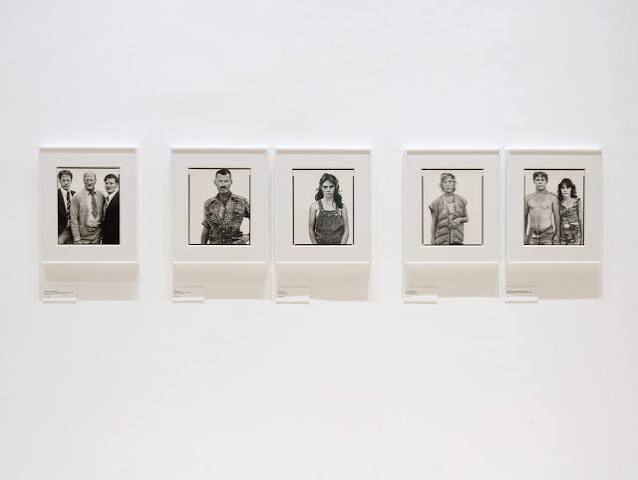
A white backdrop hung outdoors, a large-format camera, people photographed out of their surroundings. That was Richard Avedon’s setup for In the American West, a project he worked on from 1979 to 1984. The exhibition at Palazzo Esposizioni Roma runs through January 31, 2027. Curated by Clément Chéroux, director of the Fondation Henri Cartier-Bresson, it gathers the 110 prints made for the 1985 book, along with working Polaroids, notes and correspondence with people Avedon photographed. Palazzo Esposizioni Roma
The commission came from the Amon Carter Museum in Fort Worth, Texas. Avedon traveled across the western United States, stopping at truck stops, rodeos and places where people worked on the land or in industry. He photographed more than a thousand people. He was still working in fashion, taking assignments for Vogue as the project went on. In the West he used a way of making portraits that was already recognizable as his own, with people who lived outside the world of celebrity.
As a photographer, I’m struck by how carefully that simplicity was worked out. The view camera, with its 8-by-10-inch negatives, stayed on the tripod. Avedon set up the paper in open shade and used natural light. Worn seams and the marks of a day’s work are hard to overlook against plain white. With the landscape gone, so is the familiar scenery of the movie Western. What you have in front of you are the people and the choices Avedon made in showing them.
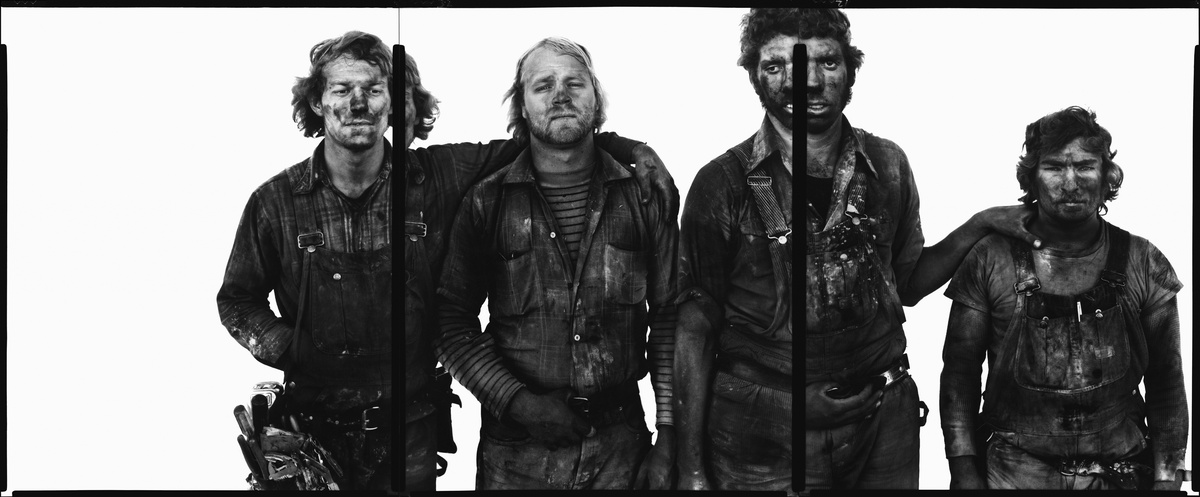
Boyd Fortin was a 13-year-old rattlesnake skinner. The coal miners were photographed in Reliance, Wyoming. The captions give a name, a place, a date and often an occupation. You can see the photographer’s hand most plainly in the portrait of beekeeper Ronald Fischer, photographed in Davis with bees covering his body. Even when a portrait looks spontaneous, somebody has decided where to put the edges of the frame and where to ask the person to stand. How much do we see of the person, and how much of what Avedon saw in them?
“All photographs are accurate. None of them is the truth,” Avedon said. The white paper directs attention toward people who usually receive very little of it, while taking away clues about their surroundings and how they lived. That tension is part of the power of the pictures. We can make out a stain on a shirt with extraordinary precision and still know very little about the man wearing it. PBS American Masters
Contacts
Brand Strategist | Photographer | Art Director | Project Manager
Alessandro Sicuro Comunication


