
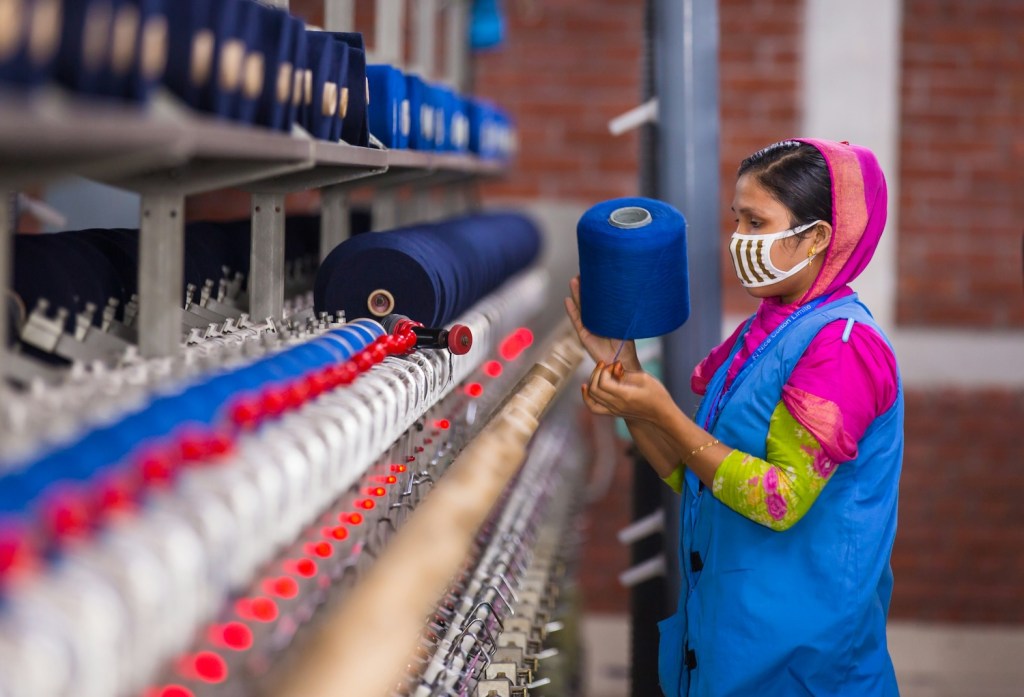
Garment workers are calling for a minimum of 30,000 taka a month, up from 12,500. Factory stoppages come as retailers wait for holiday shipments.
Around 500 of Bangladesh’s 4,500 garment factories were closed in mid-November, according to AFP. Workers have taken to the streets to demand a minimum wage of 30,000 taka a month, about $240 at the exchange rate cited by AFP. The current floor is 12,500 taka. AFP
On November 17, police fired tear gas and stun grenades in Gazipur, an industrial center outside Dhaka. Thousands of workers had returned to the streets after a meeting of the minimum wage board was postponed. The protests began in October. Rent and food have become more expensive while the wage floor has stood still.
Bangladesh is the world’s second-largest exporter of clothing after China. The garment sector employs more than four million people and exported $38.7 billion in the last fiscal year, about four-fifths of the country’s total exports. Levi’s, H&M and Primark are among the brands that source there.
On November 14, the garment and knitwear manufacturers’ associations warned that factories hit by unrest might stay closed indefinitely and asked for safety guarantees. The wage board met on November 23. The workers’ representative had put forward 32,000 taka, while demonstrators outside the meeting called for 30,000. The employers submitted their own figure, which the board kept confidential. Both sides agreed to revise their proposals. The Business Standard
Those clothes end up in American and European shops. In the 12 months through June 2026, Bangladesh shipped $1.42 billion in garments to Italy alone, according to its garment manufacturers’ association, BGMEA.
The stoppages come during the busiest weeks for shipping before Christmas. According to the Bangladesh Financial Review, disruptions in the Middle East were already adding about ten days to shipping times. When production stays suspended, a shipment meant to replenish December stock can arrive after the holiday rush is over. Bangladesh Financial Review
For the next round of orders, what matters is the price a brand pays the factory. If it stays the same, higher wages come out of the supplier’s margin. A brand that agrees to pay more can absorb the difference or pass some of it on to shoppers. Moving orders to another country is also possible, if the factories there can handle the same volume and deliver on time.

Contacts
Brand Strategist | Photographer | Art Director | Project Manager
Alessandro Sicuro Comunication


