
2 MIN READ
Rising fuel costs are hitting farmers and hauliers in Southern Italy. The protests involve a supply chain on which thousands of businesses and families depend.
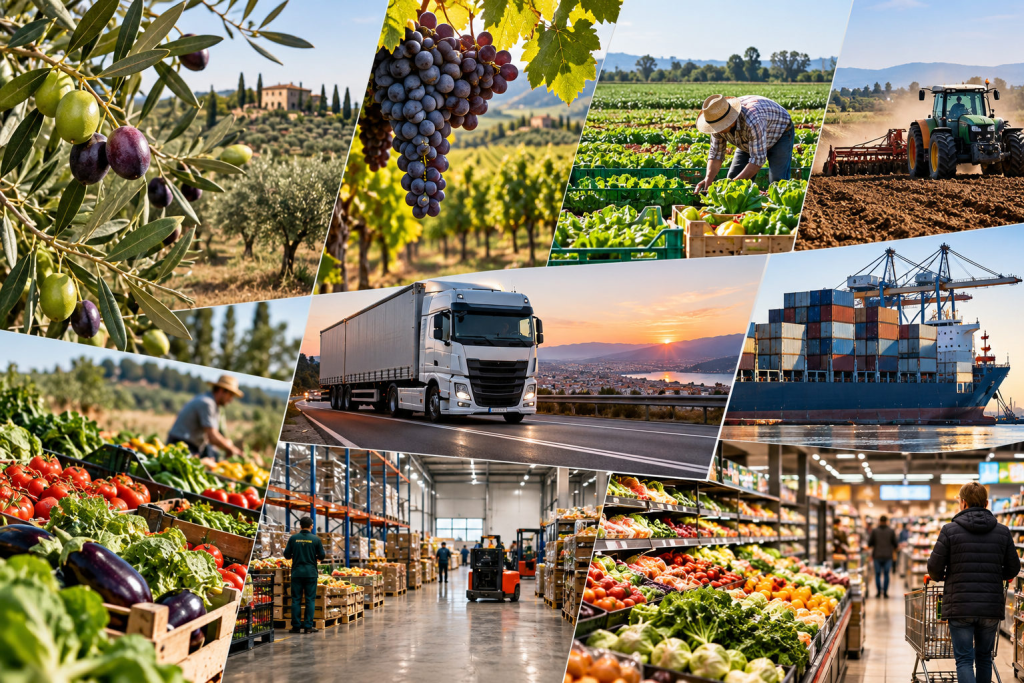
Farmers and hauliers protesting over fuel costs are disrupting the movement of goods in several areas of Southern Italy. Road blocks and sit-ins denounce an economic situation that has long worried those who work in food production and distribution. It is not just a matter of trucks and tractors. Oil mills, wineries, farms, warehouses, processing companies and retailers are involved, all tied to costs that pile up before a product even reaches the market.
Diesel has become one of the hardest costs to bear. For those who transport goods, it weighs on every kilometre driven; on farms, it powers tractors and machinery, while electricity affects irrigation and crop storage. Add fertilisers, maintenance, staff and insurance. The result is that many businesses see their margins shrink and struggle to keep prices competitive.
Wars and international tensions have worsened energy costs, but Italy’s difficulties predate these crises. What is needed are more favourable supply conditions and lower charges on fuel and electricity. Otherwise we will keep asking businesses to compete on international markets while carrying costs that limit what they can do.
In September 2025 I wrote about the richness of our production in the article “Italy, 0.50% of the world that holds a universe of excellence”. A biodiversity of olive trees, grape varieties, grains and local crops, often tied to very specific territories. Today those products must compete with cereals, oil and agricultural goods arriving from North Africa and Turkey, where costs can be significantly lower. It becomes essential to know where goods come from, to verify controls and to understand under what conditions they are produced.
There is also the problem of families. Those with a good income can keep choosing Italian products even when they cost more. For those who must watch every euro, price becomes decisive. So they end up buying the cheapest product, while the Italian one risks remaining unsold. It is a difficulty that hits both those who produce and those who would like to buy products from their own territory.
The protests show how closely agriculture, transport and trade are linked. If the movement of goods slows, the consequences reach shops and other businesses quickly. Action is needed on energy costs, infrastructure and competition conditions, before current difficulties cause further interruptions to activity.
While we keep discussing wars and international commitments, we cannot neglect the domestic economic situation. Italy needs to preserve its businesses, its jobs and the productive capacity that has made its products recognisable around the world.
We have a great agriculture. We must avoid making it competitive at a cost higher than what producers and consumers who want to buy its products can afford.

Alessandro Sicuro
Brand Strategist | Photographer | Art Director | Project Manager
Alessandro Sicuro Comunication


Tel: +39 3664855331
info@alessandrosicurocomunication.com
www.alessandrosicurocomunication.com

