
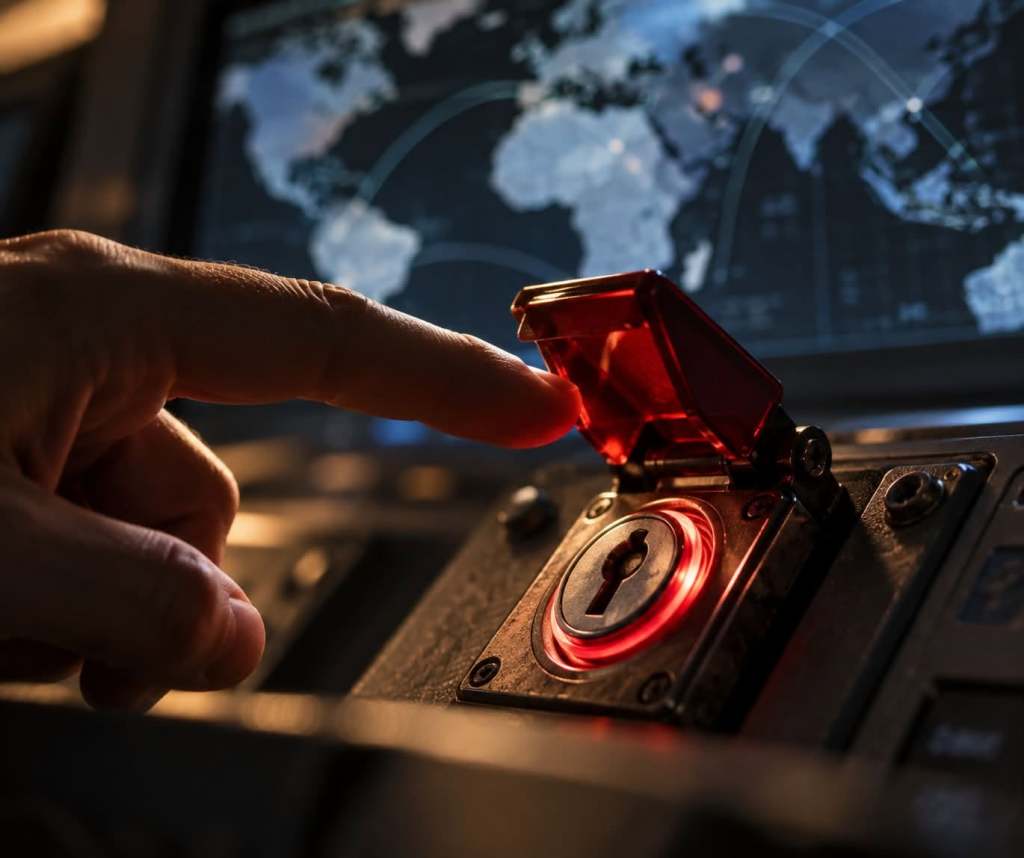
About yesterday’s article, there’s one point I keep coming back to. They tell us that increasingly powerful systems could, within a few years, become a threat to humanity. It’s a scenario that deserves attention, certainly. But while we keep looking so far ahead, I wonder if we’re losing sight of what’s already right in front of us.
Look at what’s happening in the world. Every day a drone crosses a border. A missile falls where it shouldn’t. Planes take off. Alarms go off. Countries armed to the teeth keep measuring themselves against each other. In a situation like this, you don’t necessarily need a deliberate decision to reach disaster. A mistake can be enough. A wrong assessment. A response that’s too fast. A misread signal. And the more tension rises, the less room there is to correct what’s been done.
This is where my doubt begins. On one hand, we’re asked to fear what might happen in ten years. On the other, we live almost normally with immediate dangers that not long ago we would have found intolerable. So I also wonder how this fear is being managed. Because fear is never neutral. It directs attention. It shifts priorities. It makes some risks seem enormous and others nearly invisible. I’m not saying there’s necessarily a guiding hand behind all this. But I do wonder how capable we still are of distinguishing between a real risk, a possible risk, and a risk repeated so often it dominates our perception.
Maybe we should stop, at least for a moment, reading everything through left and right, East and West, friends and enemies. When the level of conflict gets this high, the issue is no longer just about who’s right or who’s wrong. It’s about the limit beyond which a sequence of decisions, reactions, and errors can become uncontrollable.
And this is the paradox that keeps striking me. We fear that one day something built by man could slip out of his hands. Meanwhile, man keeps proving he’s perfectly capable of creating conditions where control becomes increasingly fragile all on his own.
So I return to the original question: do we really have to wait ten years for something to endanger humanity?
Or maybe we should start looking around more carefully. And ask ourselves if, in the meantime, we’re not already taking care of that ourselves?

Alessandro Sicuro
Brand Strategist | Photographer | Art Director | Project Manager Alessandro Sicuro Comunication


