
I listened to Lazarus by Porcupine Tree and it struck me immediately. It is a very beautiful piece, but above all it has something that stays. I went to read the lyrics carefully, trying to understand what was really behind those words, and this is the reading I drew from it. In my view, a very, very deep one. A song can shake us more than a hundred-page essay, because ideas are understood, while emotions are recognized. And this is perhaps exactly what happens with Lazarus.
The song is most likely dedicated to someone going through a moment in life in which they feel they have moved away from something.
Lazarus is in fact a far more restless song than its sweetness suggests. Steven Wilson builds the lyrics as if there were a voice calling the protagonist from afar. A female, almost maternal presence, who seems to tell him: come back, come away from there, leave what is hurting you.
It is not completely clear, though, who is speaking. It could be a real person, a memory, the protagonist’s conscience or even someone who is no longer there. And it is precisely this ambiguity that makes the piece even more fascinating, because that voice remains suspended in an undefined zone, halfway between memory, presence and absence.
The title Lazarus inevitably recalls Lazarus, the man who in the Gospel is called back to life. And this, in my view, is one of the most interesting keys to the piece: not so much a physical resurrection, but the attempt to reach someone who is slowly losing contact with a vital part of himself.
In the lyrics you perceive an emotionally isolated man, almost anesthetized. The world keeps moving around him, but he seems separated from it. It is as if the bond with what once meant home, love, memory or belonging had progressively weakened, leaving him in a condition of emotional distance difficult even to name.
And this is where the piece becomes even more interesting, because it offers no definitive explanation. That presence could belong to life, to the past, to a loved one, to conscience or even to something beyond life itself. Wilson deliberately leaves that door open and precisely for this reason allows the listener to fill that space with their own experience.
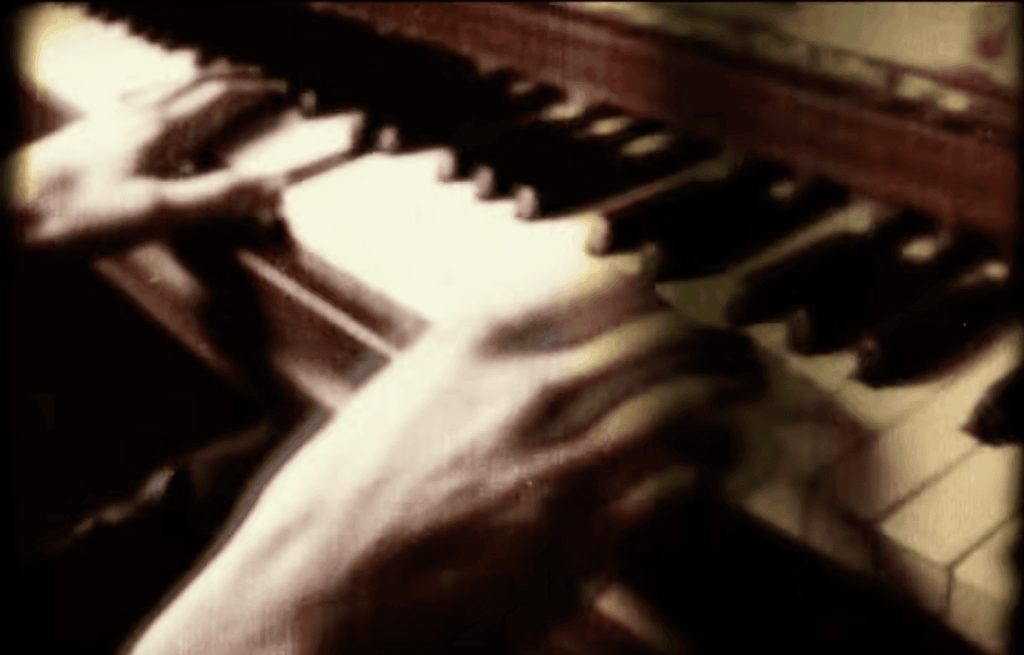
Musically, almost the opposite of what we would expect happens. The piano is very delicate, the voice intimate, the melody almost a lullaby. And precisely this apparent serenity makes the piece even more melancholic.
It is as if a deeply restless emotional matter were told without ever raising the voice. No excess, no emphasis, no need to explain everything. Just a melody that slowly accompanies you into a feeling of loss, distance and possibility.
It is like hearing someone call you gently while you are drifting away.
Perhaps this is exactly why Lazarus manages to strike even without immediately understanding all the words. Because before meaning comes a feeling. And when you then enter the lyrics, that feeling takes a more precise form.
It speaks of distance from oneself, but above all of the possibility that a voice, a memory or a feeling may still reach us precisely when we thought we had become unreachable.

Alessandro Sicuro
Brand Strategist | Photographer | Art Director | Project Manager Alessandro Sicuro Comunication


