
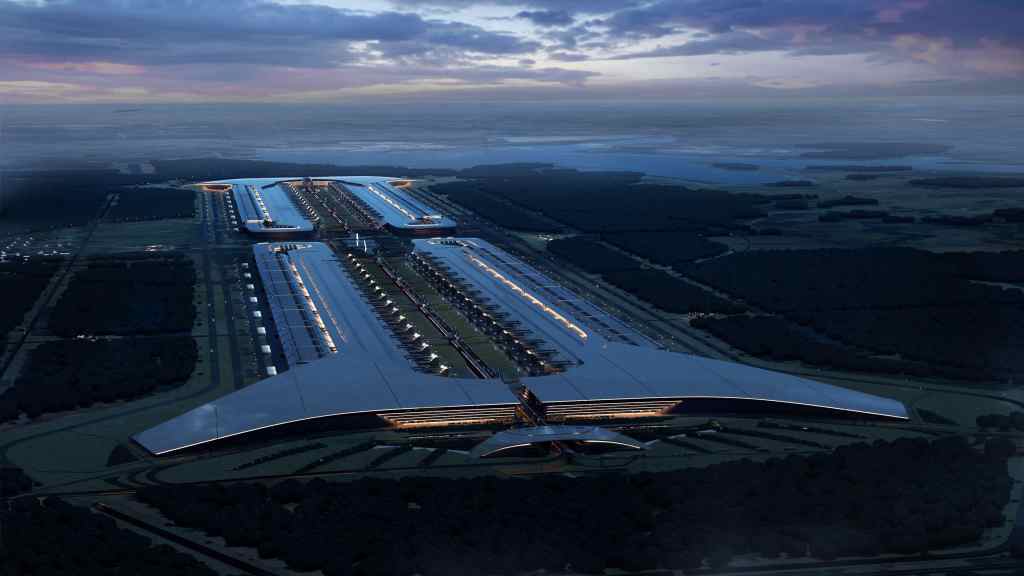
Do you know the CERN particle accelerator, that great ring in which particles are pushed to speeds very close to that of light? A similar principle could soon enter the most delicate game in the tech industry: the creation of advanced chips.
Today the machines essential to produce them come mainly from ASML, a Dutch company that holds an almost unique position in the world. ASML doesn’t directly manufacture the chips I have written about: it builds the machines that make it possible to draw on silicon circuits made of billions of microscopic transistors.
The key point is the light used in the process. To obtain such extreme precision you need a radiation called EUV. In current machines this light is born by hitting tiny droplets of molten tin with a very powerful laser. The tin becomes plasma and from that plasma the light needed to work the silicon is generated.
It is an extraordinary solution, but extremely complex.
For some time, however, another possibility has been studied: producing that same light through electrons accelerated almost to the speed of light. This is the principle of the Free Electron Laser, the FEL. The electrons pass through a sequence of magnets, oscillate and generate radiation. By tuning the system the right way, you can obtain the light needed to create the most advanced chips.
In essence, instead of starting from tin and plasma, you would start directly from a beam of accelerated electrons.
In the United States, xLight, led by former Intel CEO Pat Gelsinger, is working precisely on this technology, also backed by the American government. And this is where the story crosses paths with Elon Musk.
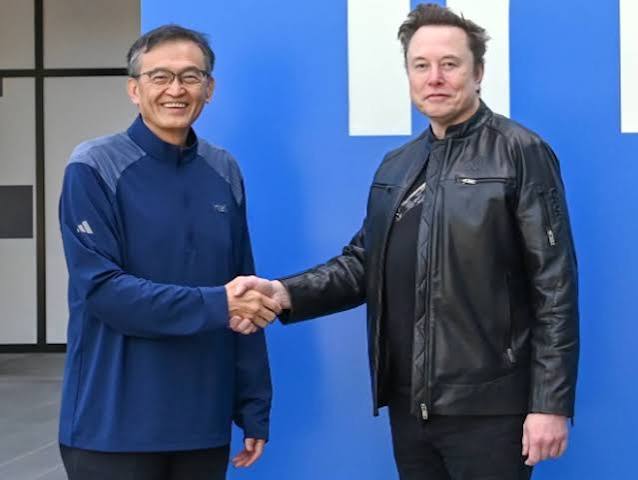
Musk is developing Terafab, a gigantic factory designed to increase the capacity to directly produce the chips needed by Tesla, SpaceX, robotics and artificial intelligence. His goal is one we know well: to control more and more internally what today he has to buy from outside.
In the Terafab renderings some observers noticed a large circular structure and speculated about the future presence of an accelerator. At the moment there is no confirmation that this circle really represents a FEL system. But Musk fueled the discussion by publicly commenting on this very technology with the phrase “FEL FTW”.
And this is where the matter becomes truly interesting.
If in the future Terafab used a FEL source, Musk could produce the light needed to create chips with a system different from the one used today in traditional sources.
This doesn’t mean ASML would disappear. Its machines are far more complex than the light source alone and include optics, mirrors, control systems and precision technologies that are very hard to replicate.
But it would change one of the most delicate steps of the entire process.
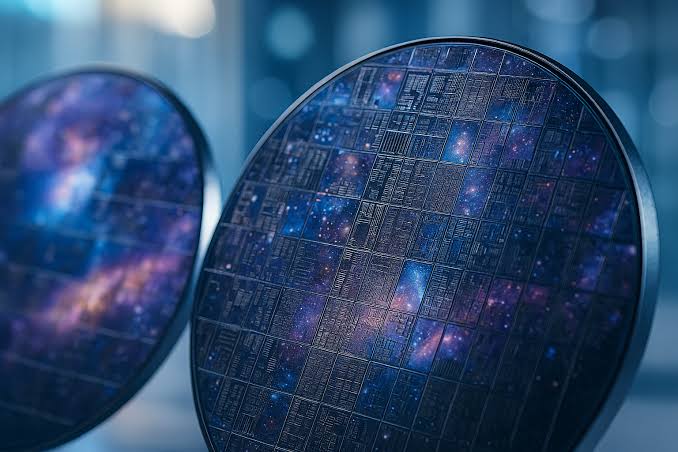
A large FEL source could even become a sort of power plant capable of supplying light to several machines at once. If it really worked on an industrial scale, it would be an important change in the very architecture of future chip factories.
And it is also a geopolitical question.
ASML represents one of the points where Europe still holds a decisive technological advantage in the global semiconductor chain. The United States dominates much of the software, chip design and artificial intelligence; Taiwan and South Korea have enormous manufacturing power. But one of the fundamental technologies for creating the most advanced chips remains European.
That is why what is happening around the FEL deserves attention.
Not because Musk is about to “destroy ASML”, as some have already written, but because an alternative path could open in one of the most strategic sectors of world industry.
If that path worked, Terafab would not simply be another chip factory. It could become the laboratory in which the way chips are produced changes too.

Alessandro Sicuro
Brand Strategist | Photographer | Art Director | Project Manager Alessandro Sicuro Comunication


