
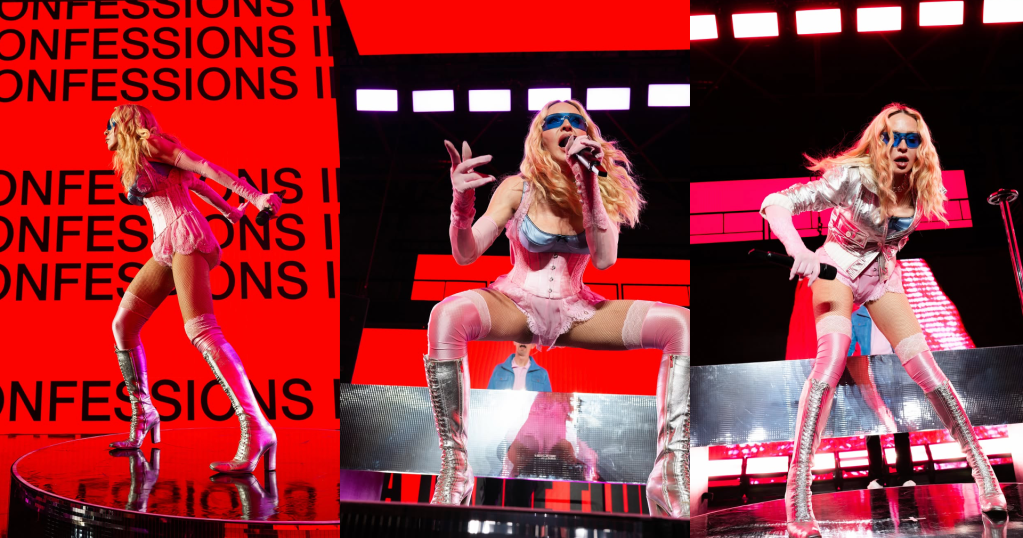
Trends, languages, music, and underground cultures now burn out at the speed of a bit. In the heart of a forest of screens, images, and messages fighting for every second of our attention, Madonna brings the body, the music, and real presence back to center stage. She transforms Times Square into a massive urban dance floor.
This isn’t simply Madonna singing in Times Square. True, the location has become a go-to spot for high-impact visual and media events in recent years.
But that’s not the point.
The point is this: Madonna, at 67, brings the concept of a live urban event back to the symbolic heart of New York. A commercial space. A spectacular one. At times almost kitsch. Advertising, tourism, entertainment, and global imagery coexist there twenty-four hours a day.
For a few minutes, that giant luminous machine became a collective dance floor. The near-surprise announcement amplified the media effect. Images, videos, and shares spread worldwide.
Times Square is no ordinary plaza. It was once called Longacre Square. It got its current name in 1904, when the New York Times moved its headquarters there. That intersection gradually became one of the most recognizable places on the planet. This detail reveals the location’s deep nature: information, advertising, city, and spectacle fused into a single visual device.
In recent months, Gucci—under Demna’s creative direction—also used Times Square as an urban runway. This helped restore its role in the contemporary narrative of fashion and luxury. It’s a significant detail. It confirms that the square has once again become a symbolic place for anyone who wants to speak to the world through images.
Of course, it remains a great cathedral of contemporary kitsch. Glowing screens. Overlapping messages. Continuous images. Almost excessive visual stimuli. But for a 2026 event, that made it perfect.
In an era dominated by artificial intelligence, computers, algorithms, and constant communication, Times Square looks like an open-air video room. A plaza made of monitors, lights, digital flows, and simultaneous messages. It’s no longer just an urban space. It’s a vertical, continuous, spectacular communication system.
That’s why Madonna didn’t just sing there. She inhabited an already-ready visual device. For a few minutes, she turned it into a collective dance floor.
At first glance, it might seem like just a promotional move tied to “Confessions II.” The new project picks up the legacy of “Confessions on a Dance Floor,” one of the most iconic albums of her career. But the event tells a much more interesting story.
Madonna isn’t just promoting an album. She’s promoting a presence.
For over forty years, her real talent hasn’t been just singing, dancing, or reinventing her image. It’s been her ability to occupy the collective imagination. To turn every appearance into a cultural event.
Many artists communicate through music. Madonna uses music as one tool in a broader strategy. It involves image, language, provocation, fashion, aesthetics, and narrative construction. Her career was built on this ability to understand how public attention works—before anyone else.
Before the social media revolution, she already knew visibility isn’t a consequence of success. It’s part of success.
That’s why the Times Square operation carries meaning beyond a simple concert. Choosing that context means turning the city itself into a communication medium.
For a few minutes, people didn’t just watch a performance. They became part of it. Passersby started filming. Phones went up. Videos started circulating online. The physical event immediately became a digital event.
And that’s where the power of the operation emerges. In the age of algorithms and programmed communication, audiences still react intensely to what feels authentic, unexpected, and shared. The surprise factor. Real presence. Lived experience. These still hold enormous value.
That’s why Madonna’s event matters even to those who don’t follow pop music. It’s a lesson in communication. It shows how a place can become a symbolic amplifier. How a city can turn into a stage. How a few-minute event can generate global visibility without complex traditional campaigns.
Great artists, like great brands, rarely sell just a product. They sell a story. A perception. A sense of belonging. An experience.
Madonna has been doing this for over four decades. She has crossed generations, technological shifts, and cultural transformations that have profoundly changed how we communicate. Maybe that’s exactly why she continues to occupy such a relevant space in the collective imagination.
The music was the pretext. The real show, once again, was her ability to transform a place, a moment, and a community into a shared story.


Alessandro Sicuro
Brand Strategist | Photographer | Art Director | Project Manager Alessandro Sicuro Comunication


