
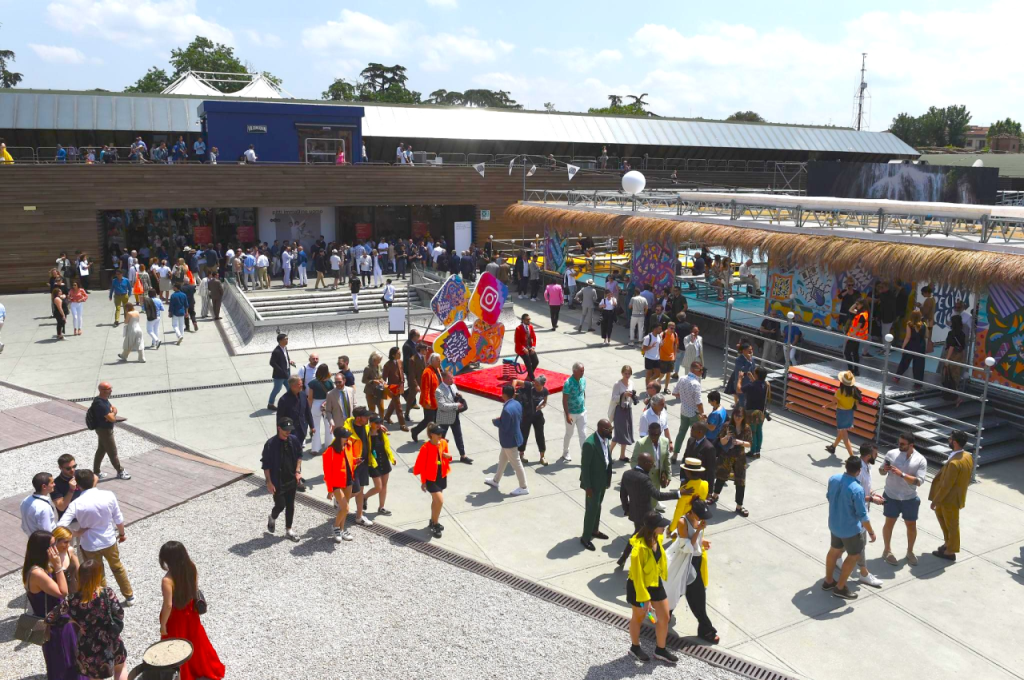
Every edition of Pitti Uomo has an official calendar, made up of shows, presentations, talks, special events, and invitation-only appointments. But then there exists another calendar, less written and perhaps even more photographed: that of the Pitti People.
It is often they who construct the most immediate image of the event. Men dressed in impeccable jackets, hats, colorful suits, glasses, very polished shoes, bags, foulards, studied details and almost theatrical postures. Pitti is also this: a spontaneous catwalk outside the catwalk, a place where menswear exposes itself not only through brands, but through those who interpret it.
In Florence, during Pitti, street style is never merely clothing. It is presence. It is a way of occupying space. It is a desire to be seen, photographed, recognized. In this sense, the Pitti People have over the years become an essential part of the story. They are not inside the official calendar, but they amplify its image.
Their role is particular. On one hand, they can seem like eccentric figures, almost characters in a constructed scene. On the other, they tell something very concrete: menswear also lives through the individual gesture, the care for detail, the ability to transform a garment into a personal signature.
Pitti Uomo 110, with its calendar of shows, guest designers, encounters, and cocktails, will certainly also have this visual dimension. The Fortezza da Basso will not just be a workplace for buyers, press, and companies, but also an open-air theater where masculine style will show itself in its most recognizable and most photographable form.
But street style should not be confused with folklore. At its best moments, Pitti People tells something deeper: the relationship between man and image, between elegance and representation, between personal taste and the need to construct a public presence. This is where menswear exits the product and becomes behavior.
For this reason, alongside the articles on guest designers, shows, and social events, it is worth dedicating a space also to this part. Because Pitti is not made only by those who present collections. It is also made by those who look at them, wear them, interpret them, and transform them into a –
–
Alessandro Sicuro
Brand Strategist | Photographer | Art Director | Project Manager
Alessandro Sicuro Comunication


living image.

