
RECONKERING IN FLORENCE: STRATEGY, STORYTELLING, AND A LUXURY SECTOR IN FLUX
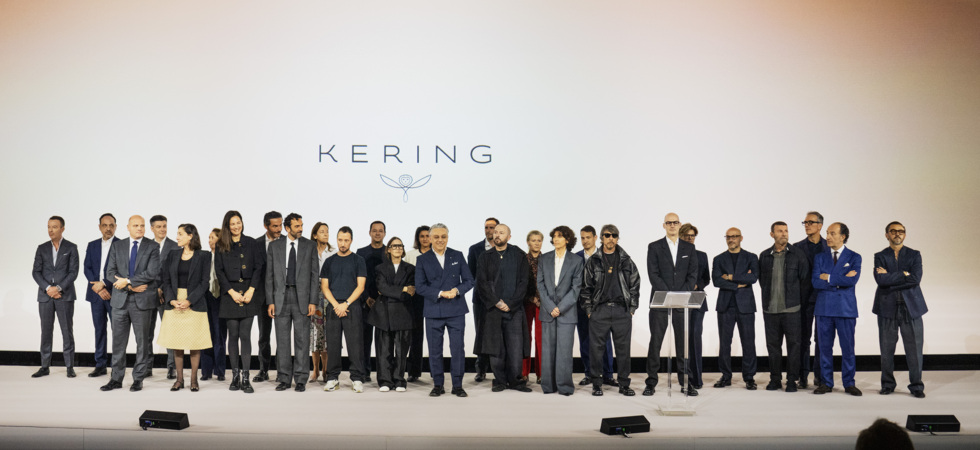
Florence, Stazione Leopolda. Over the years, this venue has become a symbol of vision, presentations, and pivotal moments for the fashion industry. This is where Kering chose to stage its relaunch. Luca de Meo delivered the narrative of “ReconKering.” An ambitious, almost programmatic neologism. It evokes the idea of reconquest.
Three hours of presentation. An international audience of analysts, journalists, and industry stakeholders. The maison CEOs sat front row, alongside François-Henri Pinault. The setup was precise and carefully constructed: strategic vision, numbers, operational structure. A powerful moment, no doubt. But also one that, precisely because of its theatrical strength, demands a clear-eyed reading beyond the staging.
The account provided by Olivier Goyot on FashionNetwork is orderly, coherent, and effective in reconstructing the plan’s strategic levers. It guides the reader through de Meo’s design, following its logic and progression. And for that very reason, in my view, it also appears too forgiving.
It focuses on the “how”—the four levers, the reorganization, the industrial discipline—but remains vague on the “why.” Especially on a fundamental point: restoring order doesn’t automatically mean rebuilding desire.
What truly shifts the center of gravity is the analysis by Antonio Mancinelli. He offers a broader and, in some ways, more uncomfortable perspective. It’s not just Kering that’s struggling. The entire luxury system is undergoing a profound transformation.
In recent years, what was the heart of the market for decades has progressively hollowed out. The upper-middle segment. The realm of widespread desire. The purchase as personal gesture, as self-reward. In its place, an increasingly evident polarization has emerged.
On one end, extreme luxury. Jewelry. Unique objects. Increasingly tied to investment logic. On the other, accessible luxury. Fragmented. Eyewear, perfumes, small accessories. Products that let consumers enter the brand without facing its full price. In the middle, those very territories—apparel, leather goods, stylistic construction—that for years sustained luxury’s grand narrative now show signs of slowdown.
This dynamic didn’t emerge from nowhere. For years, the industry drove growth through constant price increases, not volume. A mechanism that worked as long as aspirational demand held strong. Today, it shows a clear limit. The result is a more fragile, more selective market. One less willing to buy “no matter what.”
But there’s another element to add to this picture. One often handled with caution, yet impossible to ignore.
It’s not just the economic, geopolitical, or cultural context. It’s not just the changing consumer. There’s also an internal responsibility within the system.
In recent years, in several cases, artistic and stylistic direction choices failed to generate real desire. When the product stops attracting, everything else—pricing, distribution, marketing strategies—loses effectiveness.
Luxury doesn’t live on structure. It lives on emotional tension.
If the customer doesn’t fall in love, they don’t buy. When that happens, the system tends to retreat to extremes. On one side, the investment object. On the other, the accessible product that still allows participation in the brand’s world.
This is where the question becomes inevitable. It’s the same one that emerges forcefully in the sharpest analysis: what happened to buying for pleasure? A dress. A bag. A piece chosen not for status or access, but for impulse. For self-recognition.
If that center empties out, luxury doesn’t just change its economic model. It changes its nature.
So the point isn’t just whether “ReconKering” will work. The point is understanding if luxury can still generate desire—or if it’s learning to survive without it.
–
–
–
Alessandro Sicuro
Brand Strategist | Photographer | Art Director | Project Manager
Alessandro Sicuro Comunication


