
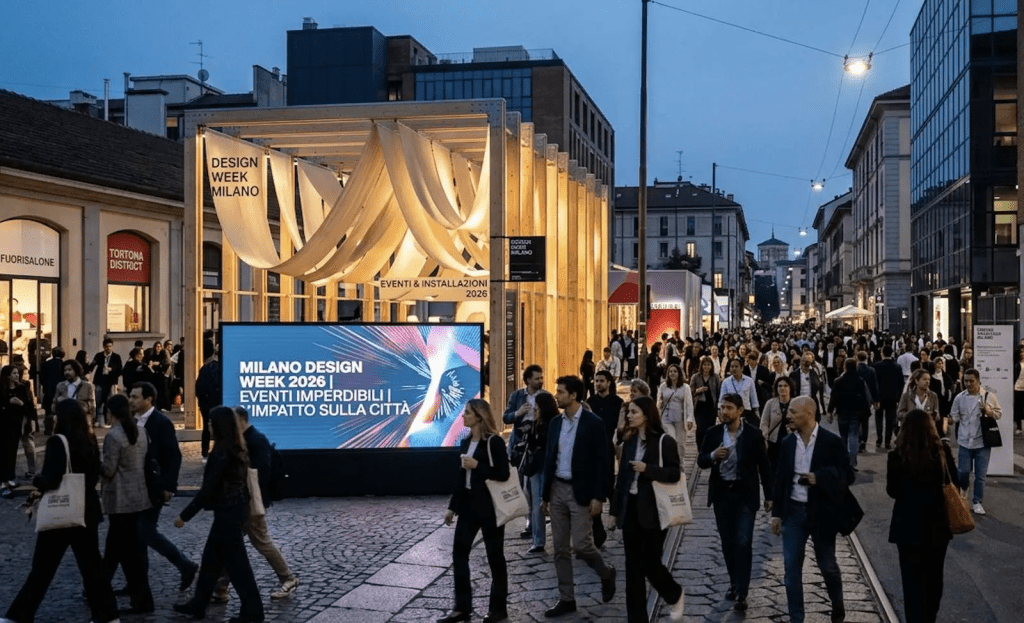
Milan, these days, doesn’t just host design. It interprets it. Facades become theater — like at 10 Corso Como — where surreal elements invade historic architecture. They transform it into an iconic image. Almost cinematic.
The language is direct. Immediate. Made to strike and stick. In the courtyards, the rhythm shifts. Installations turn immersive. Softer. Almost intimate. Suspended fabrics. Inflatable volumes. Lightweight geometries. You don’t just look at the space. You walk through it. Milan slows down here. But it never stops. Then there’s color. Bold. Declared. Almost radical. Surfaces, structures, entire facades become visual compositions. They dialogue with the city. They don’t try to blend in. They want to stand out.
And around it all, the human flow. Constant. Orderly but alive. Professionals. Curious minds. Creatives. Students. All moving as one. This is the real project: the city as a living organism. Inside, the language gets more refined. Materials. Lights. Proportions. Design becomes object again. But always within a bigger vision. No longer a single piece. Part of a coherent aesthetic system.
Milan, during Milan Design Week, proves one thing clearly: it’s not just the capital of making. It’s the capital of seeing. Of living. Of participating. And above all, of turning every space into experience.

