
SO WHAT ?
So What is much more than a song. It’s a question.
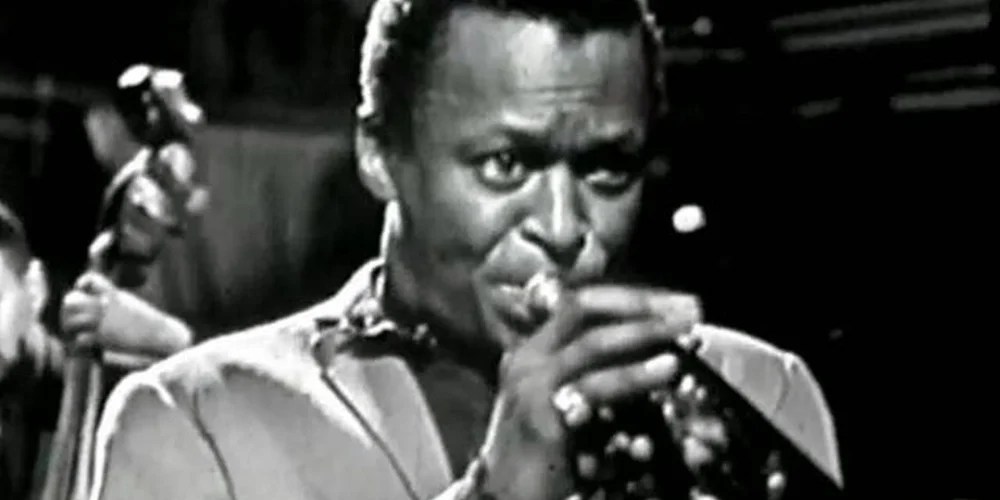
A question that Miles Davis, with his trumpet and his impenetrable gaze, threw at the world in 1959 like a challenge: So what?
Not in arrogance, but as an invitation — “You’ve heard this music, now tell me, what do you have to say?”
It’s the attitude of someone who knows he’s opened a door others haven’t yet seen.
So What opens Kind of Blue, the album that changed the history of jazz.
Before that moment, everything was virtuosity — scales, runs, restless harmony. Davis, instead, stripped everything down: two chords, space, breath, silence.
It was the birth of modal jazz, where improvisation stopped being an escape and became a meditation.
At his side: Bill Evans on piano, John Coltrane and Cannonball Adderley on saxophones, Paul Chambers on bass, and Jimmy Cobb on drums.
A group that doesn’t just play — it breathes together.
Then there’s that unforgettable scene.
Davis steps back, smokes, observes.
He doesn’t need to be at the center: his silence plays as loudly as his trumpet.
While Coltrane improvises, Miles moves behind the set, quietly speaking to the others, as if the music could keep existing even without him.
It’s an act of respect and power at once — real strength isn’t in taking space, but in letting the music live on its own.
And within that sound lies a subtle dialogue — an invisible phrasing — between Davis’s clear trumpet and Bill Evans’s impressionist piano.
Evans doesn’t accompany; he suggests. He brushes, suspends, leaves space.
Miles answers with short, sculpted phrases, letting the silences complete the thought.
Around them, Coltrane and Chambers breathe in unison: a conversation built on intuition, patience, and listening.
A perfect balance — as if every note knew exactly where it had to fall.
They were elegant, impeccable, even when life itself was a maze of smoke and substances.
They searched for doors to a different perception, before yoga and meditation offered a gentler way upward.
It was a time when music was made to ascend — not toward fame, but toward the self.
And that’s the lesson young people today should rediscover: this isn’t “old” music, it’s thinking music.
Made of breath, of balance, of dignity.
In an age where everything makes noise but almost no one truly listens, So What still stands — motionless and perfect — reminding us of the most honest question of all:
So what?
–
–
–
Alessandro Sicuro
Brand Strategist | Photographer | Art Director | Project Manager
Alessandro Sicuro Comunication


