
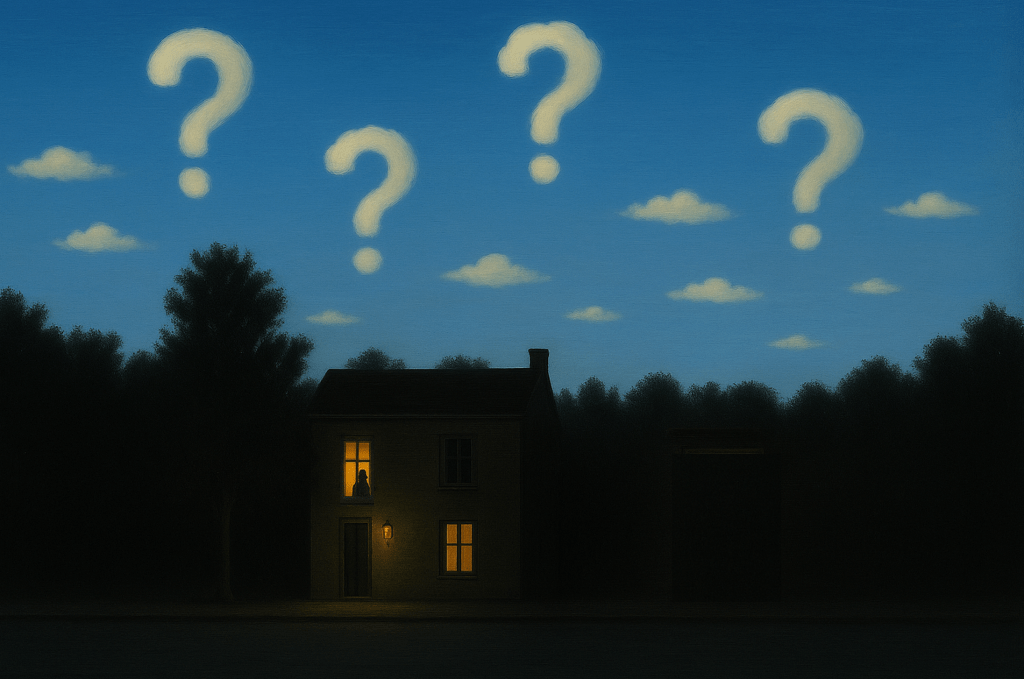
Refocusing on the present, transforming the alarm into a project, one step at a time
In recent years, the unease of young people has no longer been a background noise, but the soundtrack of our era. Intermittent schooling, job insecurity, live wars, environmental crises, and constant competition on social media: it’s a horizon that demands stability from those who grew up surrounded by instability. The result is a collective body in constant tension, a nervous system trained to remain on high alert.
In clinical terms, this is called allostatic load : when the body remains in defense mode for too long, thresholds drop, and the brain ends up interpreting what is merely stress as a threat. Thus, anxiety ceases to be an alarm signal and becomes language, an emotional grammar that expresses the fear of living in the present.
The nervous system of young people isn’t just fatigued: it’s trained to stay alert. No real wars or shocks are needed, the constant stimulation of screens is enough. Every notification, every like, every message is a micro-signal of danger or reward, an electrical impulse that keeps the brain switched on, ready, waiting. Social media doesn’t inform: it trains us to be vigilant. It’s an invisible training that produces addiction and hypervigilance. We stay connected so as not to miss anything, but we lose our temper.
And then there’s the excess, that accumulation of light and electrical impulses that course through us every day. The screen we love—because it serves us, connects us, makes us work—is also the field where the short circuit occurs. A mind overloaded with signals, a body that can no longer distinguish a notification from a threat. It’s there that the alarm becomes a permanent state, no longer a reaction but a condition.
Panic is neither madness nor weakness, but the extreme point of a failed adaptation. It’s a short circuit between biology and imagination: breathing accelerates, CO₂ levels drop, blood vessels constrict, and the brain interprets that response as a signal of imminent danger. It’s a self-perpetuating false alarm, a self-repeating mechanism. Saying “it’ll pass” isn’t a gesture of naive hope: it’s a physiological act, a way to break the chain between symptom and fear.
Returning to the present requires a grammar of the body, not of the mind. Inhale through your nose for a count of four, hold for a moment, exhale slowly for a count of six: CO₂ rises, the brain receives oxygen, and the nervous system resets. Look around, name three things you see, two you hear, one you touch: this isn’t a distraction, it’s a form of anchoring to reality. This teaches your body that the danger has passed, that life isn’t all threatening.
The real difficulty begins later. Every avoidance—the missed bus, the postponed class, the cancelled evening—becomes a confirmation that the world is dangerous. To escape, the opposite is needed: gradually returning to the places that scare us, one action at a time, without seeking heroism. Every extra minute spent not fleeing is a neurological victory, a small shift in the internal boundary.
But young people’s anxiety doesn’t just stem from the body: it reflects an adult world that has stopped acting as a container. Adults serve calmly, not perfectly; capable of withstanding the wave without denying it. “I see you, let’s breathe together, it will pass.” Stable routines, regular meals, exercise, and spaces where mistakes aren’t burdensome: normality is the best medicine. School, if it wants to be a center of mental health, must return to being a place of rhythm and meaning, with clear timetables, scheduled tests, and stable role models. Because the mind only regulates itself when the environment does so first.
And then there’s the social dimension, the void we call connection. Young people today look at each other more than they meet. Identities are built by subtraction, in a contactless showcase. Yet the body—the one that sweats, walks, makes mistakes, laughs—remains the primary cure. We need places for practice, not performance: accessible sports, workshops, music, volunteering, experiences where expertise is built through touch, not simulation.
When anxiety restricts your life, you need to ask for help without shame. Cognitive-behavioral therapy with gradual exposure works because it defuses the link between symptoms and catastrophe. Medication, if prescribed, is a tool, not a punishment. Self-medication—alcohol, drugs, isolation—doesn’t alleviate the discomfort, but rather prolongs it: it’s like turning off the siren while the fire burns.
Yet the solution isn’t psychological but cultural: we need a new education in reality. Motivation doesn’t precede action; it comes from movement. Ten lines of writing, half an hour of real study, a difficult phone call, a step outside the house: these are the micro-experiences that reprogram the brain. Every concrete gesture tells the body “I’m alive.” The opposite of fear isn’t courage: it’s competence.
We can’t ask young people to be at peace in a world that isn’t, but we can stop burdening them with the weight of our disillusionment. Give them back time, space, trust, the ability to make mistakes without falling apart. Breathe, stay, try again. Not by force, but by choice.
Life isn’t a timed test: it’s an exercise in presence. Colors aren’t decided by an algorithm, but by those who have the courage to paint them. And it’s there—in that fidelity to reality, however fragile—that fear ceases to command and begins, finally, to fall silent.
Alessandro Sicuro
Brand Strategist | Photographer | Art Director | Project Manager
Alessandro Sicuro Comunication


