
Towards cellular regeneration and the possibility of reversing tissue aging
In 2006, Professor Shinya Yamanaka demonstrated that four proteins —OCT4, SOX2, KLF4, and MYC —can restore an adult cell to a pluripotent state, meaning, in principle, capable of transforming back into many cell types. This marked the birth of iPSCs, induced pluripotent stem cells obtained by “rebooting” common cells, such as skin cells. The significance was so great that in 2012, Yamanaka was awarded the Nobel Prize in Medicine. Since then, we have known that cellular identity is not a death sentence: it can be reprogrammed. The limitation remains technical. Classic protocols work, but they are slow and inefficient, and therefore far from widespread clinical use.
––
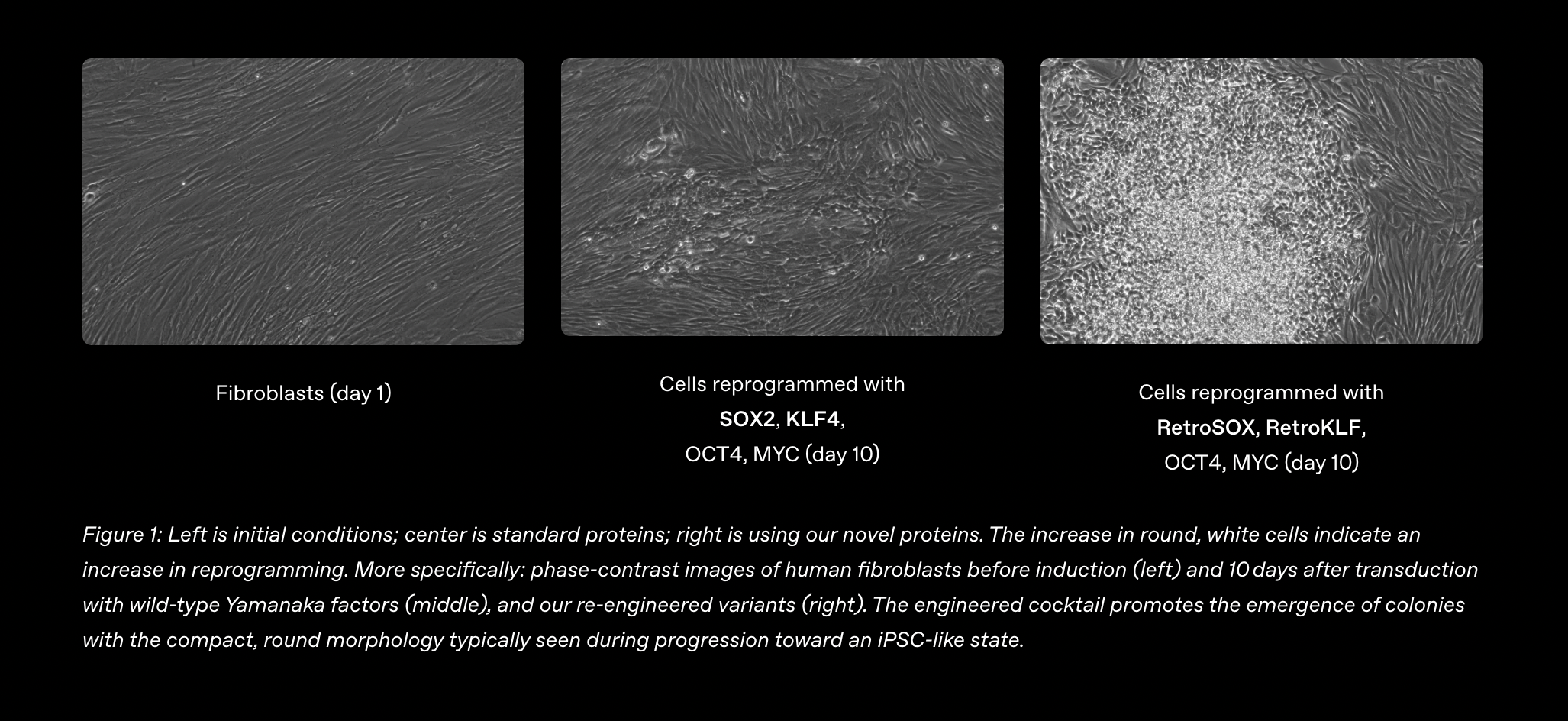
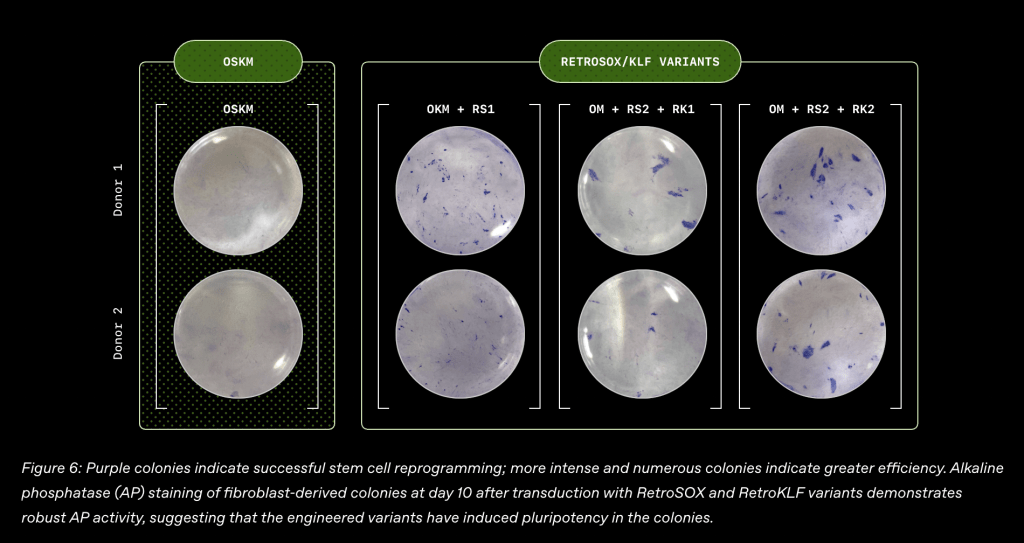
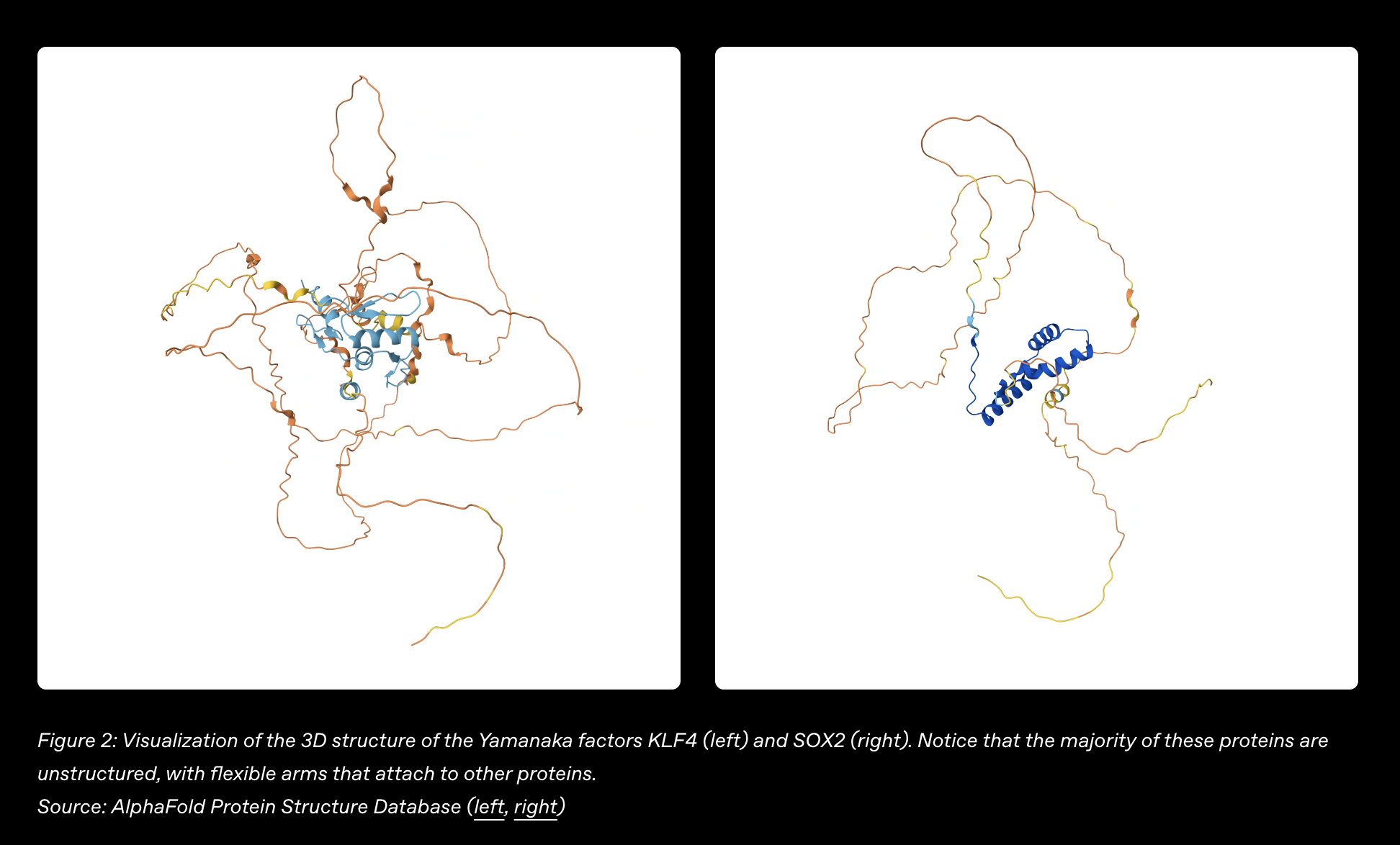
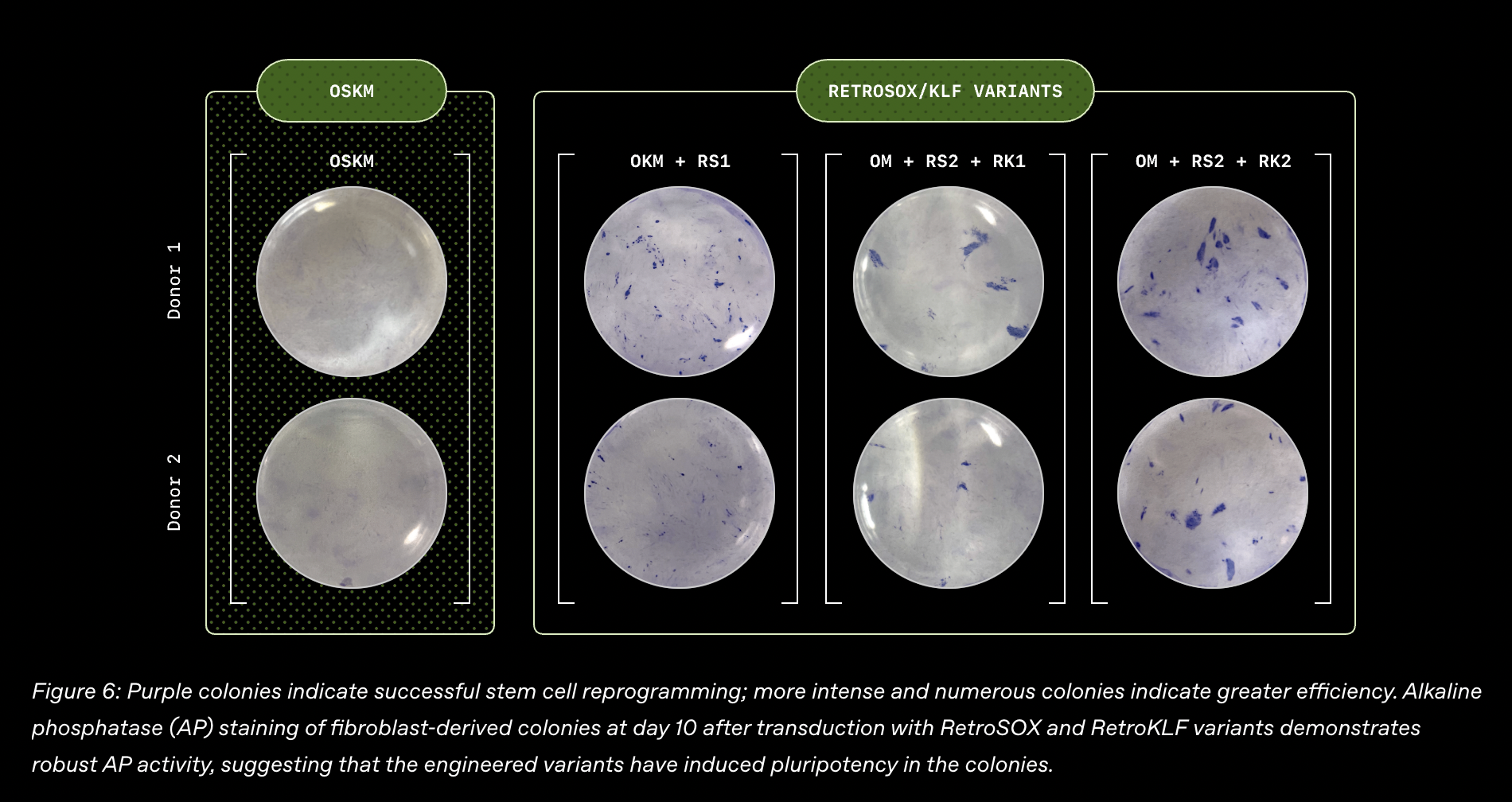
The next step comes today. In 2025, research groups have used artificial intelligence as a true accelerator. Not a magic wand, but a design tool: AI models trained on protein engineering suggest new versions of two of those factors, SOX2 and KLF4, which have proven more effective in the laboratory. Here, “more effective” means that cultured cells more quickly show signs of reprogramming, so-called markers, laboratory measurements that indicate whether a cell is truly reverting to a younger state. We’re talking about in vitro tests, not human treatments, but the gain in speed and experimental clarity is real: the algorithm explores thousands of possible protein sequences, biologists build only the best candidates and test them on the bench.
–
 –
–
A sense of chronology is important. First came Yamanaka’s discovery, which opened the conceptual and practical door to cellular reprogramming. Then, many years later, AI arrived and pushed that door open. The goal isn’t to “return twenty-year-olds” in a generic way, but to make reprogramming efficient and controllable enough to be used, one day, to repair tissue with the patient’s own cells. In this context, partial reprogramming plays a key role, that is, the measured use of these genetic switches, transcription factors, to rejuvenate functions without erasing the tissue’s identity. This is where we glimpse the regenerative medicine we truly need: skin that heals better, heart muscle that recovers after a heart attack, neurons and the retina that regain part of their lost function.
Everything that makes medicine, medicine, remains: safety, because pushing cells to change state must not increase the risk of uncontrolled proliferation; in vivo delivery, because making something work in culture is very different from making it work inside an organism; and long-term durability, because “rejuvenated” tissue must remain so in an aging body. These steps will require years and independent studies. This is the price of scientific integrity, not a deterrent to hope.
–
Alessandro Sicuro
Brand Strategist | Photographer | Art Director | Project Manager
Alessandro Sicuro Comunication


–
–

