
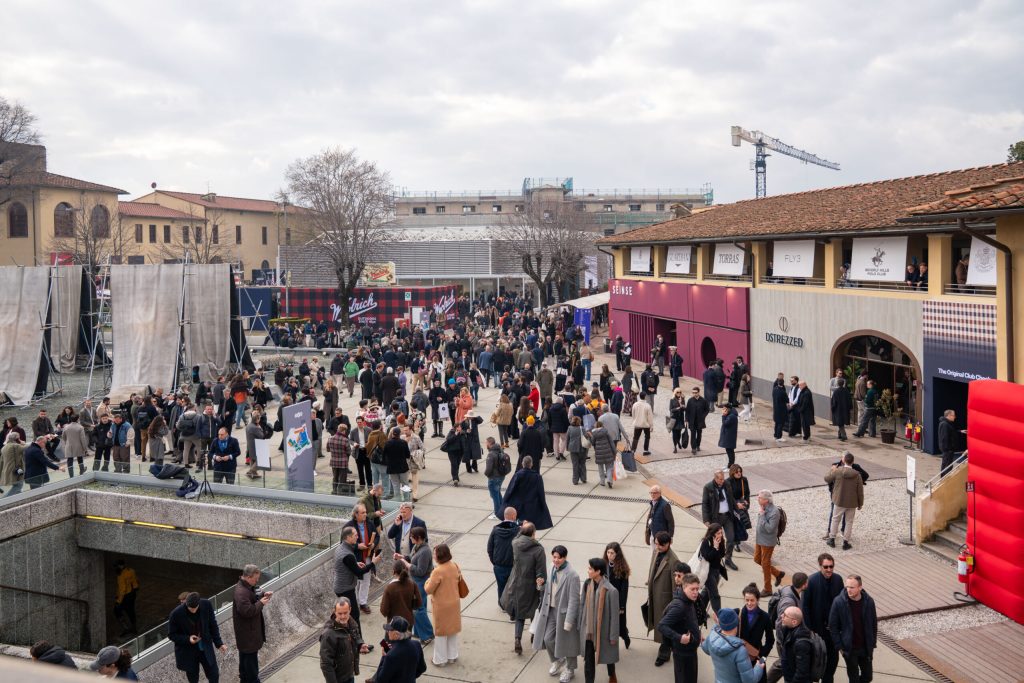
Here’s the recap of the 109th edition of the world’s most important men’s fashion event
Pitti Immagine Uomo 109 has officially closed its doors. Florence, as tradition dictates, passes the baton to Milan, where the Italian men’s fashion show calendar begins. It’s the natural shift every January. But before attention moves entirely to Milan Fashion Week, it’s worth pausing to reflect on what this edition of Pitti truly conveyed.
The results are positive in the most concrete sense. Pitti isn’t losing ground or relevance. It confirms its international role during a challenging time for the entire fashion industry. Official data shows a slight increase in exhibitors, a rise in international buyers, and overall attendance that appeared stronger than the previous winter edition—especially on the second and third days. Not an explosion, but a solid performance. Today, that matters more than any flashy spectacle.
The clearest signal comes from abroad. International buyers are up. This confirms that Pitti remains an essential reference point for those seeking quality, vision, and curated menswear. The Italian front, as expected, is weaker. Domestic buyers showed up in smaller numbers. This reflects structural challenges in retail and internal distribution. It’s not about the fair itself—it’s about the health of the domestic market.
Walking through the pavilions, the most interesting takeaway wasn’t numerical—it was cultural. This edition clearly showed the rise of craftsmanship, tailoring, and bespoke as a concrete response to the crisis facing major brands. While many big names struggle with restructuring, downsizing, and identity loss, Pitti gave space to brands focused on substance: cut, materials, construction, durability. ‘Handmade’ is no longer a nostalgic story. It’s a strategic choice.
Outside, Piazza Grande played its usual role. Peacocks, extreme looks, eccentric characters—sometimes almost cartoonish. It’s Pitti folklore. It’s the most photographed and shared part, fueling the event’s social media narrative. But stopping there would be a mistake. The heart of Pitti Uomo 109 beat inside the pavilions. It beat in meetings between buyers and brands. It beat in collections designed for a market demanding consistency, identity, and real quality.
Pitti Immagine Uomo 109 didn’t try to dazzle at all costs. Instead, it chose to reaffirm its role, maintaining an authoritative position in a changing system. In uncertain times, this ability to stay central without chasing fleeting trends may be the strongest message Florence could deliver.
Now the scene shifts to Milan. Runway lights come on. Buyers are called to assess collections on the catwalk. Florence pauses, but doesn’t step back. Pitti exits the stage knowing it did its job: remaining firmly the international center of gravity for quality men’s fashion.
–
–
–
–
–
TITO ALLEGRETTO
Classic and elegant dress code. The suit does not define who you are:
it reveals you.
<div class='tiled-gallery type-rectangular tiled-gallery-unresized' data-original-width='640' data-carousel-extra='{"blog_id":1,"permalink":"https://alessandrosicurocomunica
 Sure-com America