
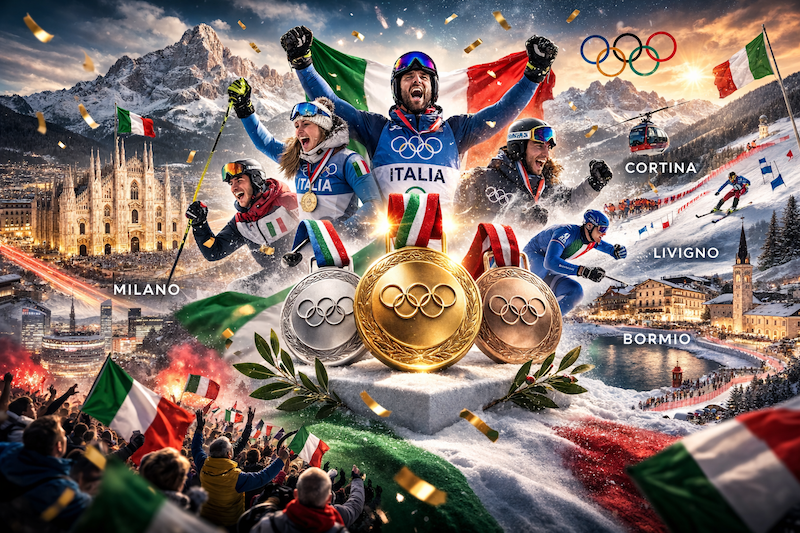
If the numbers keep trending this way, Milan-Cortina 2026 won’t just be a happy edition. It will be Italy’s most successful Winter Olympics ever, both in quantity and quality of podium finishes. Beyond the flag-waving rhetoric, this is a fact that carries real weight.
The medal count is a brutally honest snapshot. It tells you if a system works or not. When you see more golds, more placements, and more consistent performance than previous editions, you know it’s not a fluke. It’s hard work. It’s planning, staff, federations, and athletes who handle pressure without falling apart at the crucial moment.
Then there’s the other side of the medal—literally—the one that makes fewer headlines but hits the budget. In Italy, Olympic medals also come with cash prizes paid by the country, not the Games’ organizers. The amounts are the same as Paris 2024: 180,000 euros gross for gold, 90,000 for silver, and 60,000 for bronze.
These are significant numbers. Especially for athletes in sports without big sponsors, where the ‘business’ side never shows up. In those cases, the prize isn’t a luxury. It’s a lifeline. Often, it’s the only way to keep competing at a high level without becoming a financial tightrope walker.
The point is this: such a successful Olympics, if it really ends with a record for Italy, could also mean an unexpected extra cost. That’s why talk has already emerged about possible public support to handle this exceptional moment. It sounds paradoxical. You win too much and then have to find the money to celebrate. But that’s how it is.
‘Prestige’ isn’t just a word for ceremonies. It’s national reputation. It’s a brand that grows stronger in the eyes of the world. Milan, Cortina, Livigno, Bormio—they’re not just dots on a map. They’re a global showcase with lasting impact. Visibility, tourism, desirability. People come for the Games and then return for the region, if the region tells its story well.
Bottom line: medals mean glory. But they also mean economics, image, and future opportunities. This time—if the finale confirms the trend—Italy isn’t just ‘doing well.’ It’s putting together an edition that will become a benchmark.
–
–
–
–
–
 Sure-com America