
MMMM
Last night, December 30, 2025, I had the pleasure of attending La Bohème by Giacomo Puccini at the Teatro del Maggio in Florence.
It was an evening that effortlessly reminded me of opera’s simple power when everything works.
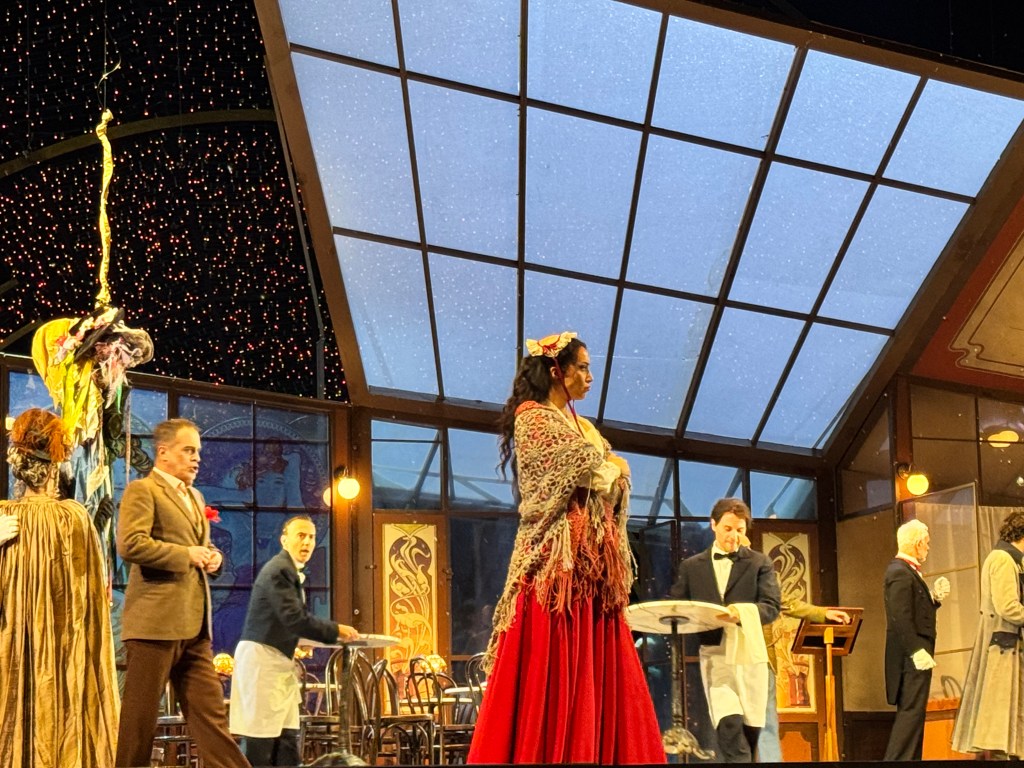
The sets and lighting struck me immediately: refined, balanced, never needlessly redundant. There was that rare quality where you don’t watch the stage ‘from outside.’ Instead, you feel like you’re there, in the attic with the protagonists, or in the crowd at Café Momus. The offstage choruses truly gave the sense of a living city, breathing beyond the edges of the stage.
All the singers were excellent, but the two female leads impressed me particularly.
Mimì, performed by Carolina López Moreno, was a surprise not only for her voice but for an uncommon beauty associated with this role. Her stage presence was intense and delicate at the same time.
Musetta, with the face and voice of Mariam Battistelli, was splendid. She brought that mix of lightness, flirtatiousness, and humanity that makes the character irresistible.
Piero Pretti’s Rodolfo was also very convincing: a confident, engaged tenor with a clean vocal line. His phrasing captured both the enthusiasm of the young poet in love and the final shadows of the drama.
About the music, I admit I’m not impartial: I adore Puccini. But I can say the orchestra worked beautifully. They were tight, attentive, and stayed close to the stage without ever overpowering it. My seat, right above the pit, let me enjoy every detail.
I was pleased to see many young people on stage among the singers, and even more so the many children in the chorus. They give the sense of a theater that is not just memory, but a future being educated in music.
A detail I greatly appreciated: the stage actors, those who don’t sing but play the waiter, the painter, the patrons. All had lively, precise expressions, never thrown together. Small things that make the situations believable and give depth to the story.
The theater’s acoustics are truly excellent. You can tell the room’s shape and wooden walls work toward a natural, clean equalization that envelops without echoing.
In the pit, young conductor Diego Ceretta, pleased and often smiling toward the performers, led the evening with energy and attention. He held orchestra and stage together with confidence.
A Bohème that shows how opera, when it works, can still unite memory and future in a single breath.
 Sure-com America