
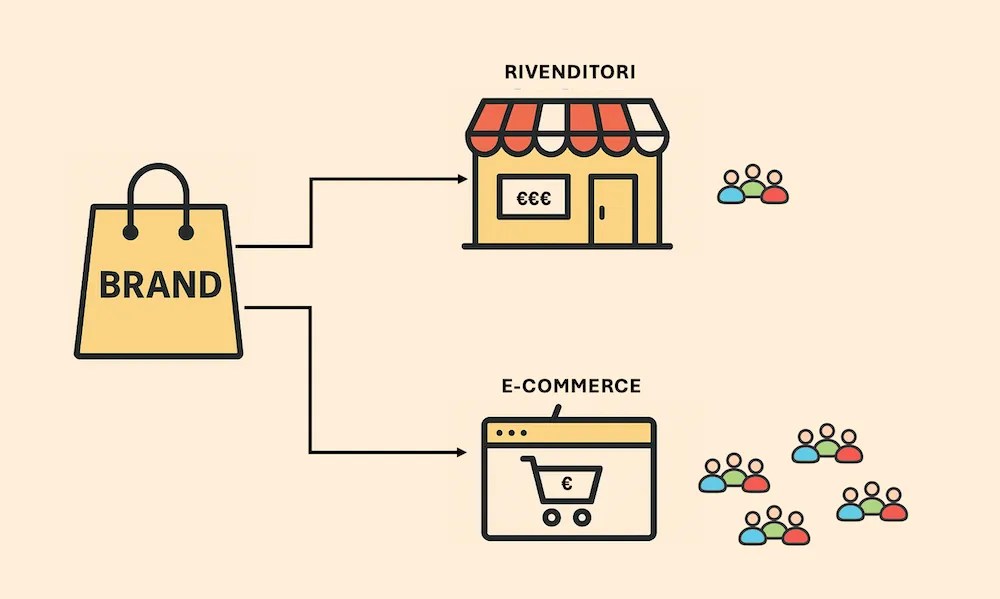
In recent years, clothing stores in Italy have been facing challenges that go beyond declining consumption or general online competition. There’s a more subtle contradiction, less talked about, but profoundly destabilizing for those working in the region.
The process is well known: stores place seasonal orders in showrooms, select collections, invest capital months in advance, and build an assortment consistent with their audience. This is the heart of traditional retail, requiring expertise, vision, and entrepreneurial risk.
The problem arises later.
It’s increasingly common for brands themselves, especially those with a strong digital presence, to offer aggressive and ongoing discounts on their e-commerce sites. These discounts are no longer limited to end-of-season sales, but are now distributed throughout the year: promotions, private sales, permanent Black Fridays, and serial discount codes.
The result is paradoxical: the store finds itself selling at full price—or with already reduced margins—products that are offered online at 50, 60, or even 70% discount. In some cases, the final online retail price even drops below the purchase price the retailer paid in the showroom.
At that point, the damage isn’t just financial. It’s reputational. The customer comes into the store, tries on, touches, asks for advice… and then discovers that the same item costs much less online, from the same brand. The store no longer appears as a valuable source, but as an “expensive” intermediary, even when it isn’t.
This isn’t about demonizing e-commerce, nor about regretting a past that won’t return. It’s about channel conflict . A brand that wants to dominate both digital and physical retail can’t afford to be the primary competitor of the stores that represent it.
One possible solution, discussed by many industry players, would be a genuine differentiation of the lines: products specifically for physical retail and products intended for online channels and major promotional campaigns. This isn’t just cosmetics, but a clear strategy that allows both channels to operate without cannibalizing each other.
The issue is broader and touches on the very future of retail in urban centers. Stores aren’t just points of sale: they’re places for relationships, advice, and product culture. If they’re stripped of their economic and symbolic value, the damage doesn’t just affect retailers, but the entire fashion ecosystem.
The question, then, is simple but uncomfortable:
do brands really want to continue to exist in physical stores, or do they consider them merely a temporary showcase before selling online?
Until this ambiguity is addressed with strategic honesty, the retail crisis will not just be a market issue, but a deliberate choice. And the consequences are already there for all to see.
–
-GALLERY
G-
–
Alessandro Sicuro
Brand Strategist | Photographer | Art Director | Project Manager
Alessandro Sicuro Comunication


 Sure-com America