
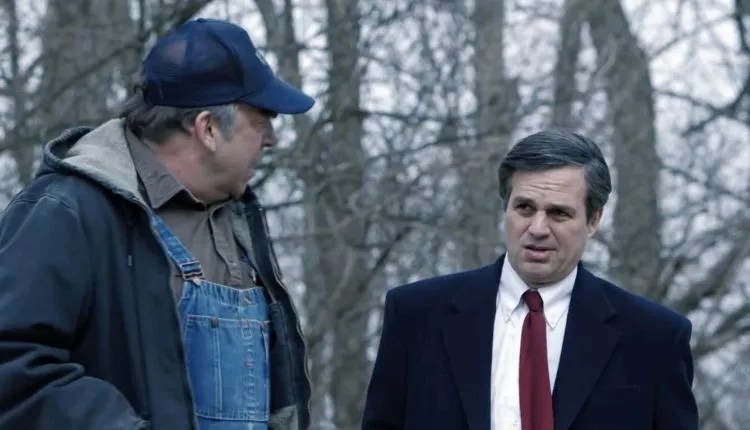
When cinema becomes an investigation again
There are films that don’t just tell a story, but reawaken collective memory. Todd Haynes’s Dark Waters is one of them: a sober, civilized film that brings to light an uncomfortable truth hidden beneath the surface of progress.
The story is real: that of Robert Bilott, a Cincinnati lawyer who for twenty years fought against the multinational DuPont, guilty of contaminating the water of an entire American region with toxic substances (the infamous PFAS). A legal and moral battle, waged by a man who until that moment had defended the chemical industry itself. This is the short circuit that sustains the entire film: the conscience rebelling against the system of which it is part.
Todd Haynes, director of refined and disturbing works like Safe and Carol , here opts for rigor. He abandons aestheticized atmospheres for a sober, almost documentary tone, which restores to the audience the essence of an era corrupted by blind faith in industrial science. The photography is cold, metallic, filtered through a dull blue that seems to imbue everything with chemistry. He seeks not spectacle, but truth.
Mark Ruffalo, also the film’s producer, plays Bilott with a measured intensity, far removed from any Hollywood heroism. He’s an ordinary man who gradually discovers the enormity of an environmental crime that has affected millions. Alongside him, Anne Hathaway, in a restrained but solid role, conveys the familiar counterpoint: the weariness and fear of those who live alongside a battle too great for any one individual.
Dark Waters fits into the great American tradition of ethical legal dramas—that of Insider , All the President’s Men , Spotlight , The Post —but it goes beyond denunciation. It shows how easy it is for corporate power to insinuate itself into everyday life: in a pan, a glass, a domestic gesture. Teflon, the symbol of modern comfort, here becomes the perfect metaphor for a toxic well-being, smooth on the surface and poisonous beneath.
The film is striking for its restrained language and its courage to avoid narrative shortcuts. There are no explosions, no spectacular trials: just the slow obstinacy of those who choose to do the right thing, even when it’s inconvenient. “It seemed like the right thing to do,” Bilott repeats several times. It’s a simple phrase, but it’s enough to capture the film’s entire moral thrust.
Watching it today, years later, Dark Waters feels even more timely. It reminds us that the illusion of technological innocence is long gone, and that individual responsibility remains the only antidote to collective distraction. It is moral cinema in the highest sense: it doesn’t preach, but interrogates. It doesn’t accuse, but forces us to watch.


–
–
Alessandro Sicuro
Brand Strategist | Photographer | Art Director | Project Manager
Alessandro Sicuro Comunication


 Sure-com America