
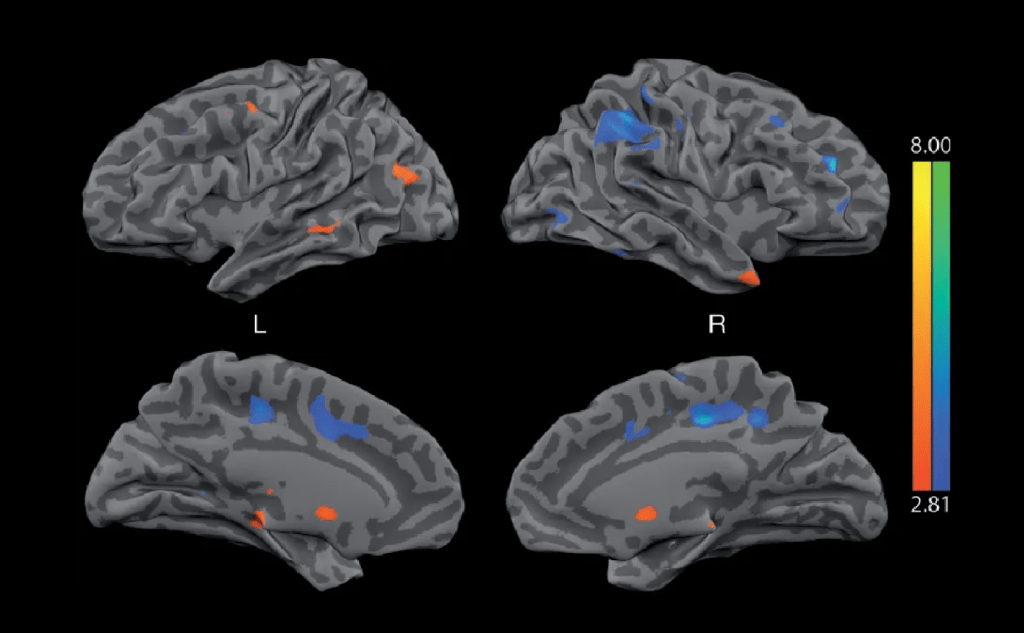
Every reading is an act of transformation. Not a simple cultural ritual, not a light pause. When we read, our brains truly change. Neuroscience calls it neural plasticity: connections between neurons are remodeled, new synapses are formed, and existing ones are strengthened or weakened.
This means that every page leaves a physical mark on our mind. We never read in vain: even a dialogue, a phrase stolen from the barber’s magazine, an unexpected conversation shapes the structure of our thoughts.
Long-term memory is one of the most obvious effects. When we read, we don’t just accumulate information: we fix it in brain maps that remain available for years, sometimes for our entire lives. The books that shaped us as children still live within us, and our brain stores them as coordinates to orient us.
Then there’s the aspect of empathy. Fiction, in particular, activates the same brain areas we would use if we actually lived those experiences. This is why in novels we “inhabit” other lives: we suffer, we love, we journey with the characters. The brain doesn’t fully distinguish between real and imagined experiences, and this broadens our capacity for feeling.
Even language itself expands. Each new word learned becomes a new cognitive tool: it allows us to think about concepts we couldn’t even name before. Reading is therefore a continuous training of abstract thought, an enhancement of consciousness.
Finally, concentration. In an age dominated by notifications and distractions, reading remains an exercise in mental endurance. Training our gaze on long, dense pages restores our ability to maintain focus, a fragile muscle that atrophies without practice.
Reading isn’t a luxury, it’s not a pastime: it’s a creative act that directly affects our brain. Every sentence, every book, every conversation transforms us, biologically and spiritually.
Reading, then, isn’t an adornment to life: it’s a form of evolution. Every word we encounter becomes a small architectural structure in our minds, a brick that pushes the boundaries of what we can imagine and understand.
In a fast-paced world, reading is perhaps the only act that doesn’t chase, but creates. It doesn’t accelerate: it roots. It doesn’t merely entertain us, it re-establishes us. And it is in this silent transformation that the page reveals its true power: not only to tell the world, but to rewrite our own.
Alessandro Sicuro
Brand Strategist | Photographer | Art Director | Project Manager
Alessandro Sicuro Comunication


 Sure-com America