
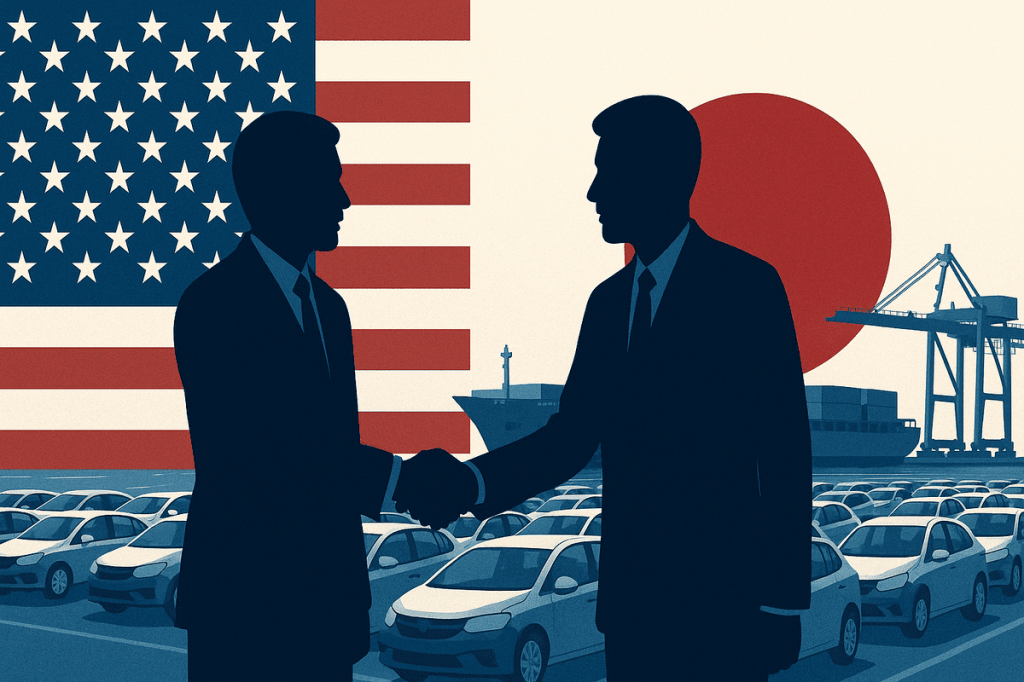
Weeks‑long negotiations have culminated in a landmark pact between the United States and Japan, under which Japan has pledged up to $550 billion in loans and guarantees for investments across the U.S. economy. In return, the U.S. will impose a 15% tariff on Japanese auto exports—down from the previously threatened 25–27.5% range. Tokyo will also maintain its current tariffs on U.S. agricultural products. Under the new framework, approximately 90% of investment profits will stay within the United States, with Japan receiving the remaining 10%
Markets reacted immediately: Tokyo’s Nikkei surged nearly 4%, led by Toyota and Honda shares (up 14% and 11%, respectively), while U.S. stock indices also opened higher . Analysts suggest the deal may stabilize global trade sentiment and ease tariff‑related uncertainty just ahead of an August 1 deadline .
A critical feature of the agreement is that Tokyo’s $550 billion investment will be directed at former President Trump’s discretion, bypassing traditional oversight committees. The investment is expected to target sectors such as semiconductors, pharmaceuticals, steel, shipbuilding, critical minerals, energy, automotive, LNG, and AI technologies Japanese private and public entities also commit to funding 100 Boeing planes, increasing defense procurement from American firms by $3 billion annually, and raising rice imports by 75% within existing quotas.
However, U.S. automakers voiced strong concerns. GM, Ford, and Stellantis argued that the deal tilts in favor of Japanese manufacturers, not least because imports from Canada and Mexico continue to face higher tariffs . Steel and aluminum tariffs, still at 50%, were excluded from this agreement.
Although the deal has been hailed in both Washington and Tokyo, key details about investment timelines, profit distribution, and governance remain unclear. Without formal transparency mechanisms, some warn it could set a concerning precedent for future U.S. trade deals.
Disclaimer: This article is part of Alessandro Sicuro Communication’s independent coverage of international trade developments. We aim to deliver accurate, unbiased analysis free from political, ideological, or commercial bias. The interpretations presented are based on publicly available data and do not represent official endorsements or financial advice.
–
–
Alessandro Sicuro
Brand Strategist | Photographer | Art Director | Project Manager
Alessandro Sicuro Comunication


 Sure-com America