
PITTI IMMAGINE 108
Preserving and developing Italy’s heritage of craftsmanship, tradition and tailoring, while fostering the new energies of generational renewal. Fortezza da Basso reaffirms its central role in the fashion system.
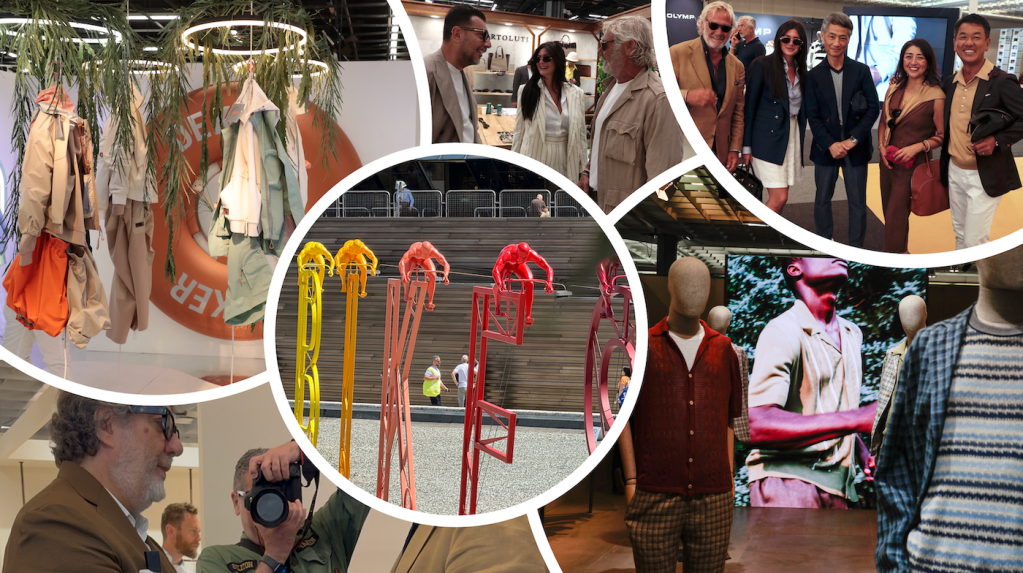
The 108th edition of Pitti Uomo has come to a close, leaving behind a trail of energy, ideas, and renewed confidence in the fashion industry. While the numbers are still below pre-2019 levels, the overall outcome shows a modest yet meaningful uptick: a 3% increase in foreign buyers compared to June 2024, over 15,000 total visitors, and more than 11,400 buyers. These are important figures—especially because they do not signal any negative reversal, but rather a slow and steady recovery.
The beating heart remains Fortezza da Basso: an international crossroads of talent, fabrics, sartorial lines, and creative visions of every kind. An unmissable venue for those who observe men’s fashion with a keen eye for the balance between tradition and innovation. In the corridors of the Fortezza, there was a palpable desire to act, to share, to be present. A vibrant atmosphere, even if not yet as fully charged as in its best seasons. Some longstanding operators were notably absent, and the Italian turnout slightly declined, partly due to logistical difficulties.
It must be said that the absence of strategic Eastern markets—now missing for years—and the slowdown of flows from China had little impact on the event’s overall quality or vitality. In fact, within this global context of uncertainty, the rise in foreign buyers remains all the more significant.
What truly matters is the quality of the encounters, the synergies created, the projects sparked and the confirmations received. This 108th edition brought to Florence curious, committed visitors and high-value buyers, mainly from non-European markets: the United States and China leading the way, followed by Japan, India, and Southeast Asia. Eastern Europe and some Middle Eastern regions also signaled a renewed vitality.
Let’s be clear: Pitti Uomo cannot—and should not—be compared to Milan or Paris. It plays in a different league: more intimate, more sartorial, more focused on the culture of clothing than on the clamor of runway shows. And that’s precisely why it remains a one-of-a-kind event: refined, concrete, captivating. Here, the spotlight is on artisans, on small and large-scale producers, whose creations are showcased in stands that, for three days, become vibrant stages of creativity. Unlike Milan, where the catwalk reigns, Pitti privileges the story of materials and craftsmanship—narratives of people and worlds.
In this article, I offer an overview of the event as I saw and felt it. In the follow-up piece, I will present a curated list of people and brands I met—operators I spoke with, photographed, and exchanged stories and visions with. A mosaic of experiences that reflects not only the beauty of the event but also its deeper soul.
And between the lines, a conviction I will never tire of emphasizing: the true value of our country lies in the expert hands of those who work with care and dedication—tailors, shoemakers, shirtmakers, leather artisans, creators of foulards, ties, belts, shoes, and accessories. In everything that still embodies the excellence of Italian craftsmanship.
Not every child can—or should—become an influencer or a pop star. We need a new generation willing to take up the mantle, to preserve and renew the ancient knowledge of our trades. Only then will we continue to create fashion—not merely consume it.
GALLERY
Click on the images to discover the details


–
–
–
–
Alessandro Sicuro
Brand Strategist | Photographer | Art Director | Project Manager
Alessandro Sicuro Comunication


 Sure-com America